
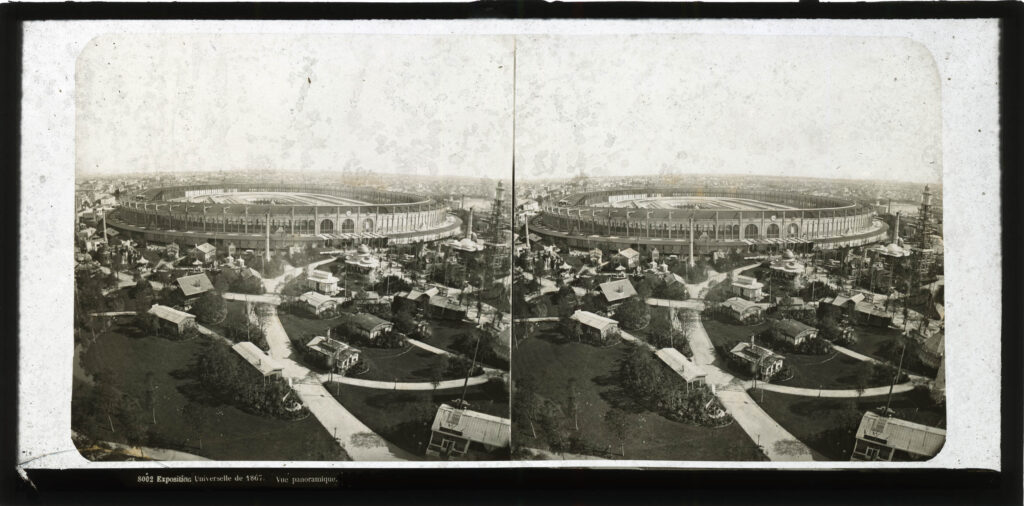
Unknown author. General View of the 1867 Universal Exhibition. FBS Foundation
The Universal Exhibitions of the 19th century were key events for showcasing the technological, industrial, and cultural advances of the time. Photography, as a new form of expression and documentation, played a crucial role in these exhibitions.
Since the first Universal Exhibition in London in 1851, photography began to gain prominence. In this edition, daguerreotypes and calotypes were exhibited, demonstrating the potential of images as a means of visual communication. As the century progressed, subsequent exhibitions in Paris, Vienna, and other European cities incorporated photography as an essential part of their displays.
The FBS Foundation houses a valuable collection of photographs and catalogues from universal exhibitions since 1851, providing a detailed account of these historic events. Through these documents, it is possible to explore the evolution of international exhibitions and their impact on technological, artistic, and cultural development.
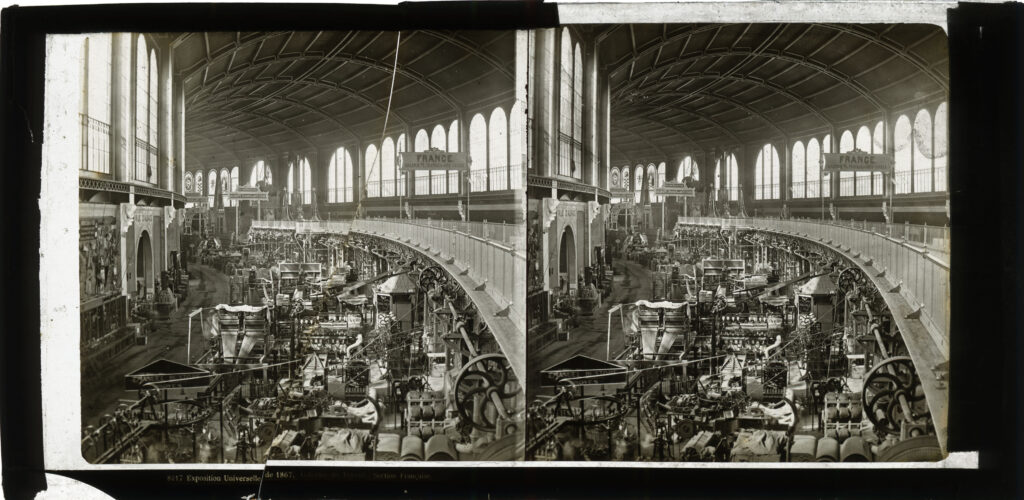
Unknown author. Partial view of the French pavilion at the Universal Exhibition in Paris in 1867. FBS Foundation
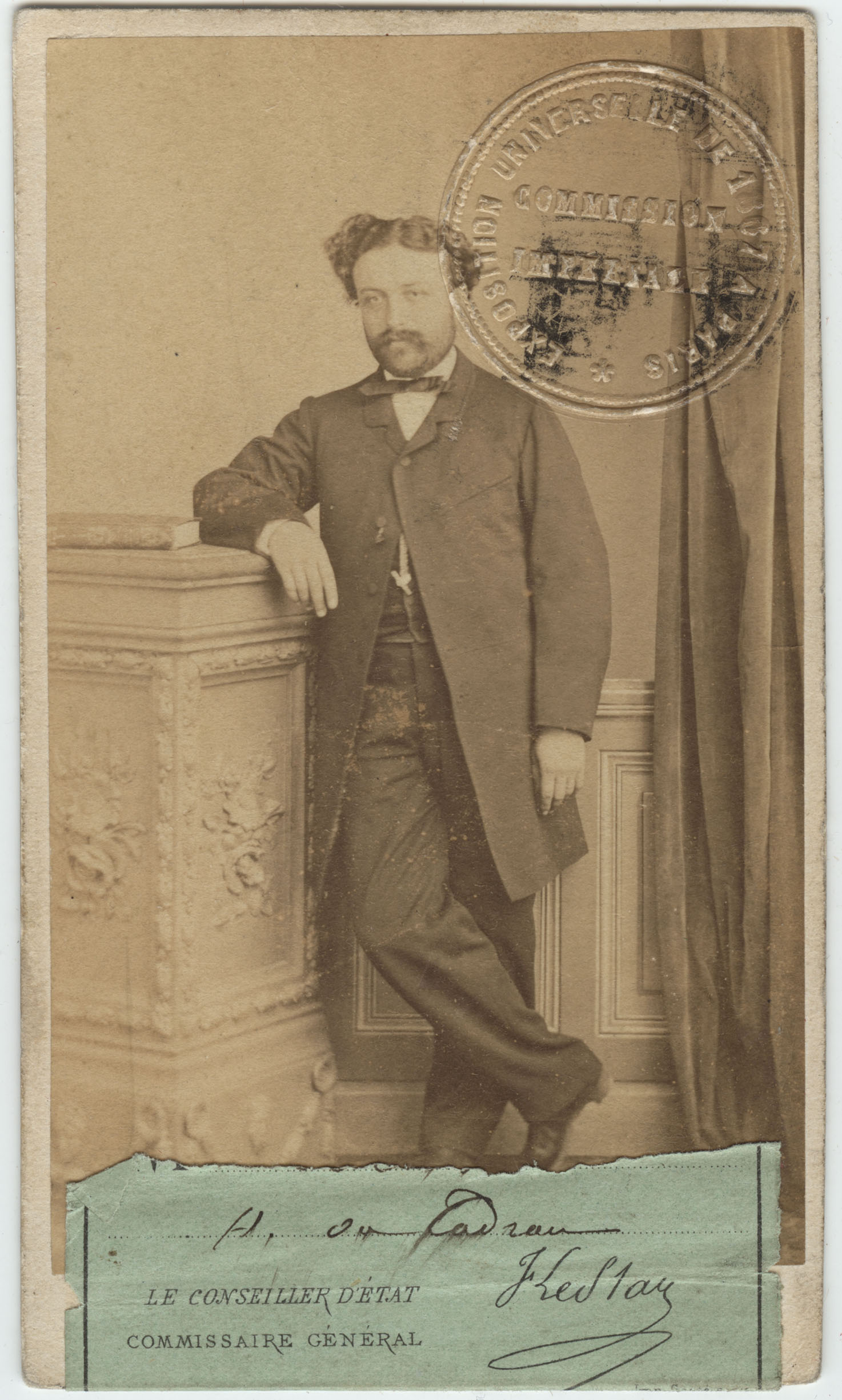
Unknown author. Personal Entry Ticket with Photograph for the 1867 Universal Exhibition in Paris. FBS Foundation.
The catalogues include information on various cities that have hosted these exhibitions, such as London, Paris, Vienna, Chicago, San Francisco, Madrid, and Barcelona, among many others. Thanks to this geographical and temporal diversity, the collection represents an essential reference source for researchers and scholars of industrial and cultural heritage worldwide.
The Paris Exposition Universelle of 1867, held at the Champ de Mars, was a showcase for the technical, artistic, and scientific progress of the 19th century. Among the most outstanding disciplines was photography, which not only established itself as an art and documentary medium but also introduced technical and scientific advances of great impact.
By 1867, photography had moved past its initial stage. The wet collodion process, introduced in the 1850s, allowed for negatives on glass plates with unprecedented sharpness and detail. Albumen prints had become standardized, and photography was beginning to integrate into all aspects of life. Stereoscopic photography, carte de visite, and illustrated albums were welcomed by the public. At the same time, photographers were exploring new frontiers: color, enlargement, mechanical reproduction, and both astronomical and microscopic photography.
The international exhibition became a key platform for launching new photographic innovations, most notably François Willème’s photosculpture. This innovative process, developed in the 1860s, combined photography and sculpture to create three-dimensional portraits with great fidelity. Willème used multiple cameras arranged in a circle to simultaneously capture different angles of the subject. From these images, a three-dimensional model was generated, resulting in a photorealistic representation.
During the 19th century, photosculpture aroused great interest among artists and scientists, who saw it as an opportunity to improve the representation of reality. This technique was applied not only to portraiture but also to anatomical and anthropological studies, allowing human figures to be documented with unprecedented accuracy. The FBS Foundation houses several photosculptures and preserves period texts that provide valuable information on these advances. Simultaneously, other developments, such as stereoscopy and photogrammetric experiments for the reconstruction of volumes, marked fundamental milestones in the evolution of three-dimensional imaging.
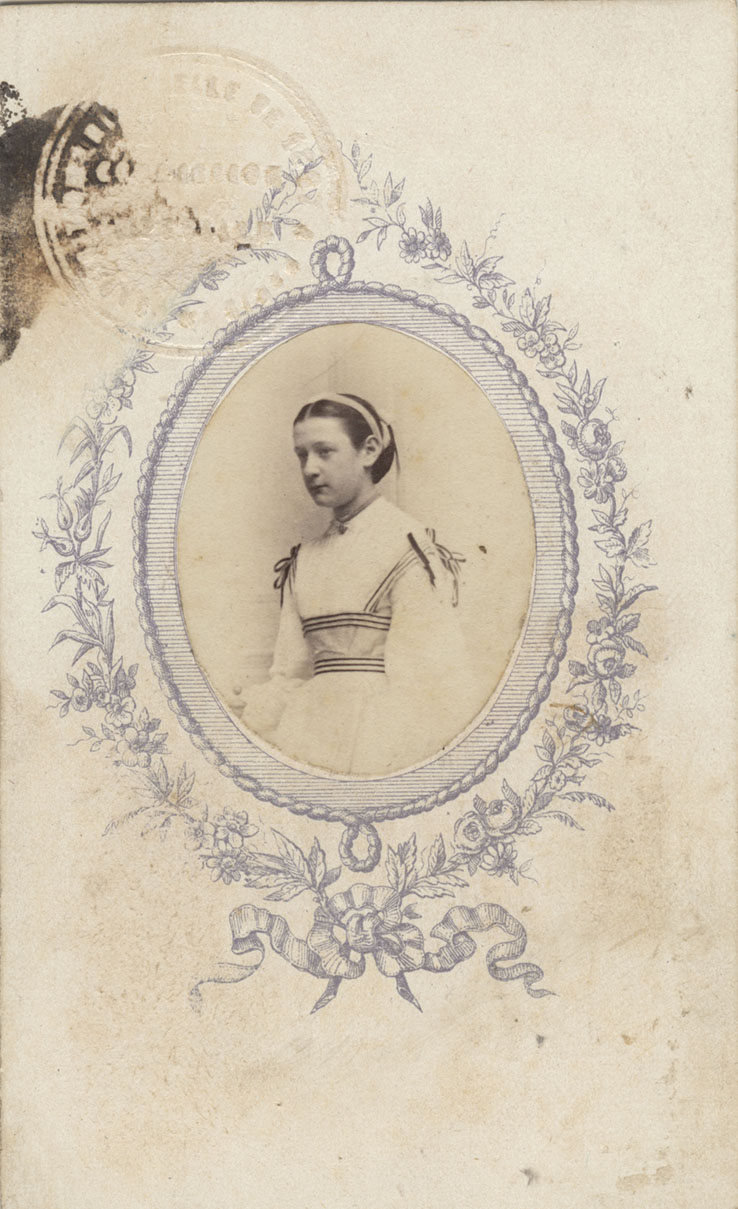
Unknown author. Personal Entry Ticket with Photograph for the 1867 Universal Exhibition in Paris. FBS Foundation.
During the Universal Exhibition, photozincography was presented as a modern solution for image reproduction in printed publications. Its ability to produce accurate and durable copies without the need for manual engravers was particularly useful for reproducing maps, official documents, scientific illustrations, and works of art. This process combined the fidelity of photography with the efficiency of mechanical printing.
Alphonse Poitevin also presented his photomechanical printing processes. These methods allowed the reproduction of photographic images on paper using ink, facilitating their printing in books, magazines, and catalogues. Poitevin was widely recognized by the scientific and photographic community. He received two prizes in 1862 and 1867 from the Société Française de Photographie, as well as a special award at the Paris Exposition Universelle of 1878. Others, such as Placet and Garnier, also presented different processes combining photography and image printing.
Bertsch, Lakerbauer, and M. Philippe Plateau exhibited their photographic works taken through the microscope. Their work enabled the capture of details not readily visible to the naked eye, expanding photography’s possibilities as a scientific tool.
The Universal Exhibition of 1867 also incorporated photography into the production of tickets by adding images of visitors. Some were simple portraits affixed to a card, while others took the form of carte de visite stamped with the official exhibition seal. The FBS Foundation has several copies of these tickets.