
The Collection
Object of the month
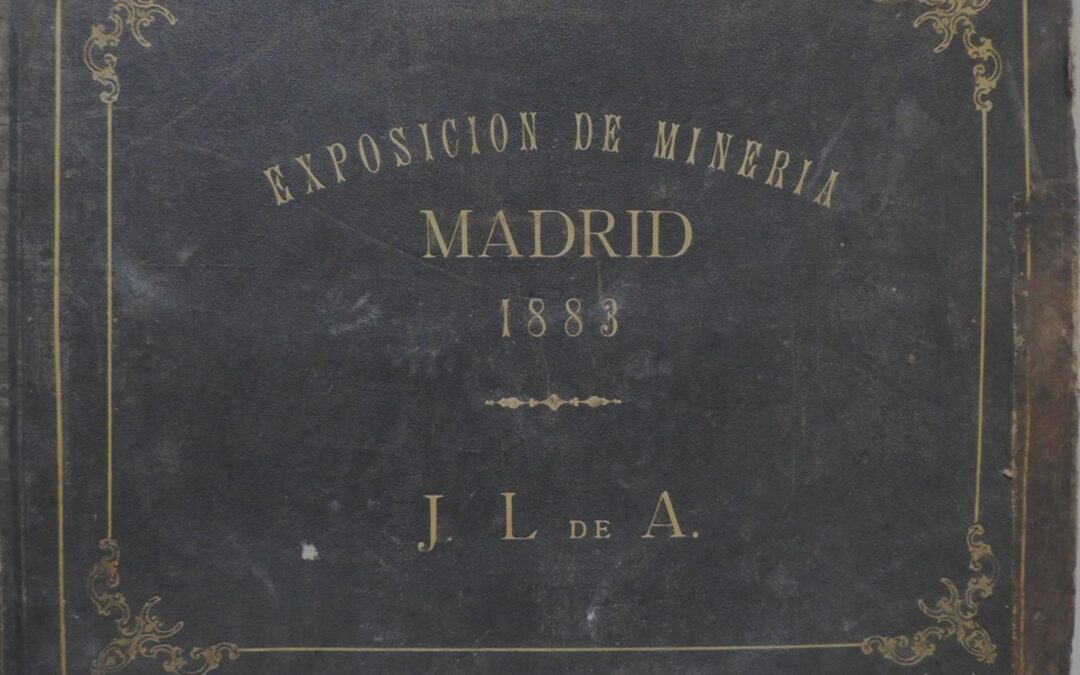
HERITAGE, AN EXHIBITION THAT LEFT ITS MARK
An addition inside of Madrid’s Retiro Park in 1883 left a lasting architectural mark: the “Palacio de Velázquez,” named after architect Ricardo Velázquez Bosco, who designed it and co-directed its construction.
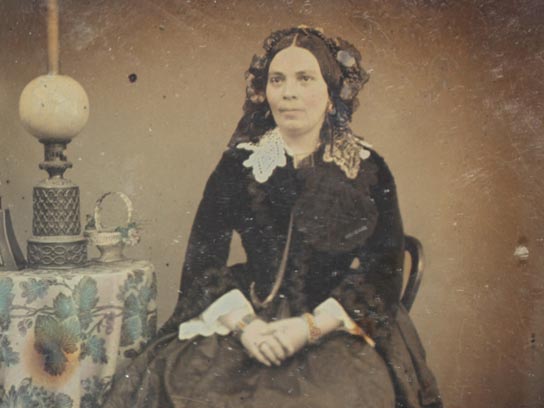
THE STEREOSCOPY DETECTIVE
This study delves into the essence of stereoscopic photography, redefining our understanding of the viewing process and the complexities of visual perception beyond mere entertainment, revealing not only its technical characteristics and state of preservation, but also its historical relevance.
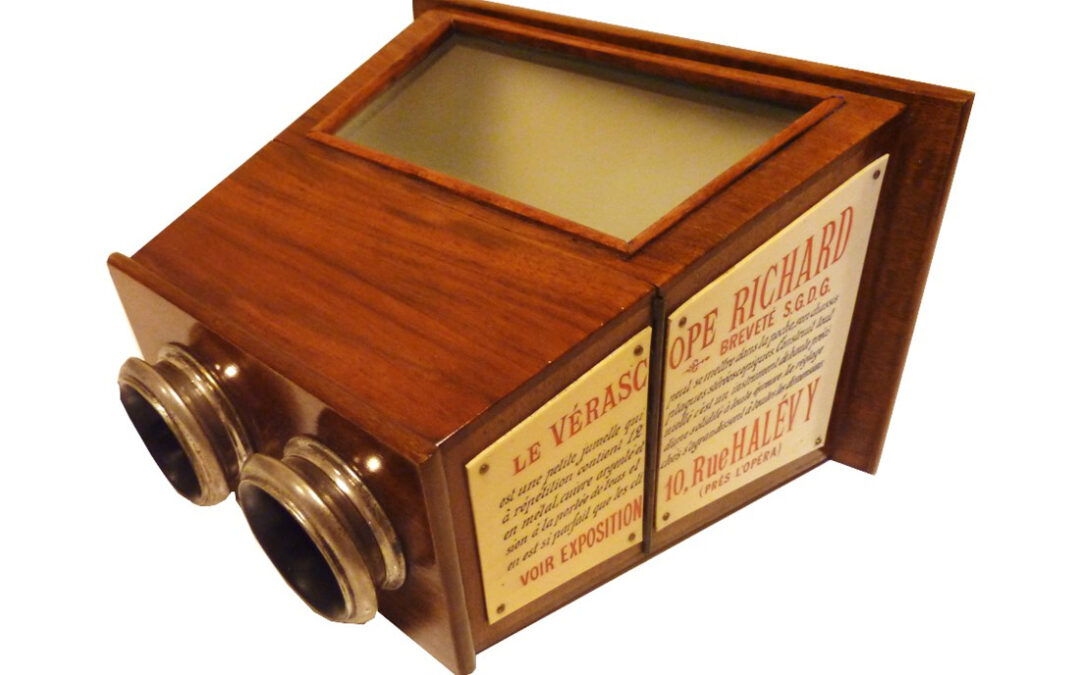
STEREOSCOPIC VIEWERS FOR ADVERTISING
Jules Richard created the LE VÉRASCOPE viewer as a fixed demonstration tool to promote quality stereoscopic vision to professionals, with a mahogany wood design and a specimen showing his 1907 Parisian business. This viewer highlights Richard’s innovation in stereoscopic photography and his family and historical context.
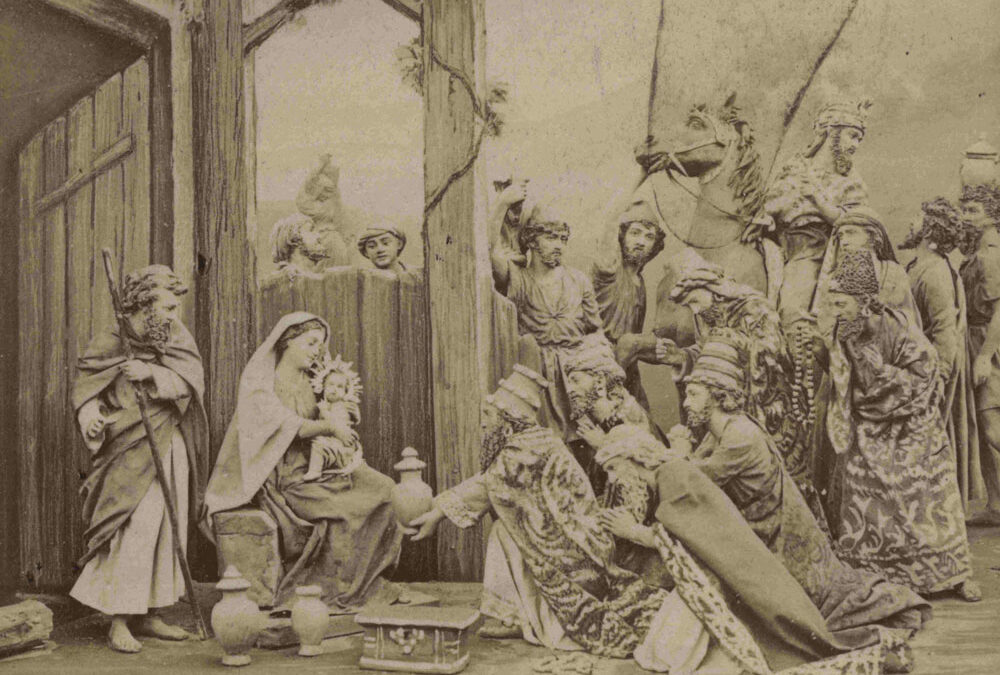
TEMPORARY TRANSMISSION
THE AMERICAN NOVELTY Co. reused stereoscopic photographic backgrounds from publisher B.K.’s “LA VIE DE JÉSUS” series to create four-color prints adapted to its Sculptoscope viewer, which allowed wider dissemination of these 19th century religious images.
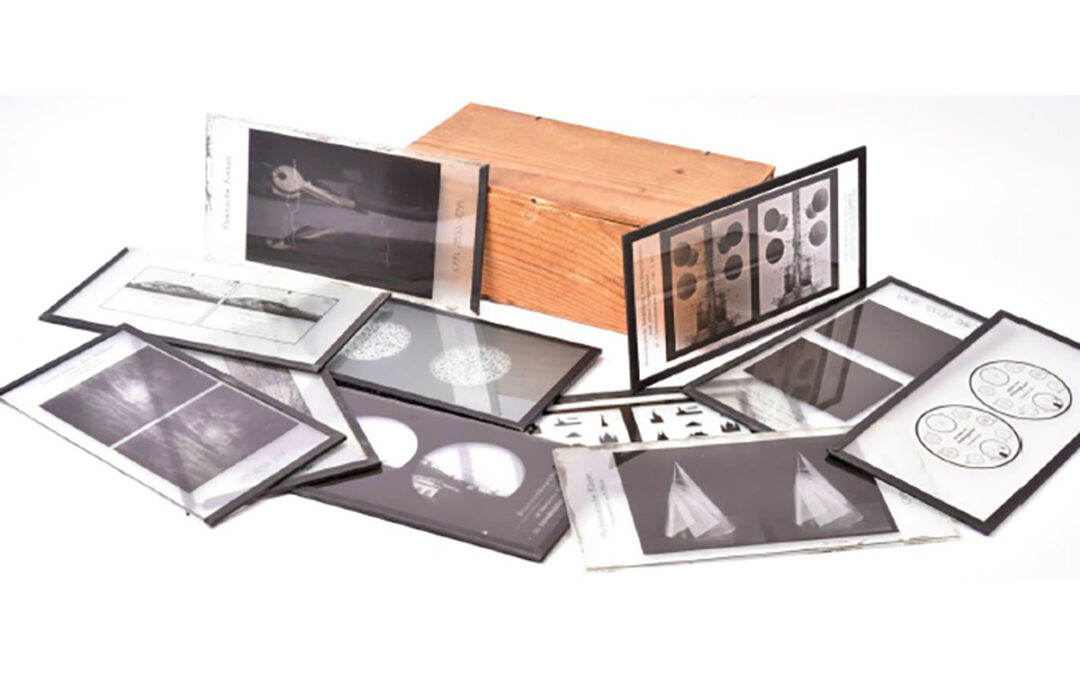
VISIONED (ways of seeing and applying stereoscopy)
A set of 11 stereoscopies linked to Carl Pulfrich’s research at Carl Zeiss, Jena, covering disciplines such as refractometry, stereophotogrammetry and photometry. Through the analysis of these images, it demonstrates how stereoscopy has been a key tool in scientific and technical research since before the rise of photography.
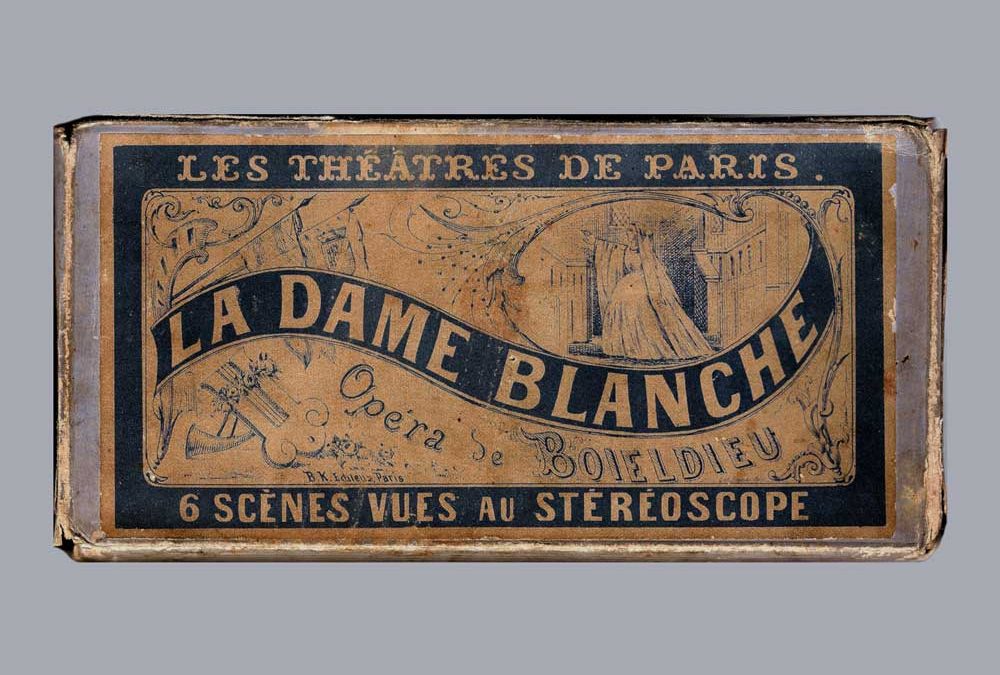
CRITIQUE, SATIRE AND CARNIVALS
A collection of stereoscopic photographs from the mid-19th century, captured at the Théâtre de l’Opéra-Comique in Paris in 1862, offers a unique perspective on the comic opera ‘La Dame Blanche’. These images document the original staging and provide information about the cultural and technological context of the time.

VIEW-MASTER
In January, a month of kings and toys, the FBS Collection presents elements of the VIEW-MASTER family, including the S-I Series projectors. The system was created by Wilhelm Gruber, a German inventor, in collaboration with Harold Graves, developing discs with 7 patented stereoscopic pairs. Manufactured by Sawyer’s Inc, they were first marketed in 1947.

WE ARE COLOURFUL
The Lumière Autochrome plates, patented in 1903, revolutionized color photography by combining science, technique, and mass production, marking the beginning of an era where capturing natural colors became accessible to everyone.

Skeletons and Ghosts
The FBS Collection presents a series of stereoscopic works on death and the supernatural, exploring how these themes were approached in the 19th and early 20th centuries. Highlights include “The Skeletons’ Spree” by the London Stereoscopic Company, a satirical piece that generated controversy in its time for its social criticism and humorous approach to death.

Grimatiscope | Photography – Art & Humour
Mechanical viewfinder, with spring-loaded, wind-up motor and movable lenses. Each lens moves differently, so two different distorted and changing images are obtained.

GAMES AND TOYS (stereoscopic cartoons)
The series of 144 SCÈNES ENFANTINES published by B.K. included aspects of childhood in which he tried to reproduce “imitation games of the adult world”, but there were also other collections that tried to bring to the public the types of toys preferred by children, the spontaneous games they sought using the means at their disposal and also educational games.

SELF-PHOTO ET STÉRÉO-MONDAIN
Wooden box compartmentalised to house a photographic kit containing: a stereoscopic camera without lenses or objectives, with holes separated at the standard interpupillary distance; three 45×107 mm plate-holder frames…
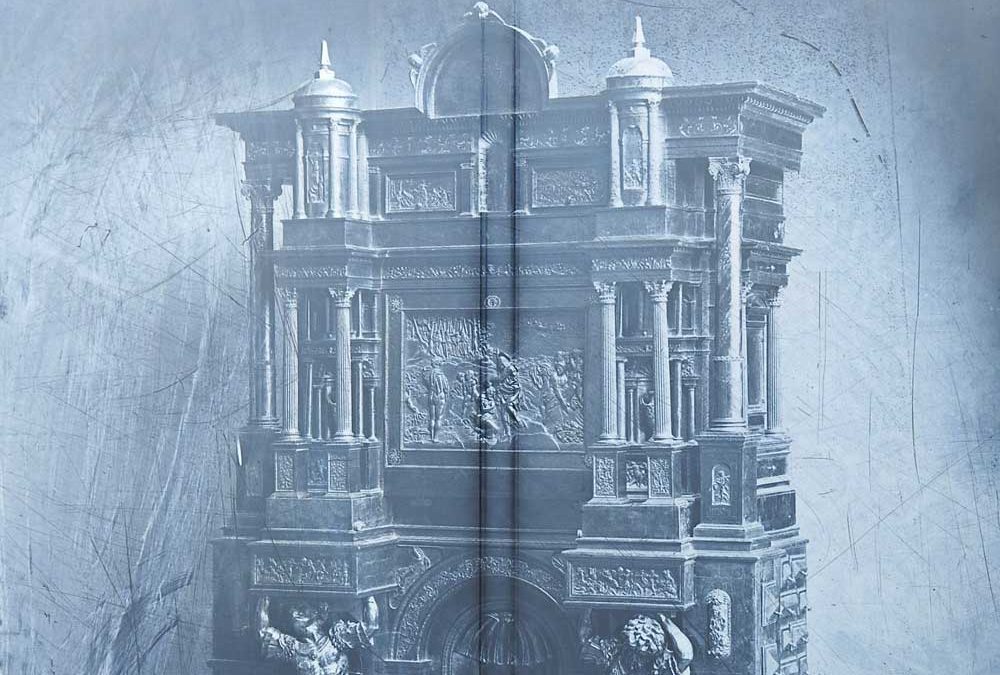
Negative Cabinet Hernani
Large format negative, which reproduces a piece of writing desk furniture (Cabinet Hernani) belonging to the Infante’s furniture heritage and which in 2018 was declared to be of exceptional interest.
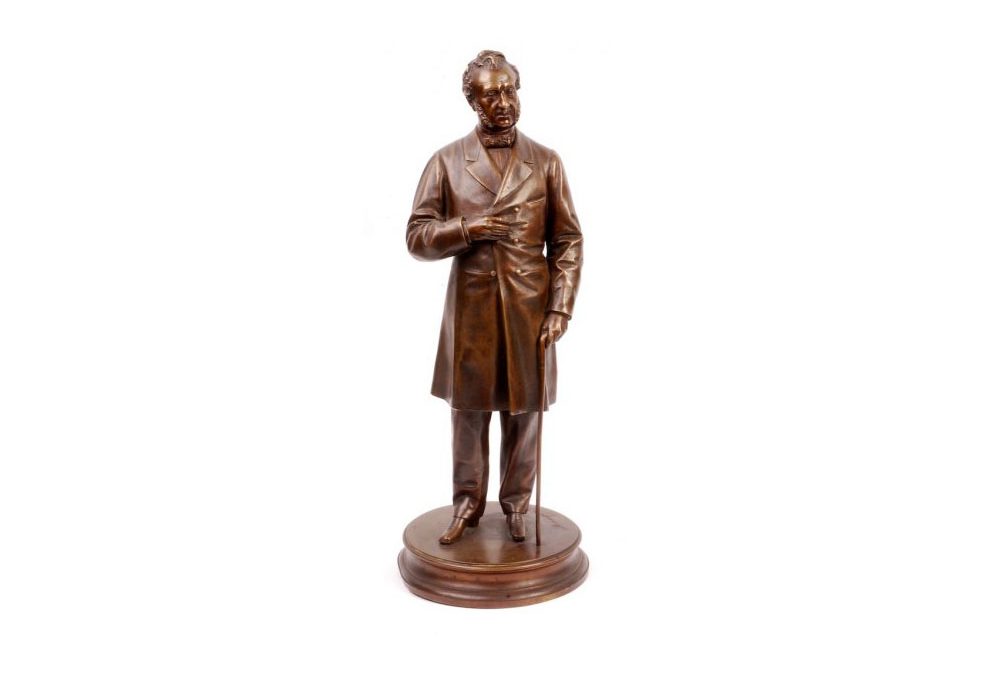
PHOTOSCULPTURE
In early 1860 Willème applied for a patent in France on the process of making photo-sculptures that he himself had invented; he obtained it on August 14, 1860 and revalidated it on April 6, 1861. The system was also patented in England and the United States, in 1964 and 1865 respectively…