
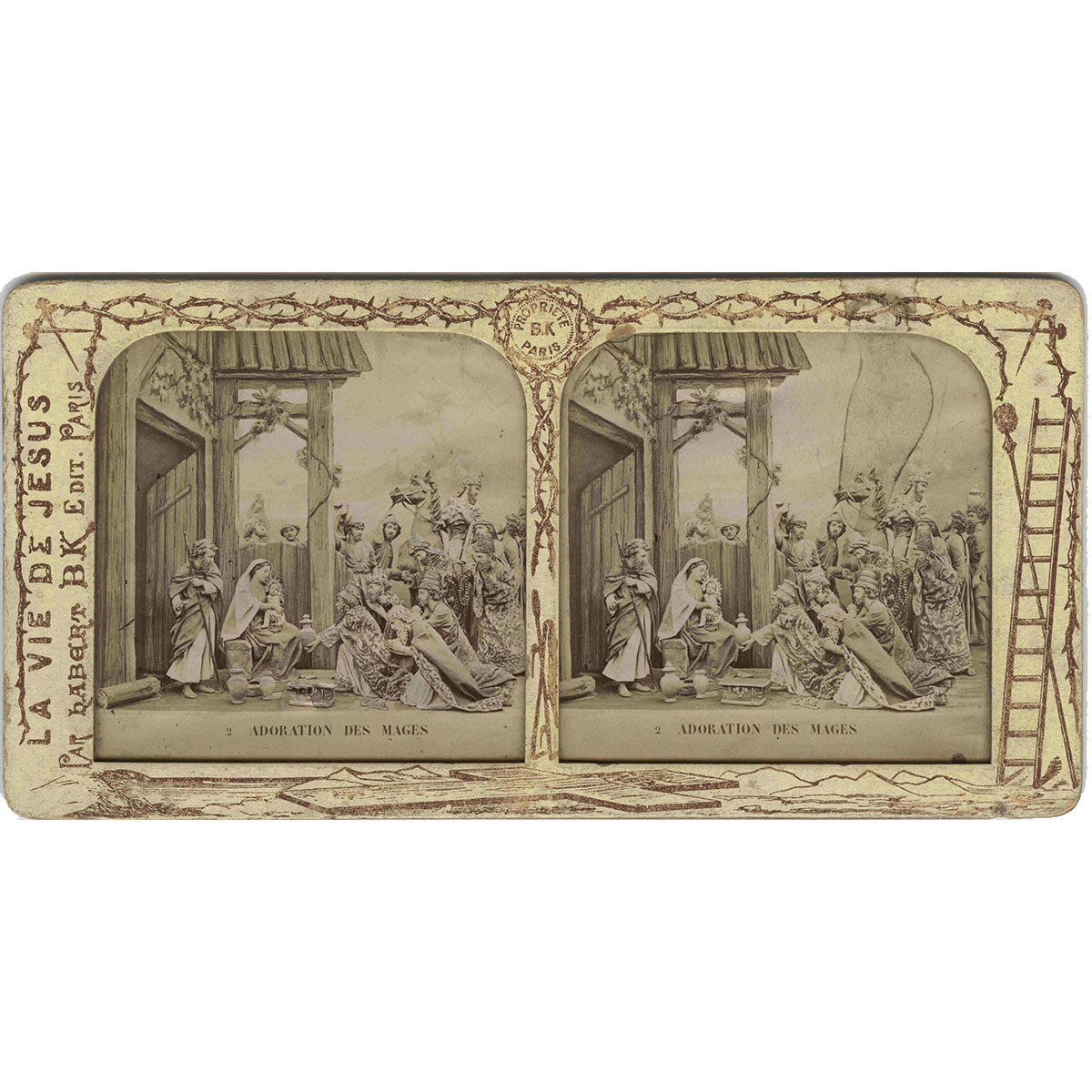
LA VIE DE JÈSUS by HABERT
Publisher ADOLF BLOCK (c. 1870)
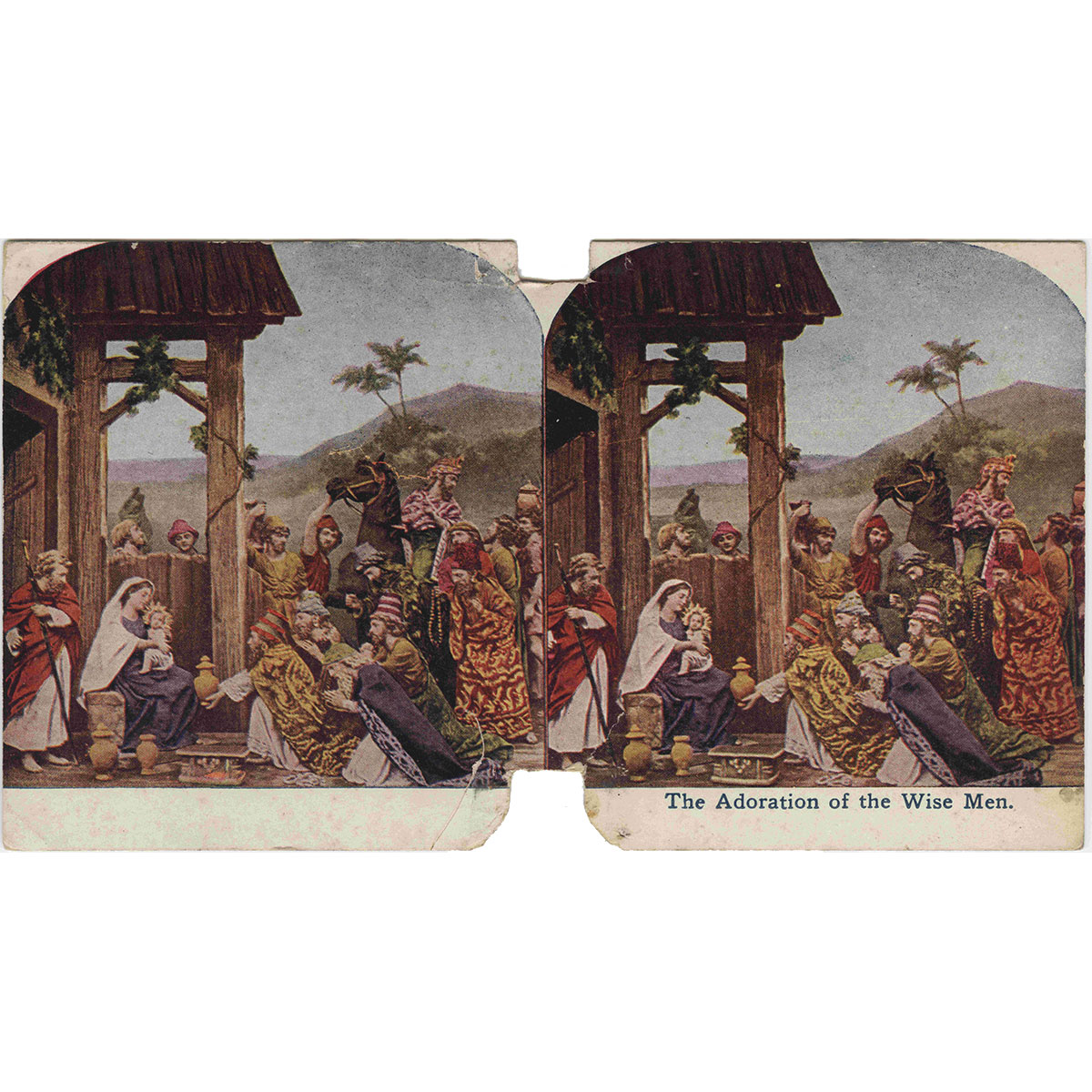
Four-colour printing type THE AMERICAN NOVELTY CO.
(c. 1929)
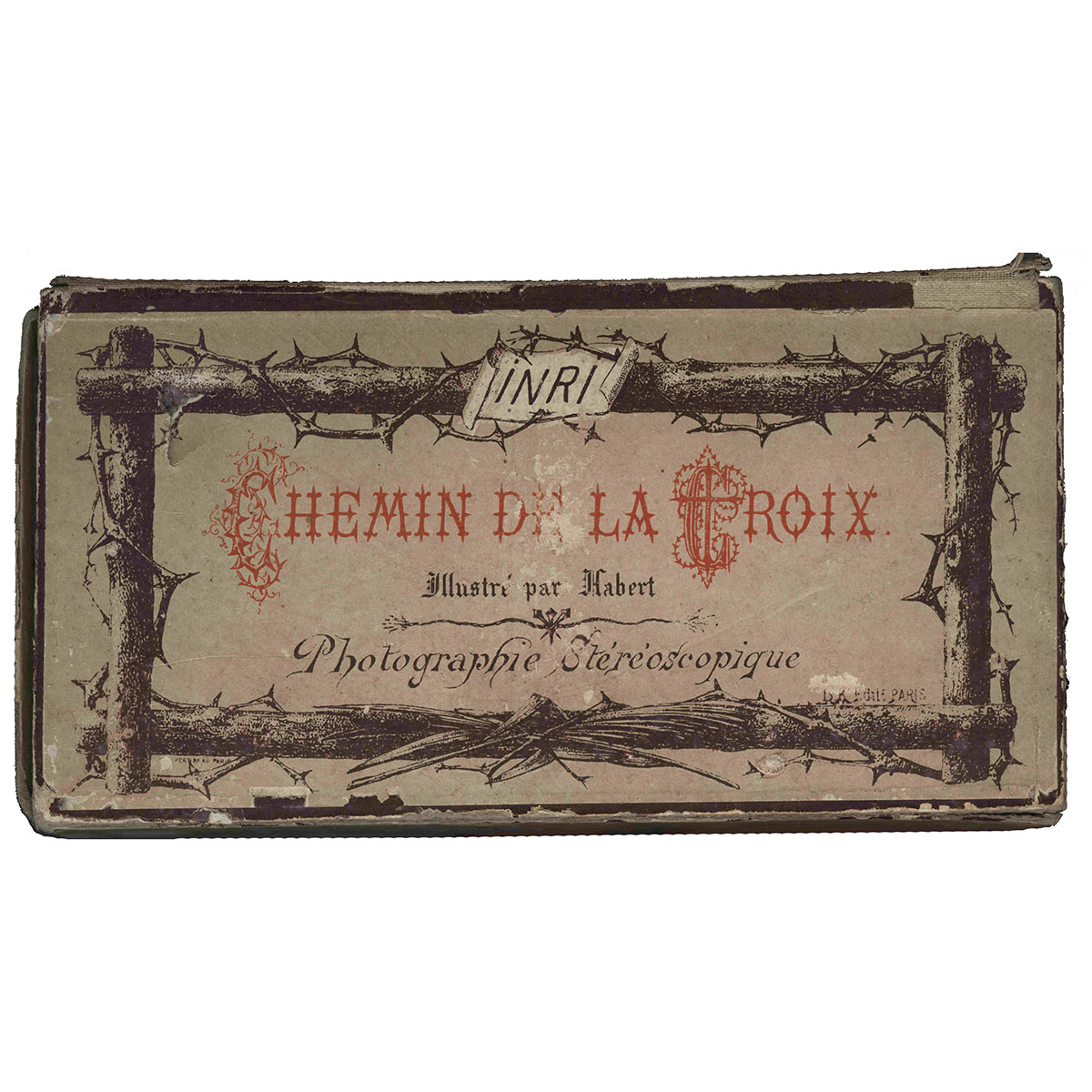
BK box cover on crucifixion.
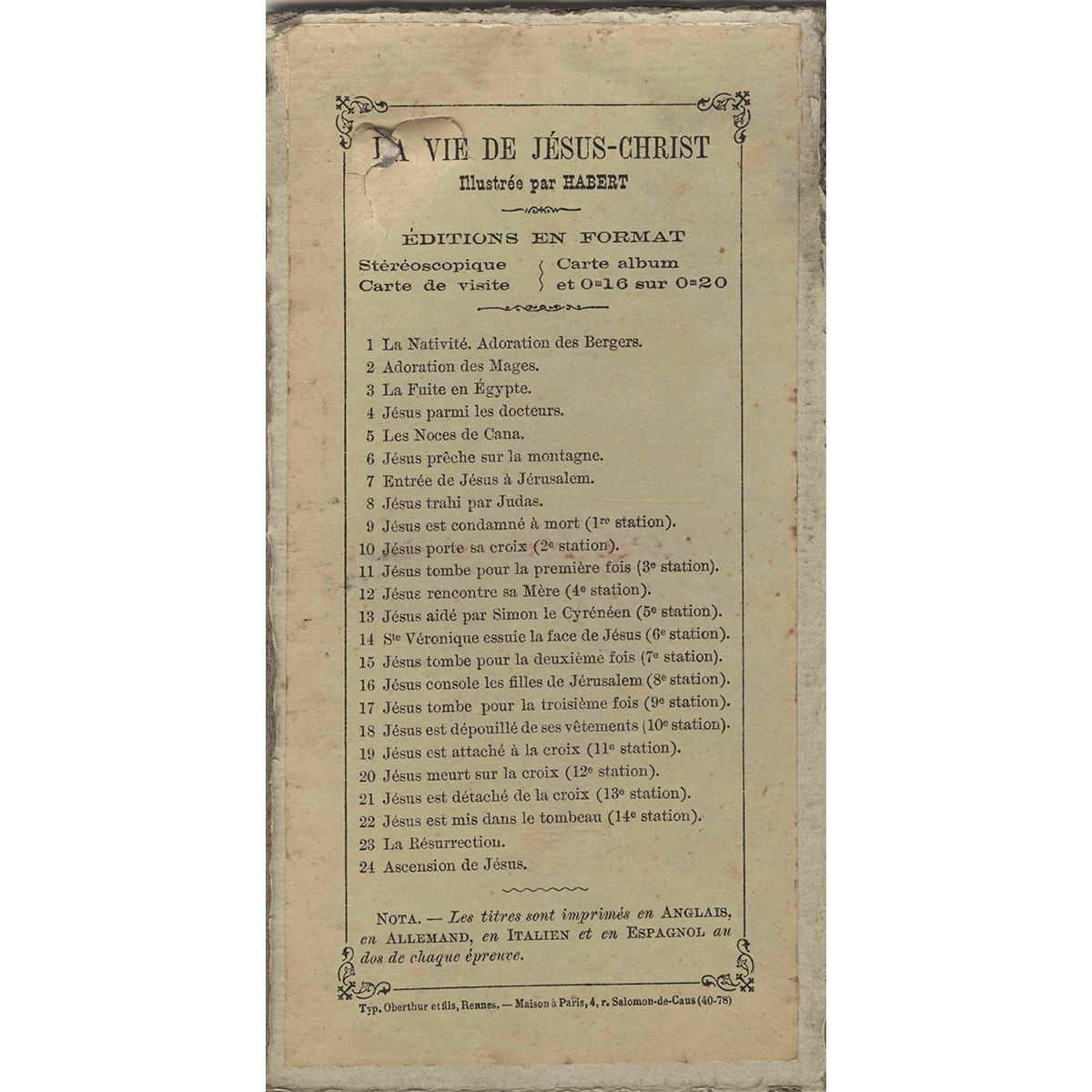
Index of images on the inside of the cover
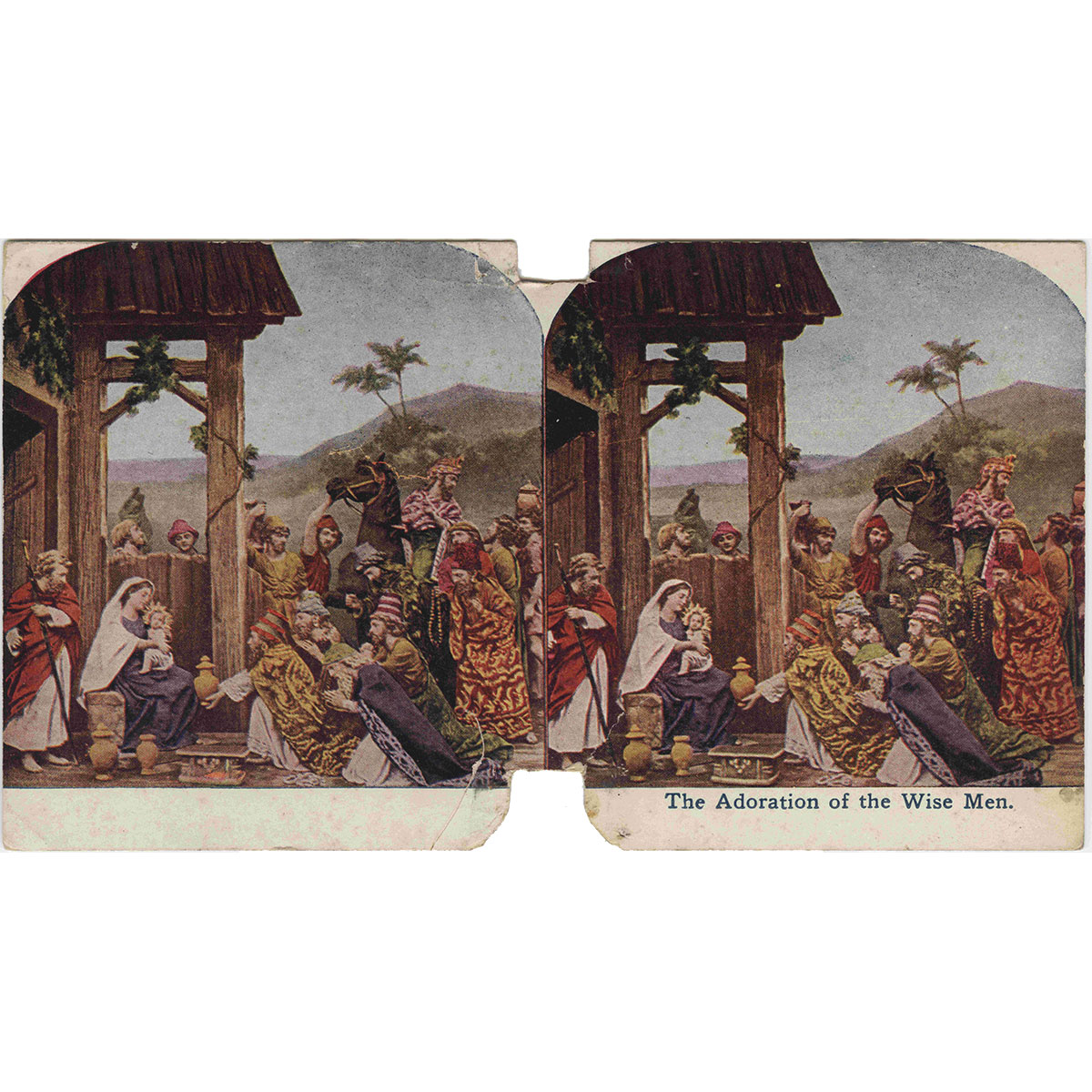
Sculptoscope - The Adoration of the Wise Men - 1929
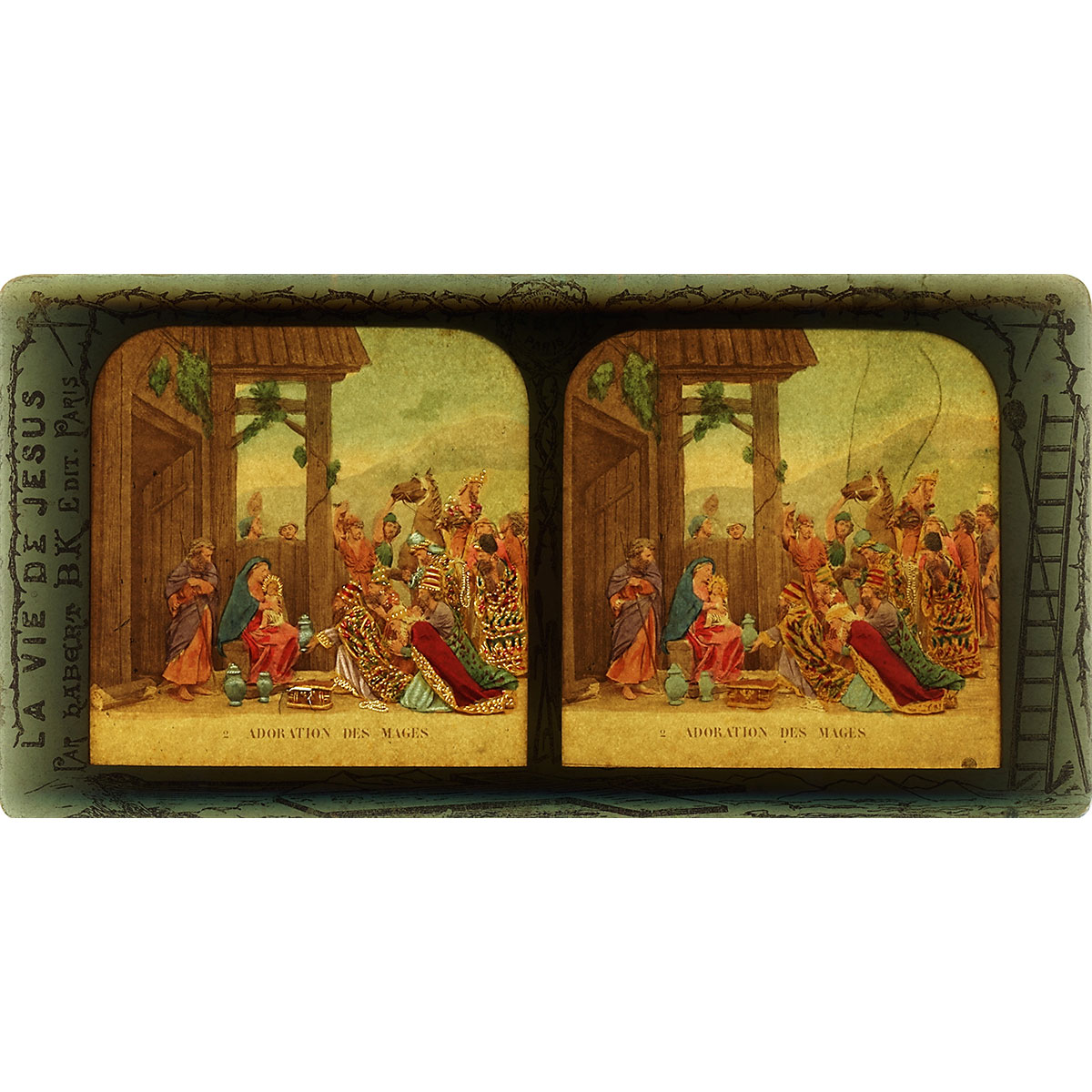
Editions B.K. - stereoscopies no. 2. ADORATION DES MAGES backlit c.1870
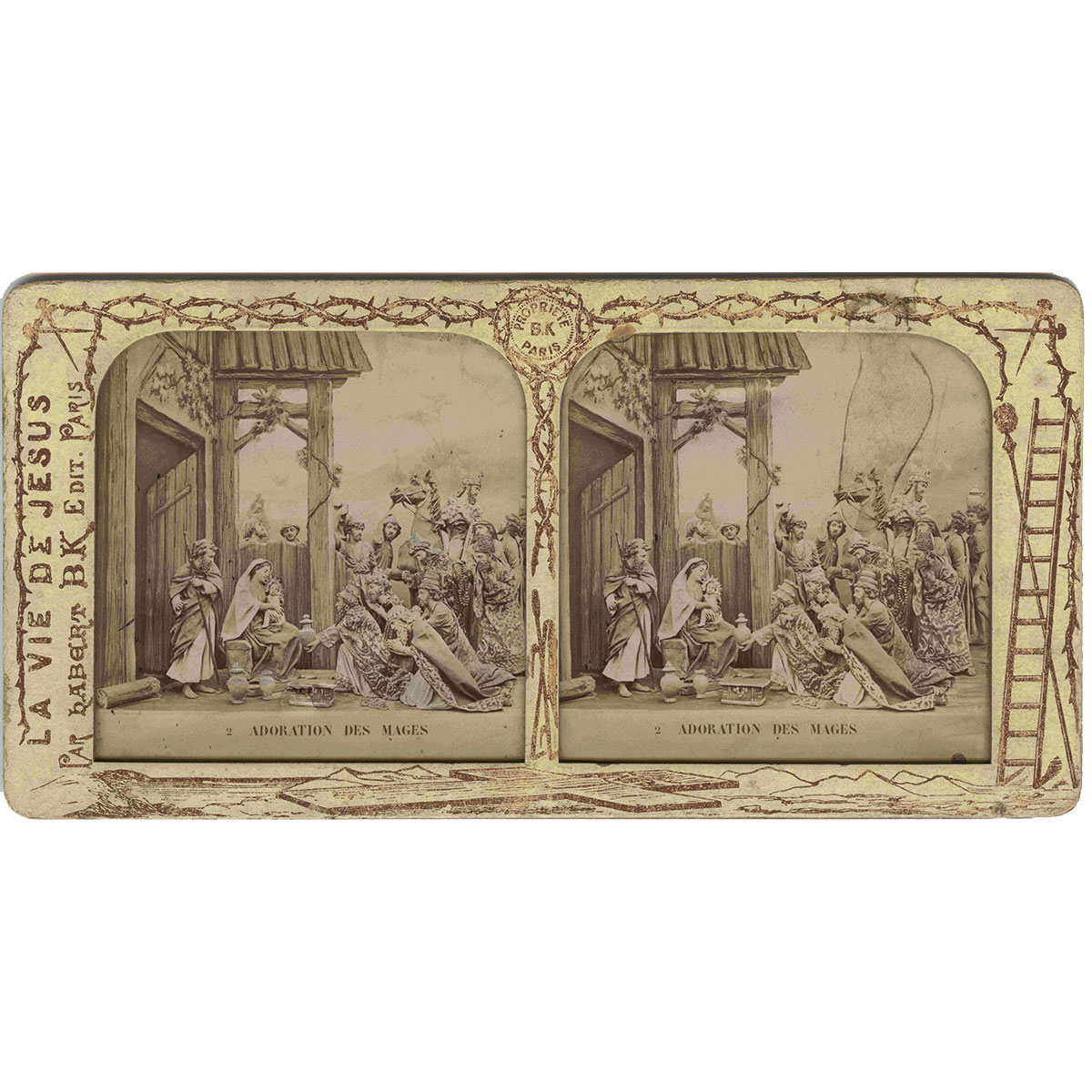
Editions B.K. - stereoscopies no. 2. ADORATION DES MAGES c.1870
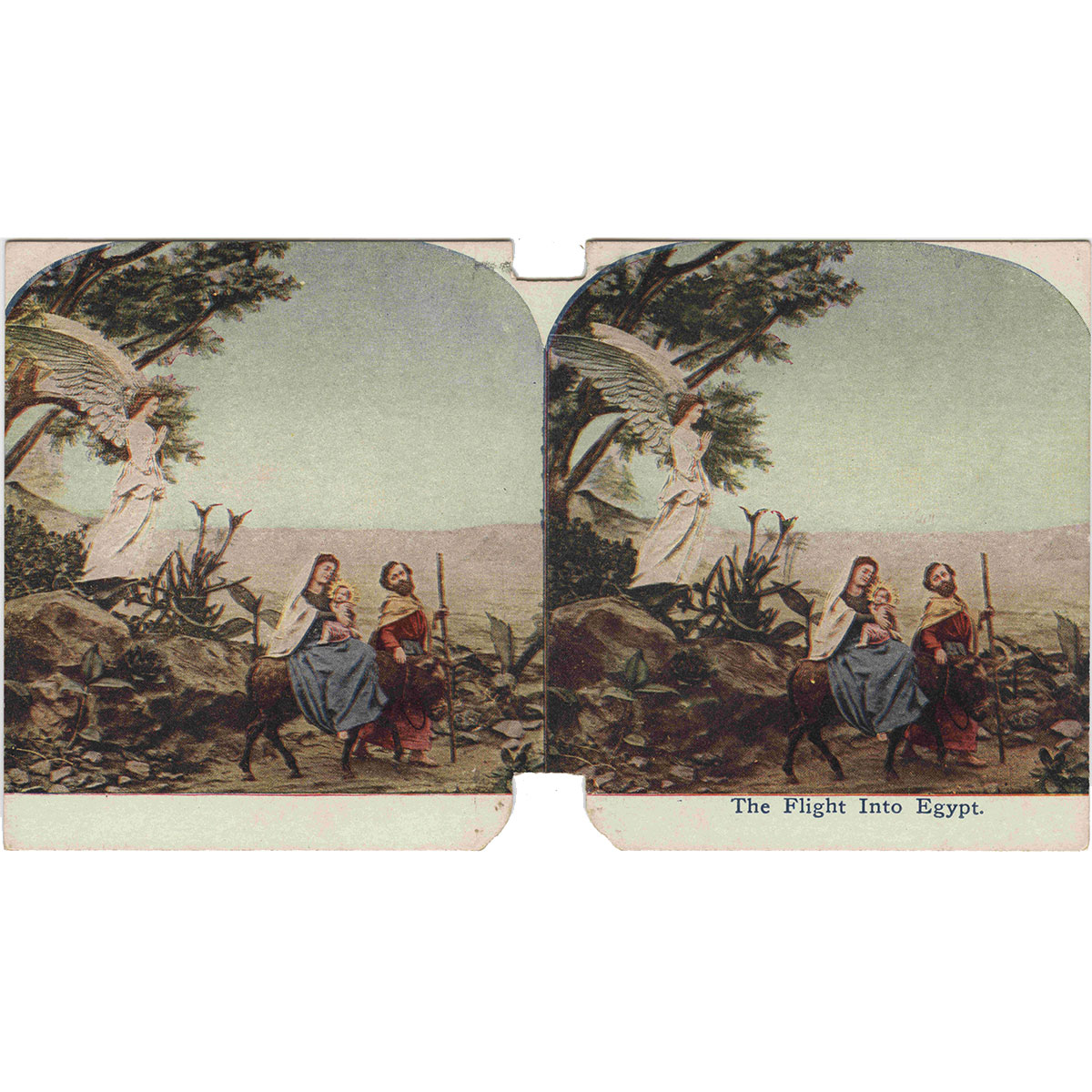
Sculptoscope - The Flight Into Egypt 1929
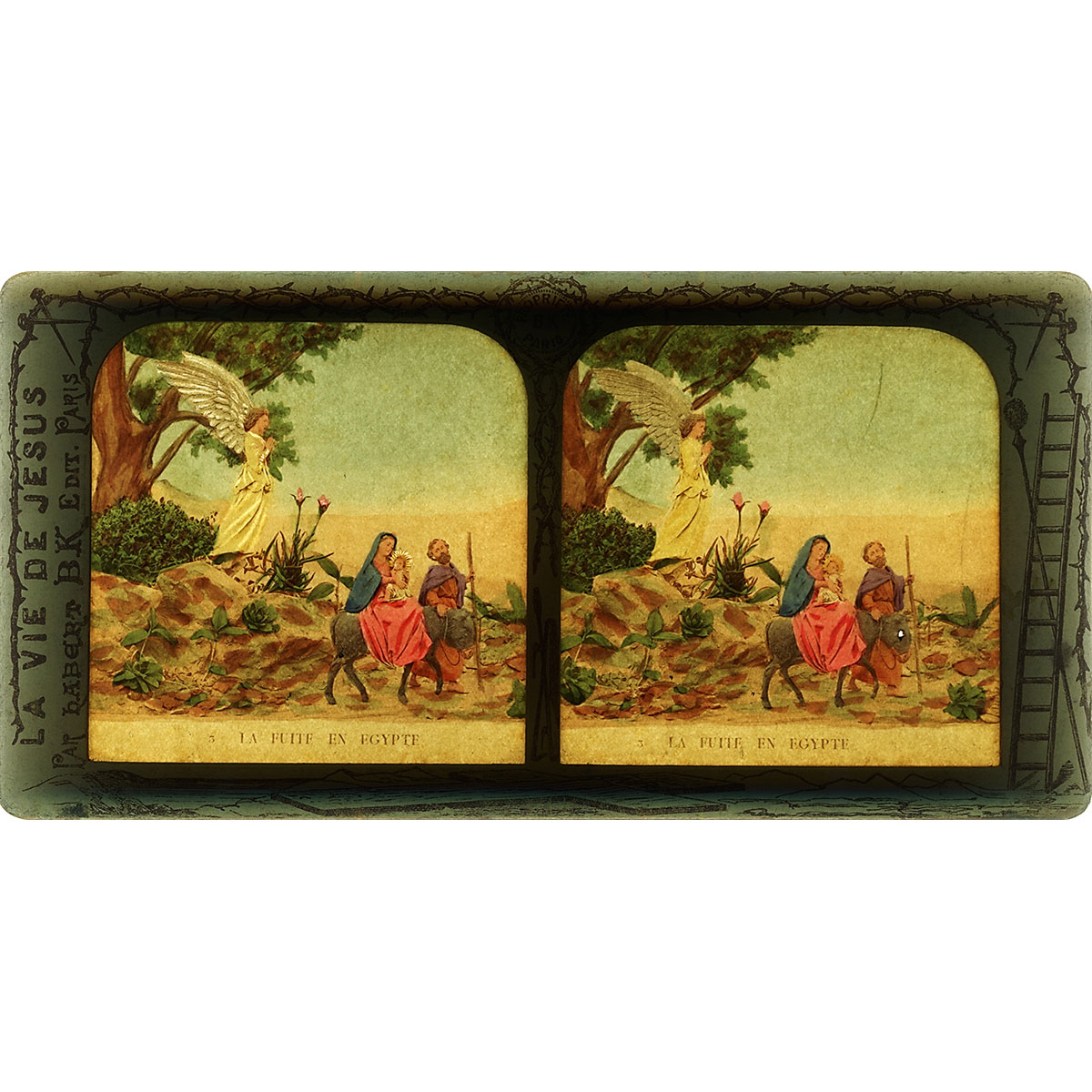
Editions B.K. - stereoscopies no. 3. LA FUITE EN EGYPTE backlit c.1870
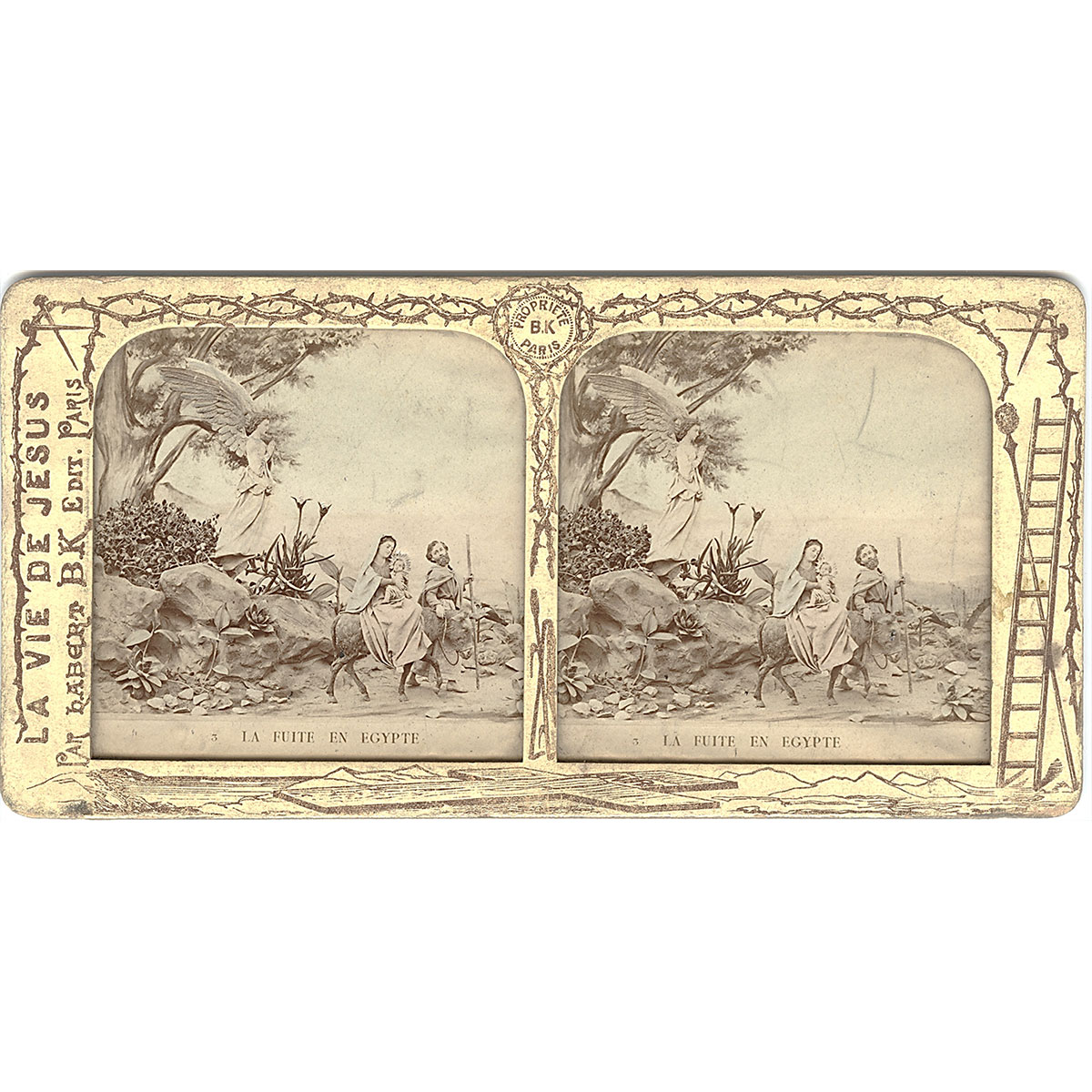
Editions B.K. - stereoscopies no. 3. LA FUITE EN EGYPTE c.1870
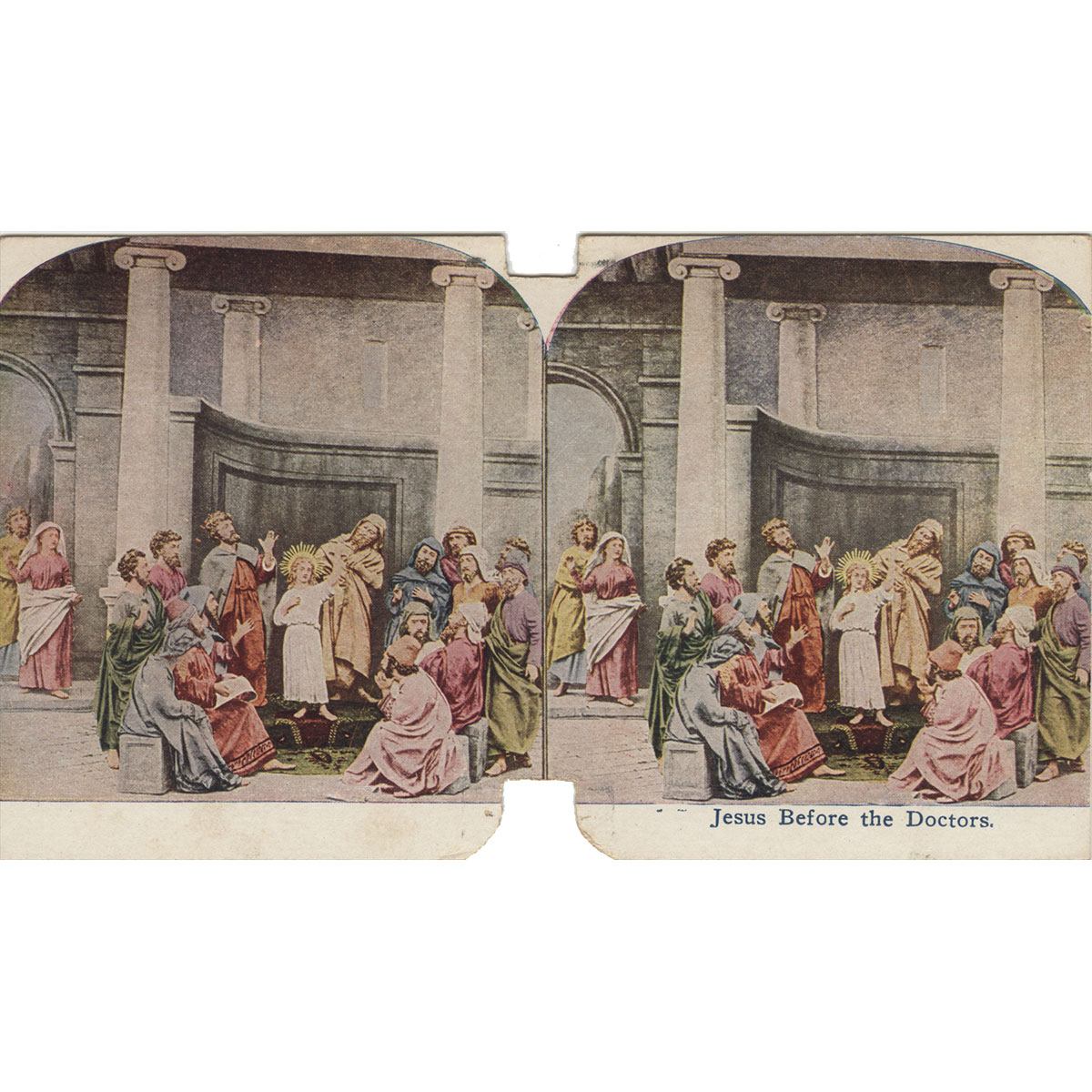
Sculptoscope – Jesus Before the Doctors 1929
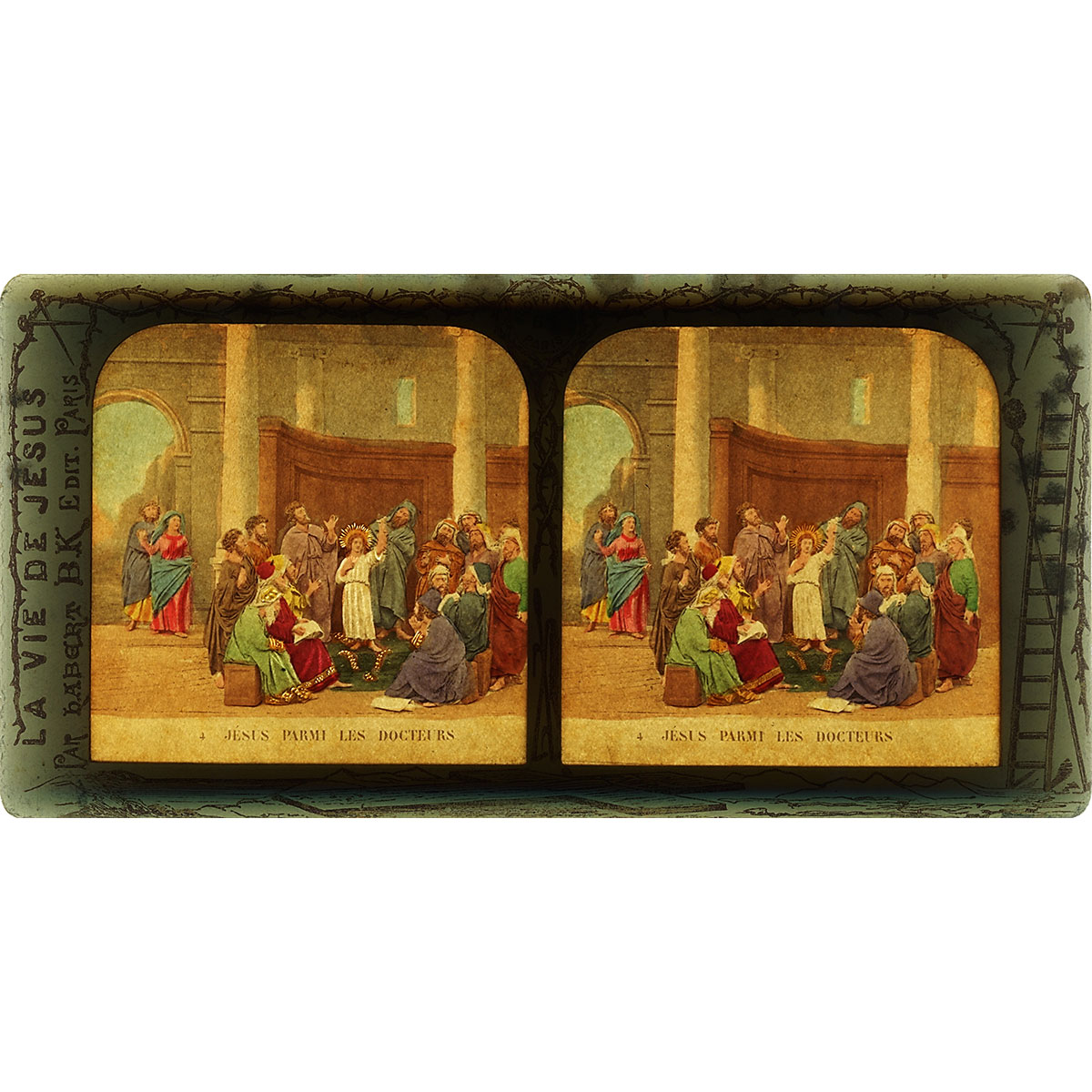
Editions B.K. - stereoscopies no. 4. JÉSUS PARMI LES DOCTEURS backlit c.1870
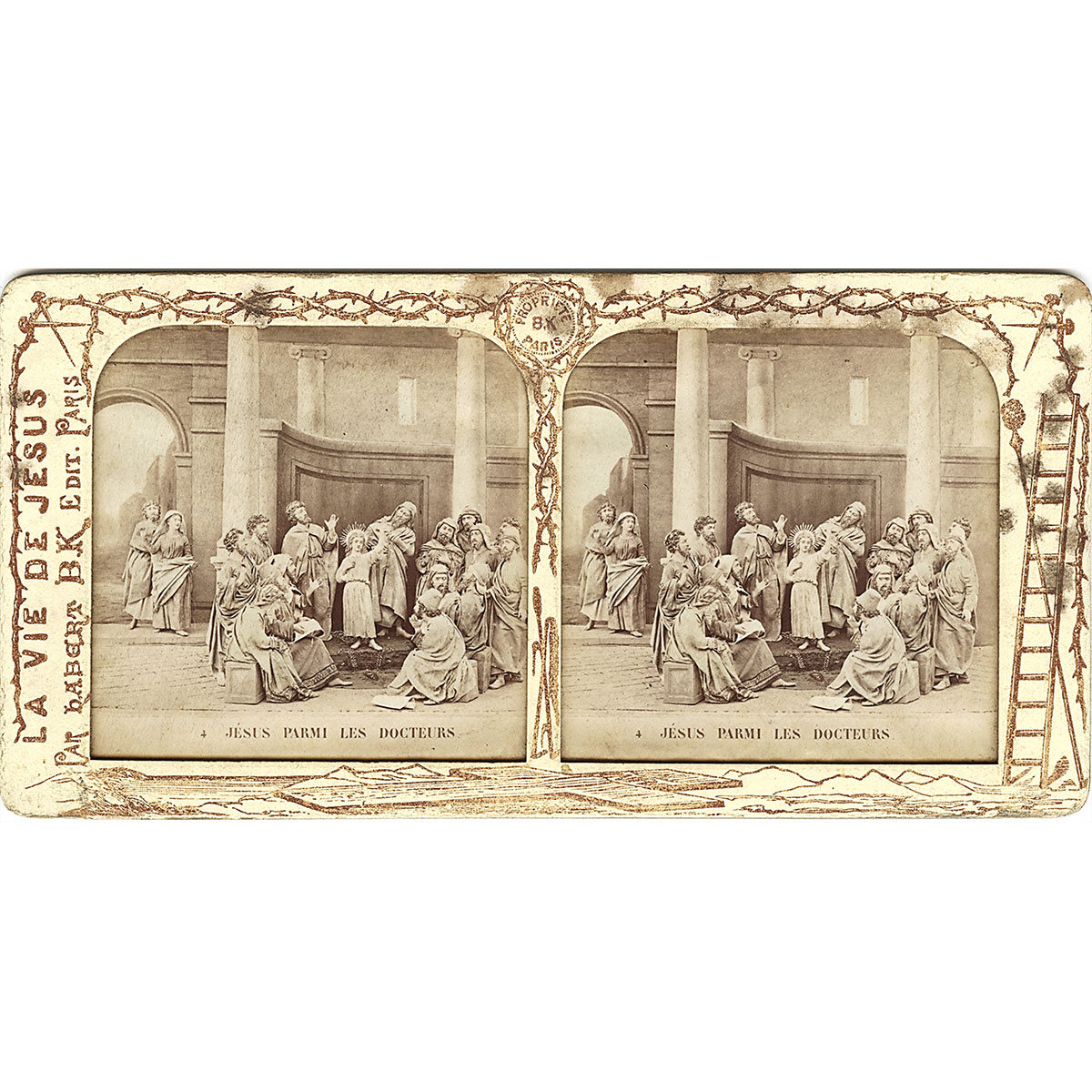
Editions B.K. - stereoscopies no. 4. JÉSUS PARMI LES DOCTEURS c.1870
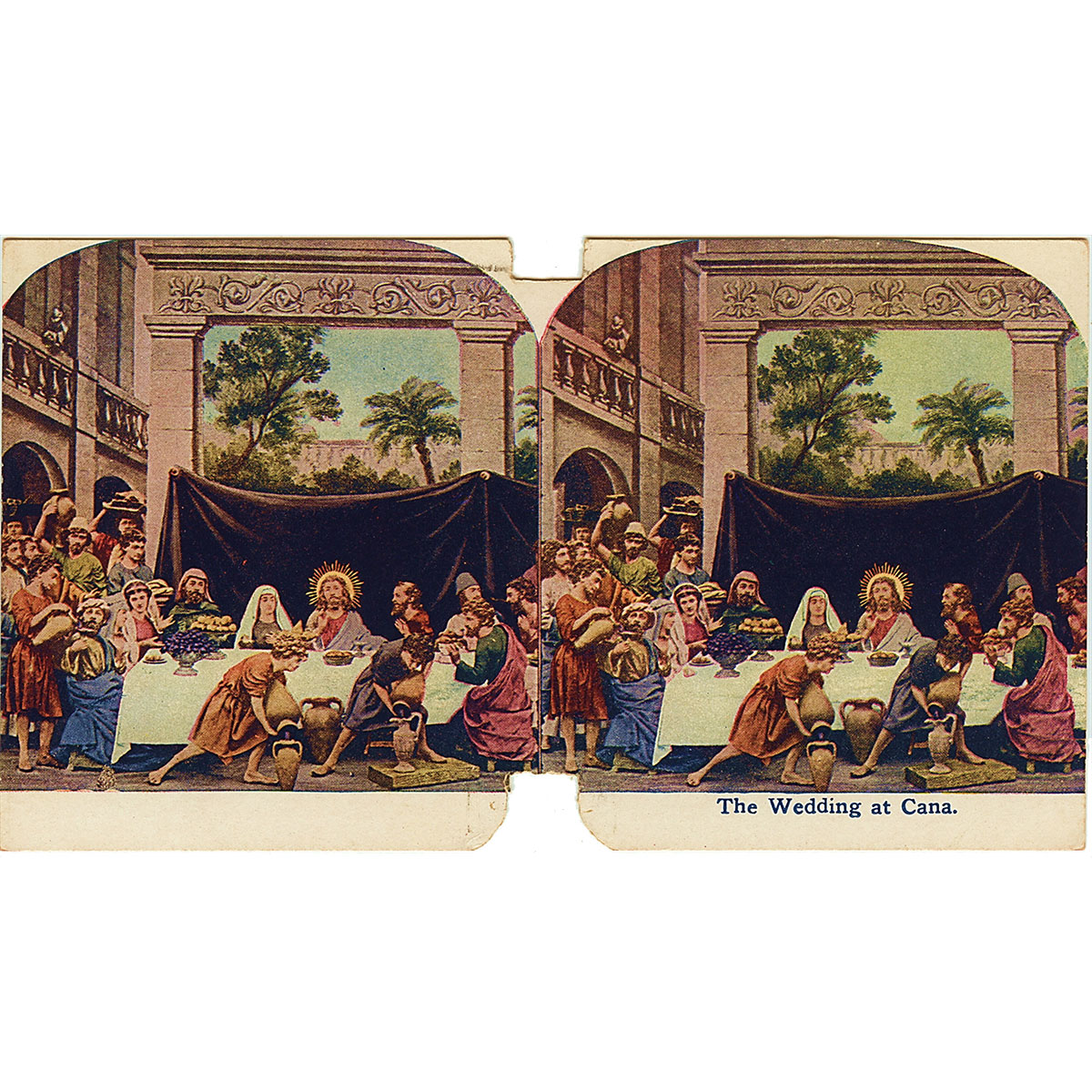
Sculptoscope – The Wedding at Cana 1929
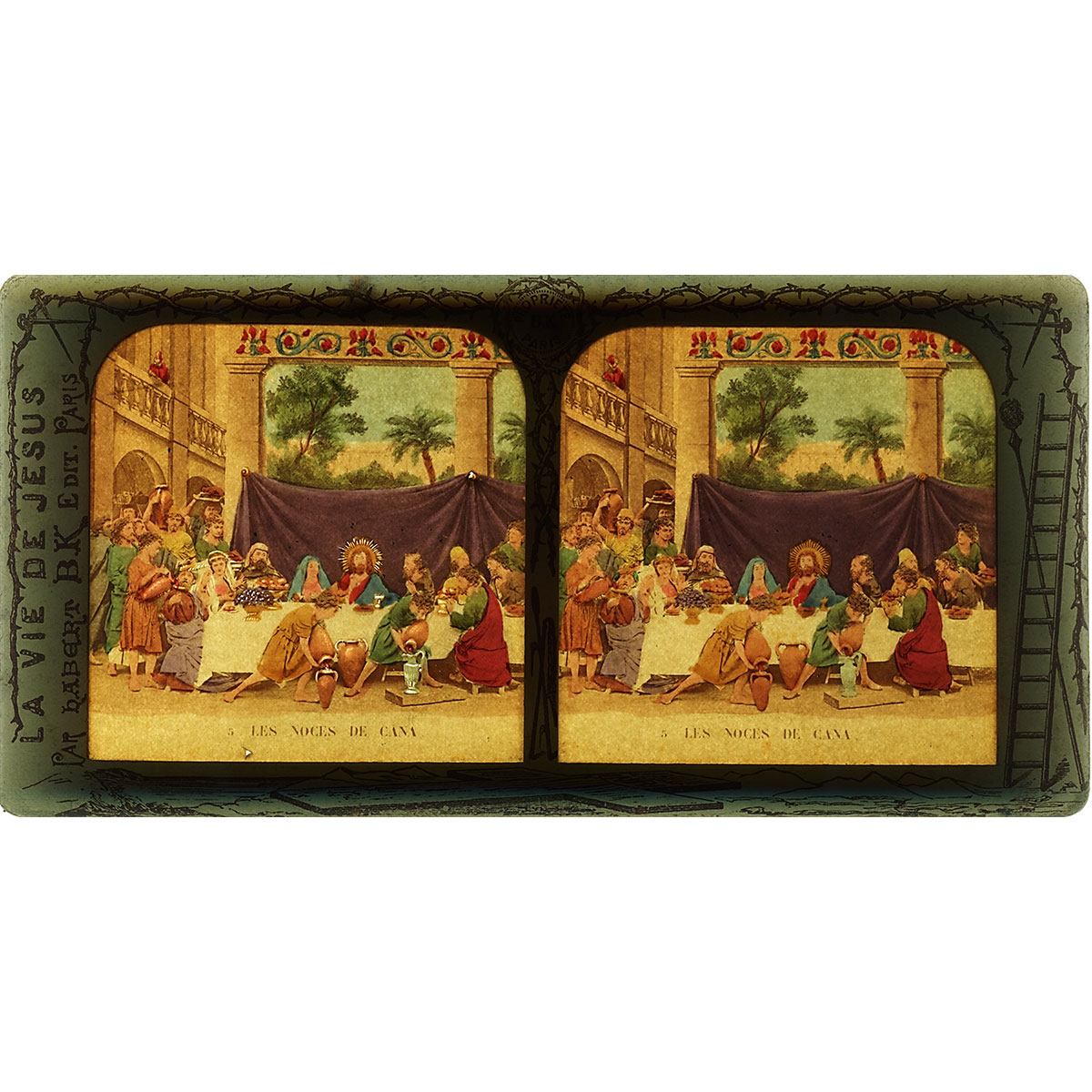
Editions B.K. - stereoscopies no. 5. LES NOCES DE CANA backlit c.1870
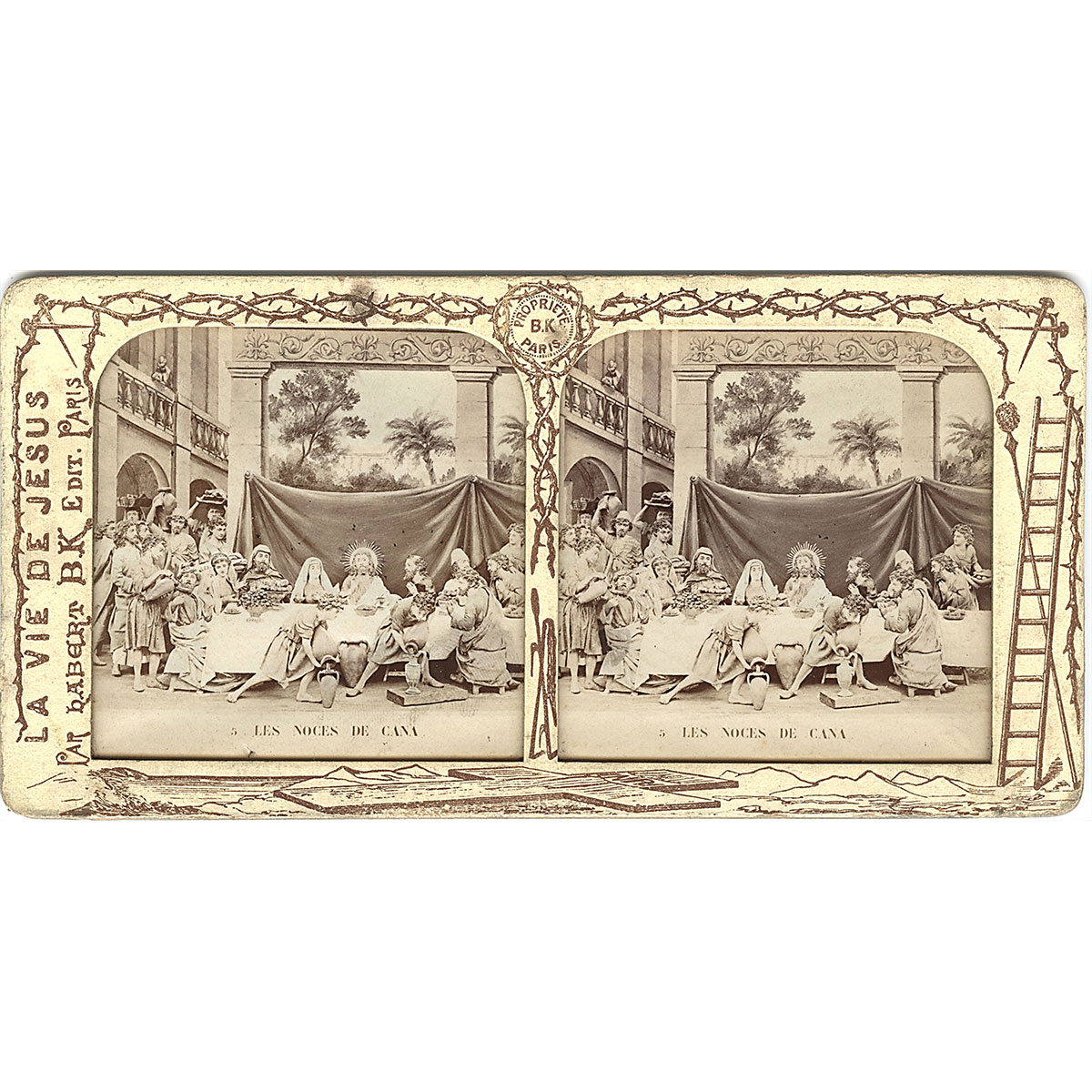
Editions B.K. - stereoscopies no. 5. LES NOCES DE CANA c.1870
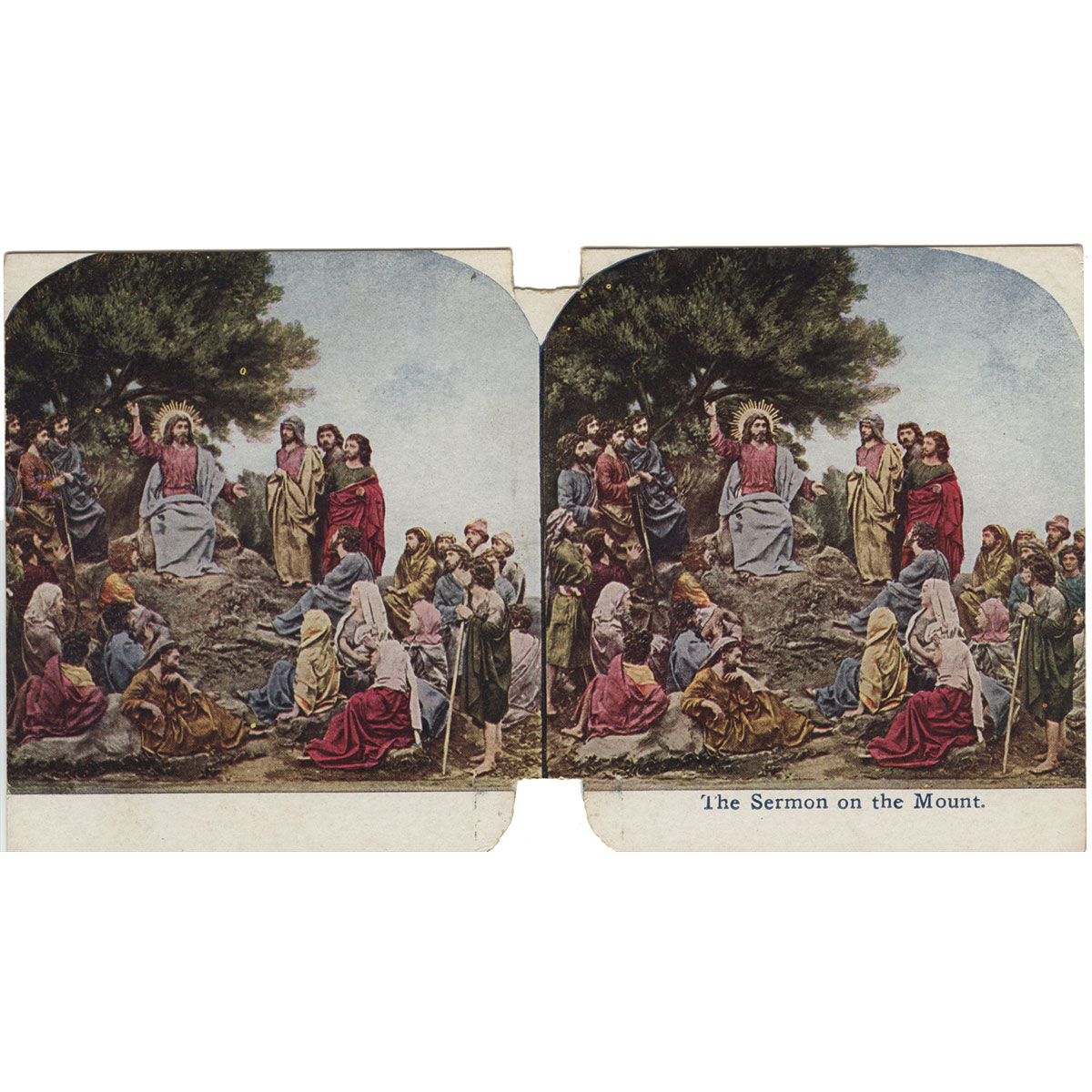
Sculptoscope – The Sermon on the Mount 1929
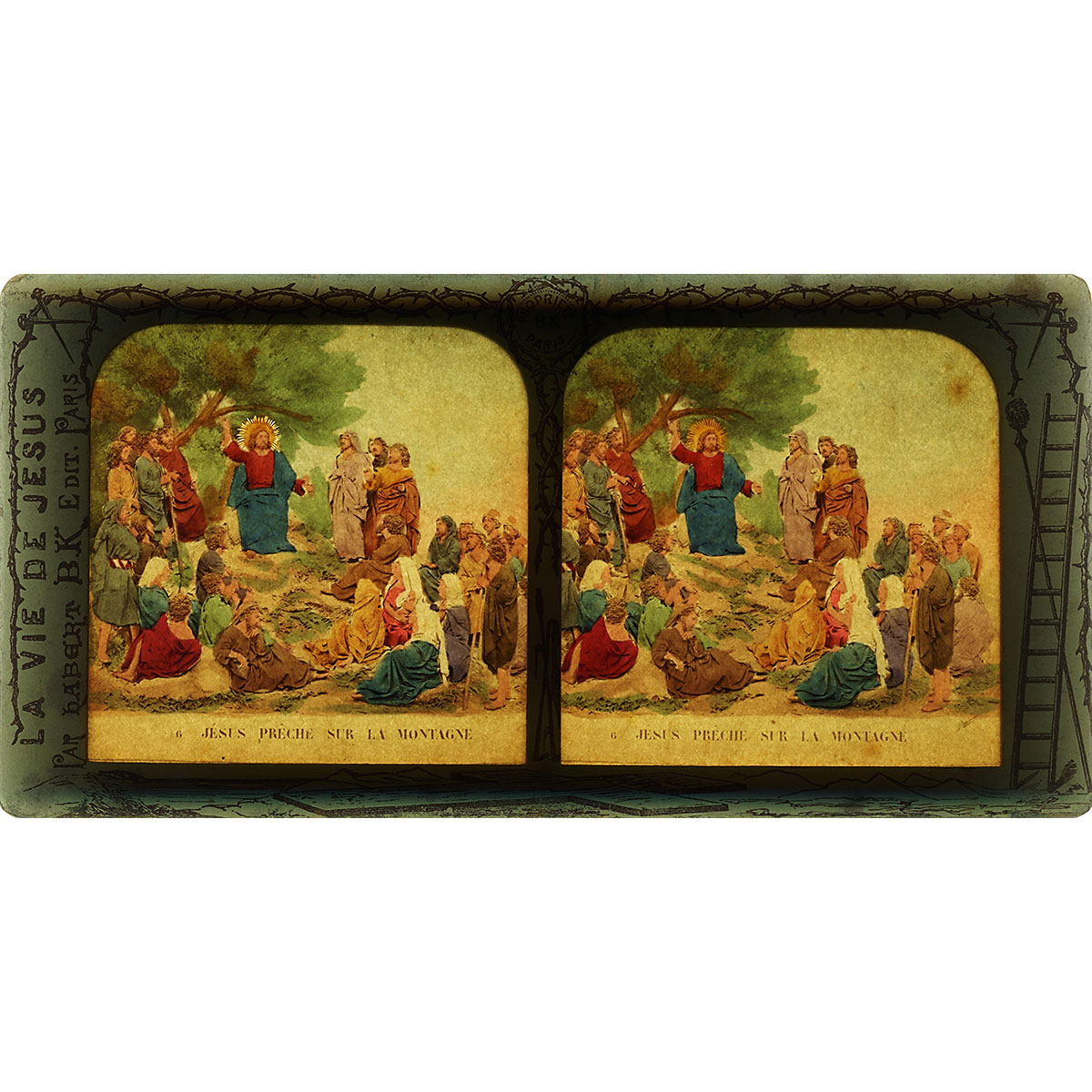
Editions B.K. - stereoscopies no. 6. JÉSUS PRÈCHE SUR LA MONTAGNE backlit c.1870
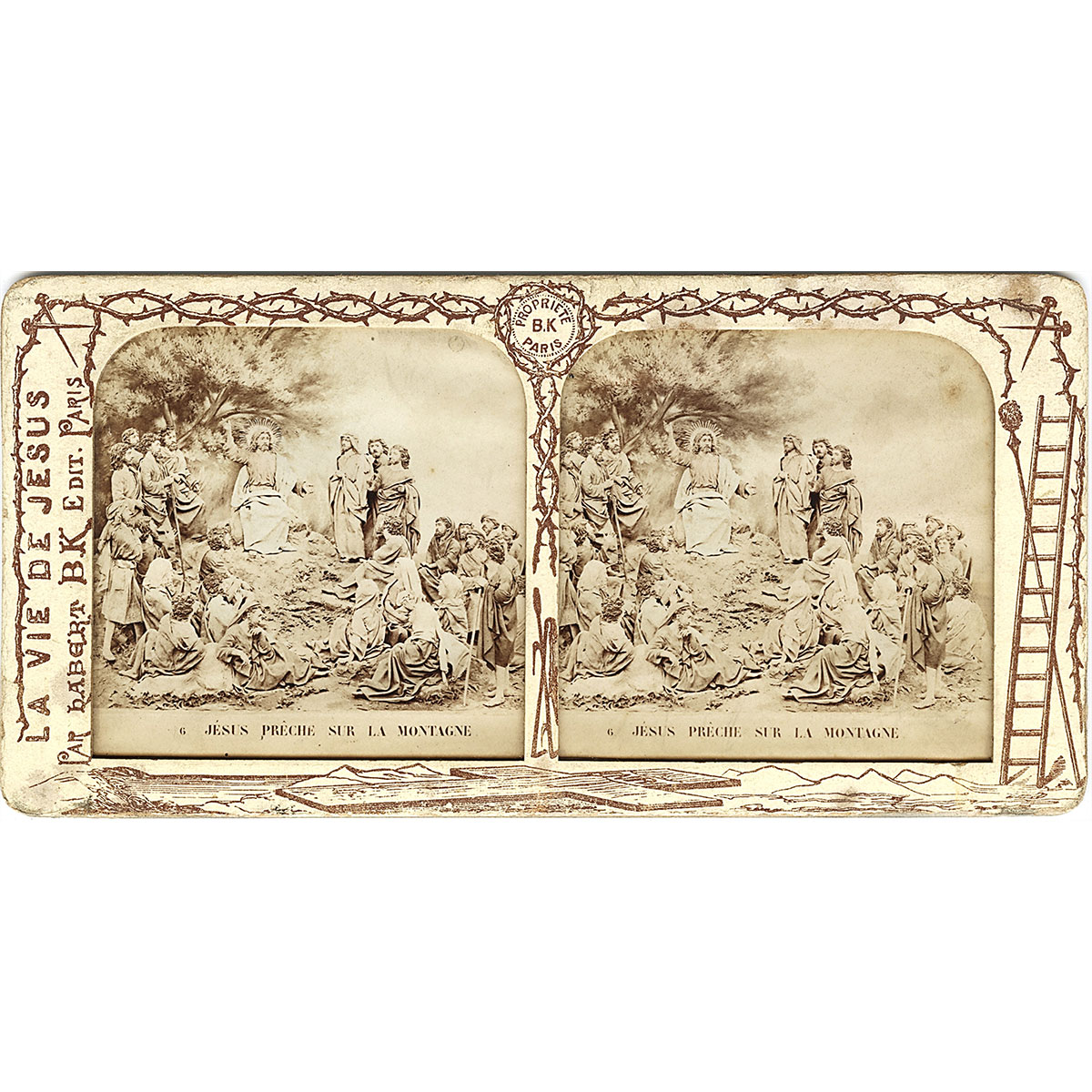
Editions B.K. - stereoscopies no. 6. JÉSUS PRÈCHE SUR LA MONTAGNE c.1870
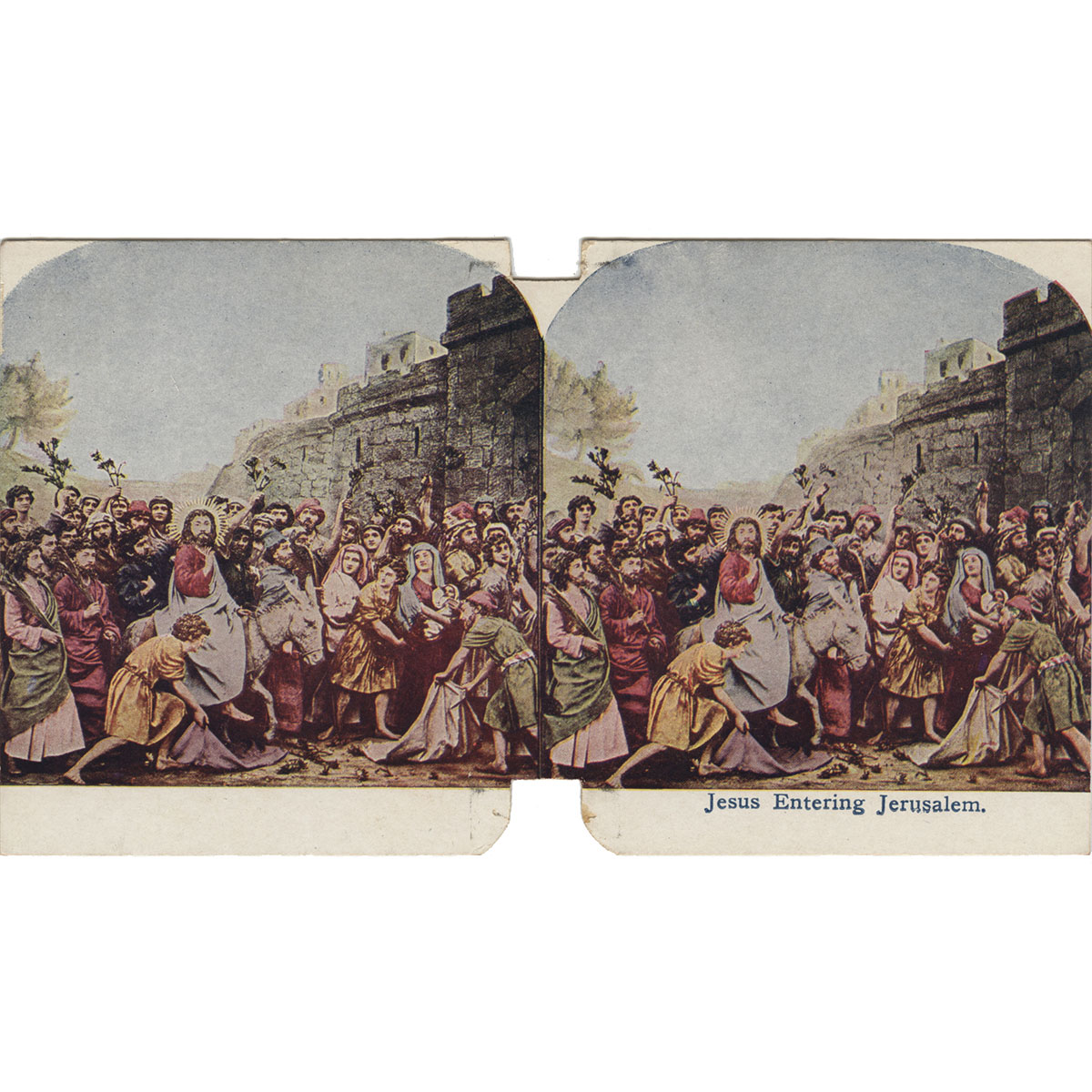
Sculptoscope – Jesus Entering Jerusalem 1929
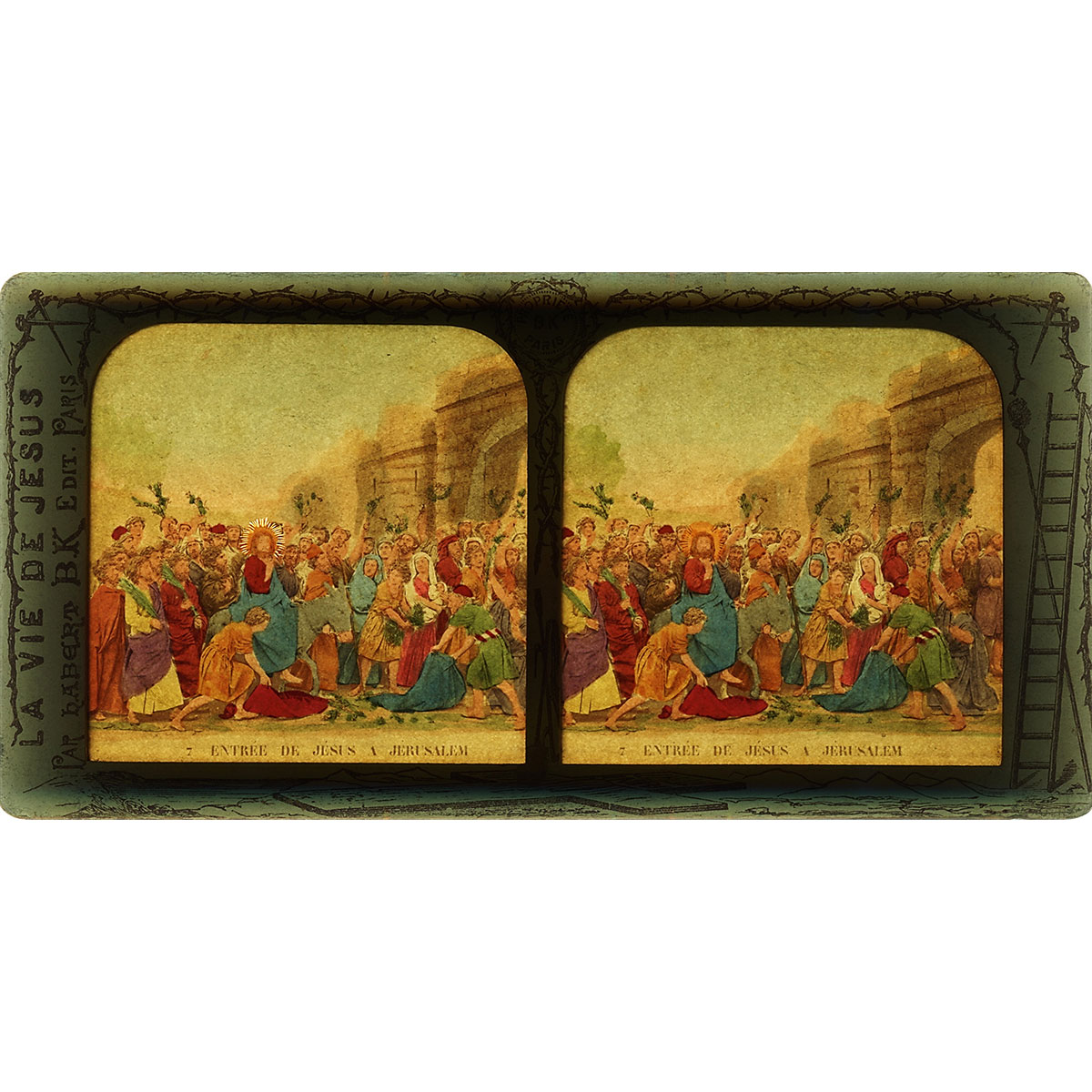
Editions B.K. - stereoscopies no. 7. ENTRÉE DE JÉSUS A JÉRUSALEM backlit c.1870
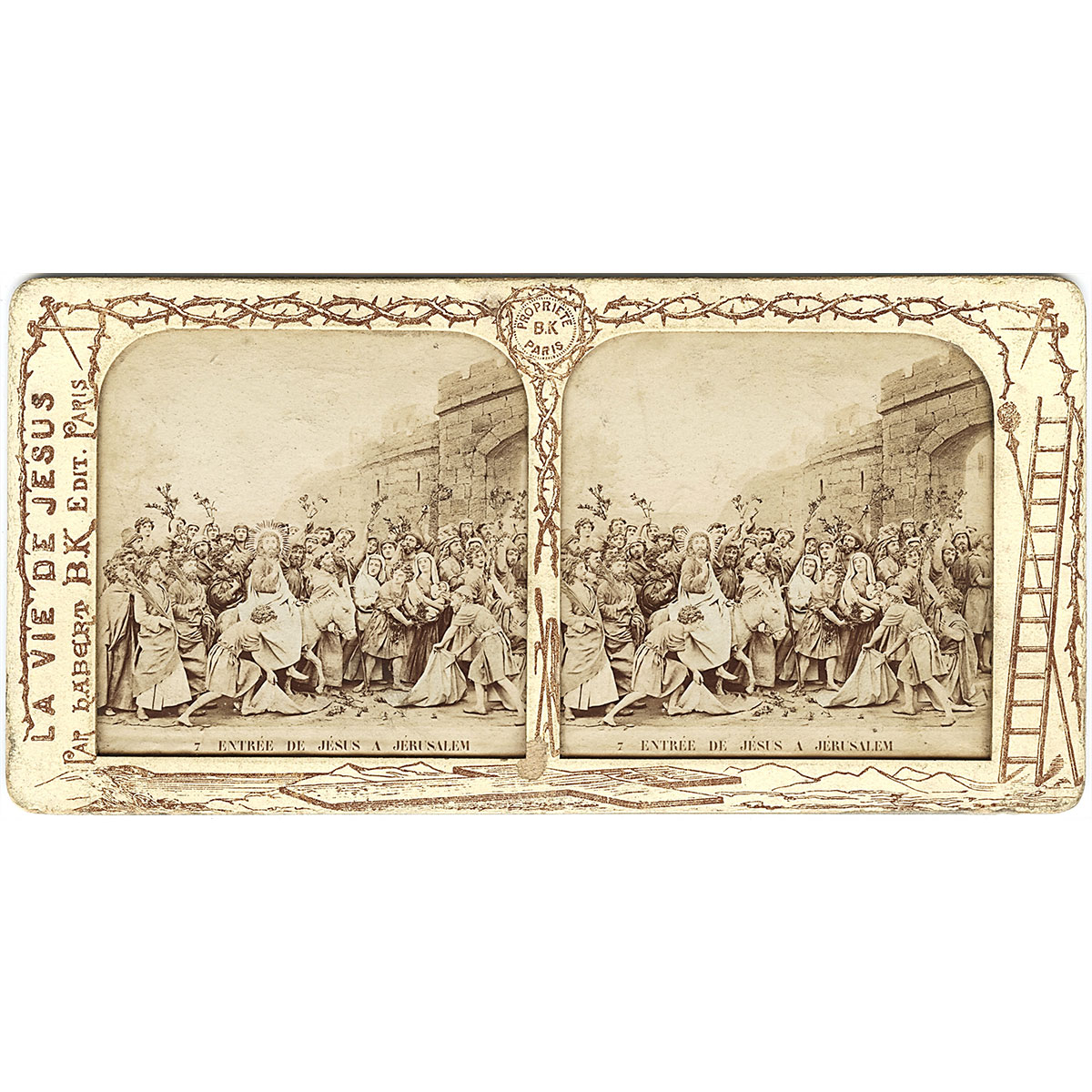
Editions B.K. - stereoscopies no. 7. ENTRY OF JESUS INTO JERUSALEM c.1870
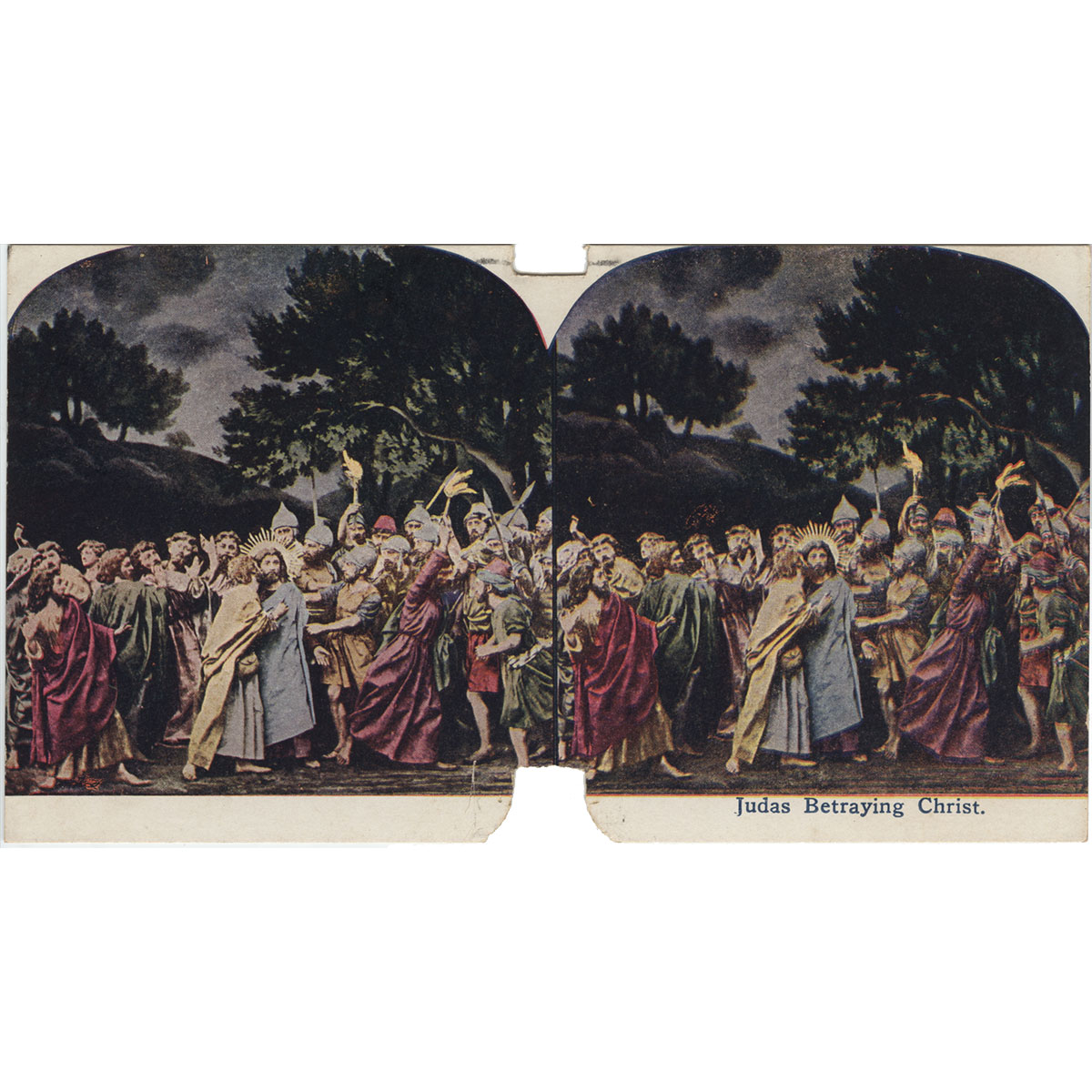
Sculptoscope – Judas Betraying Christ 1929
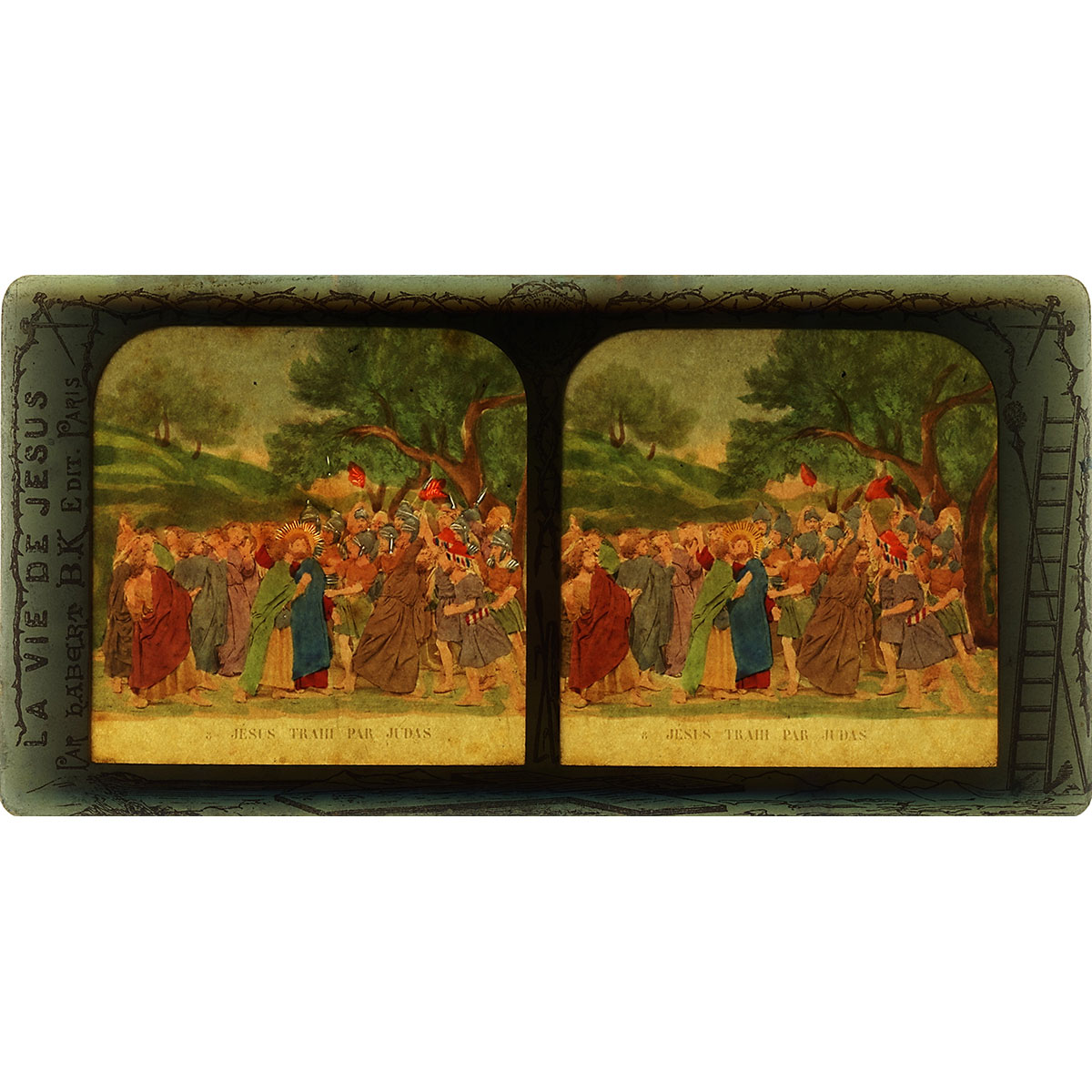
Editions B.K. - stereoscopies no. 8. JESUS TRAHI PAR JUDAS backlit c.1870
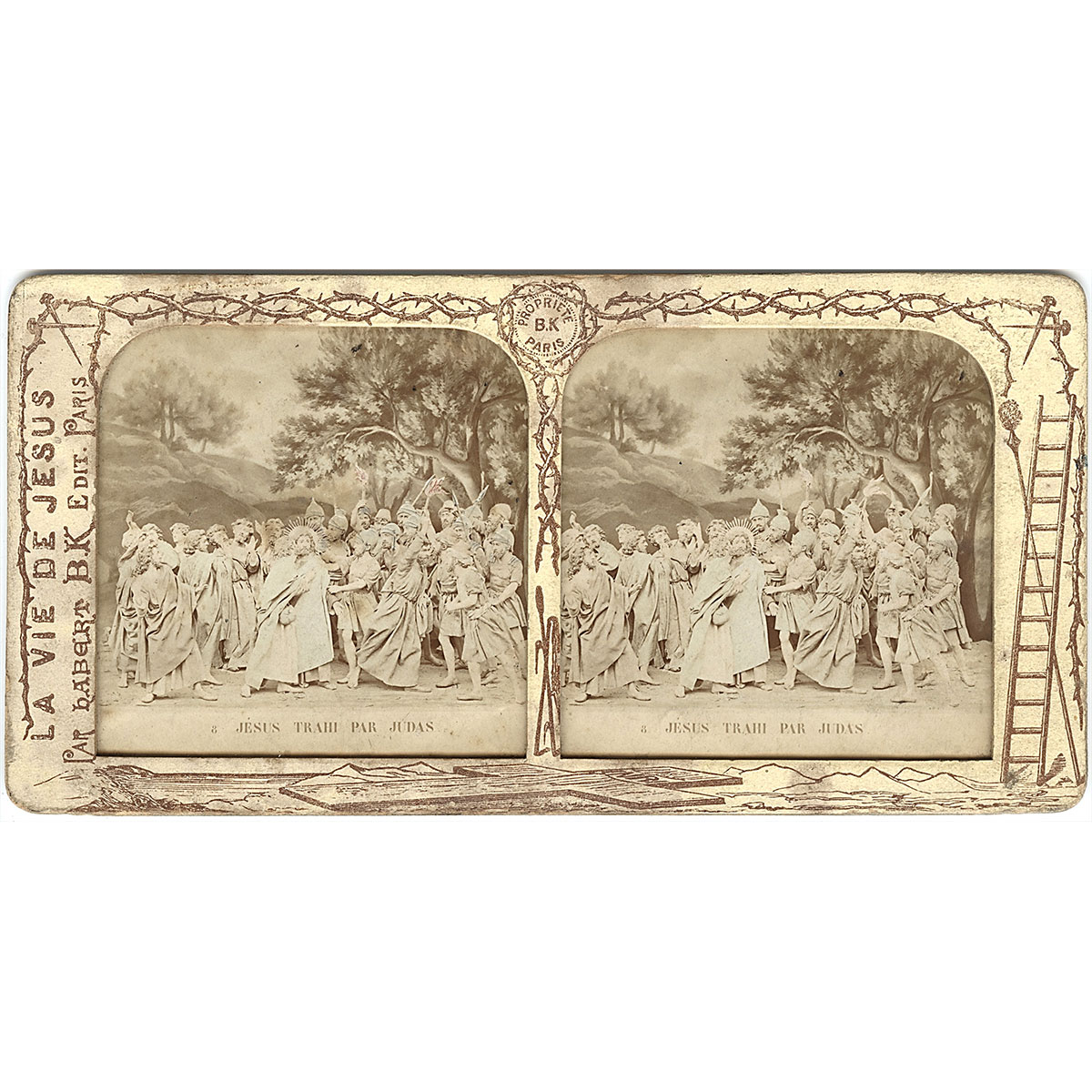
Editions B.K. - stereoscopies no. 8. JESUS TRAHI PAR JUDAS c.1870
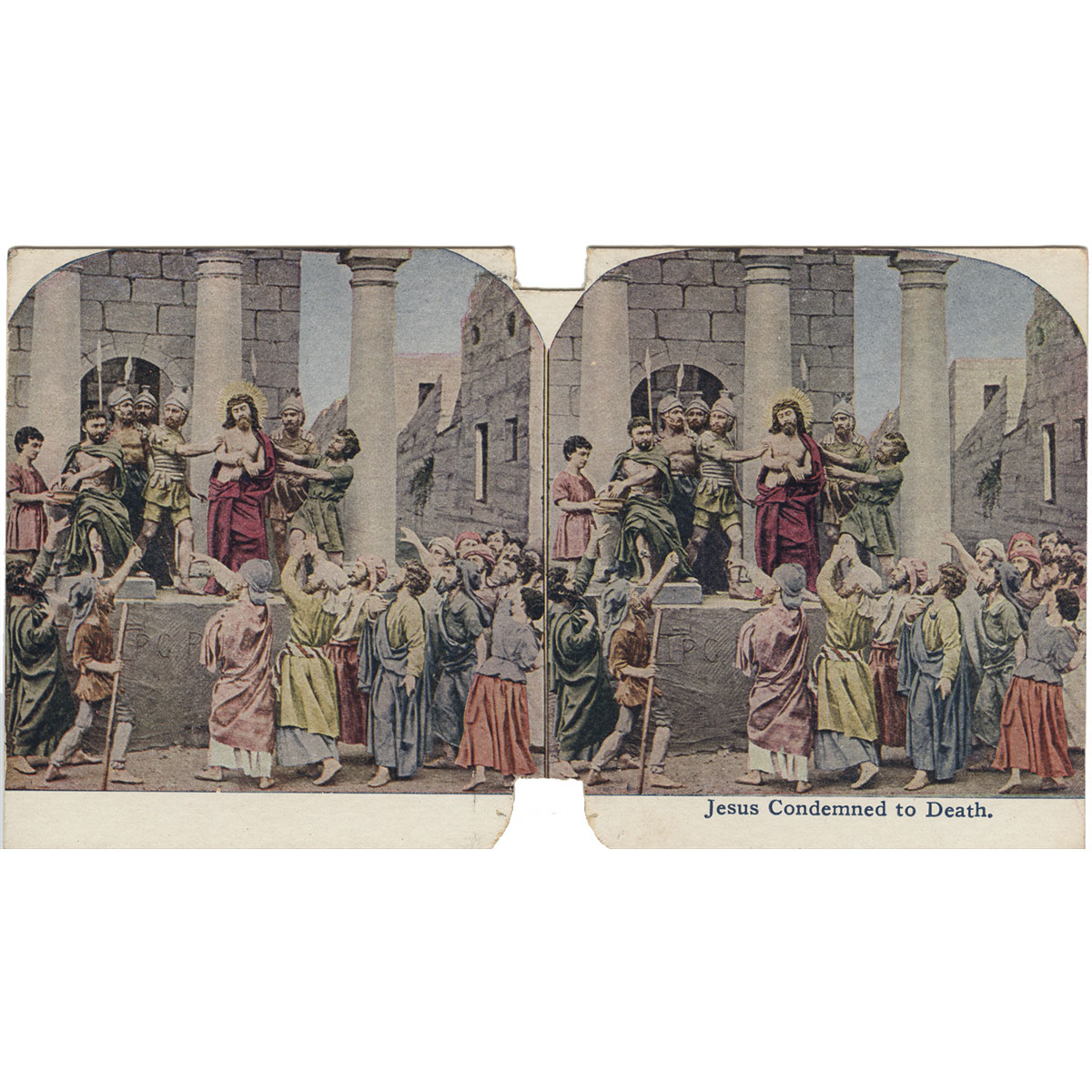
Sculptoscope – Jesus Condemned to Death 1929
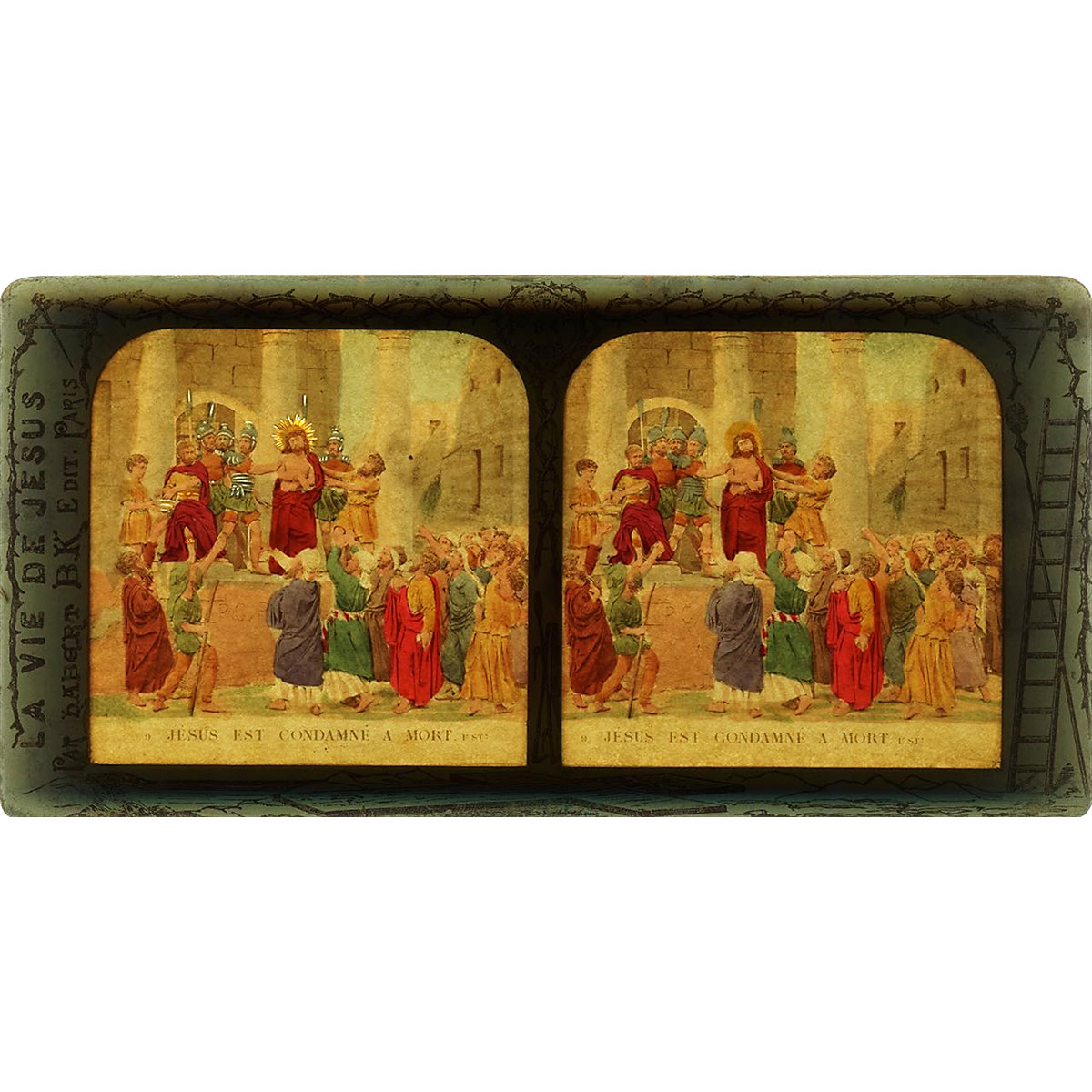
Editions B.K. - stereoscopies no. 9. JÉSUS EST CONDAMNÉ A MORT 1ᵐᵉ STᵒᶰ baclklit c.1870
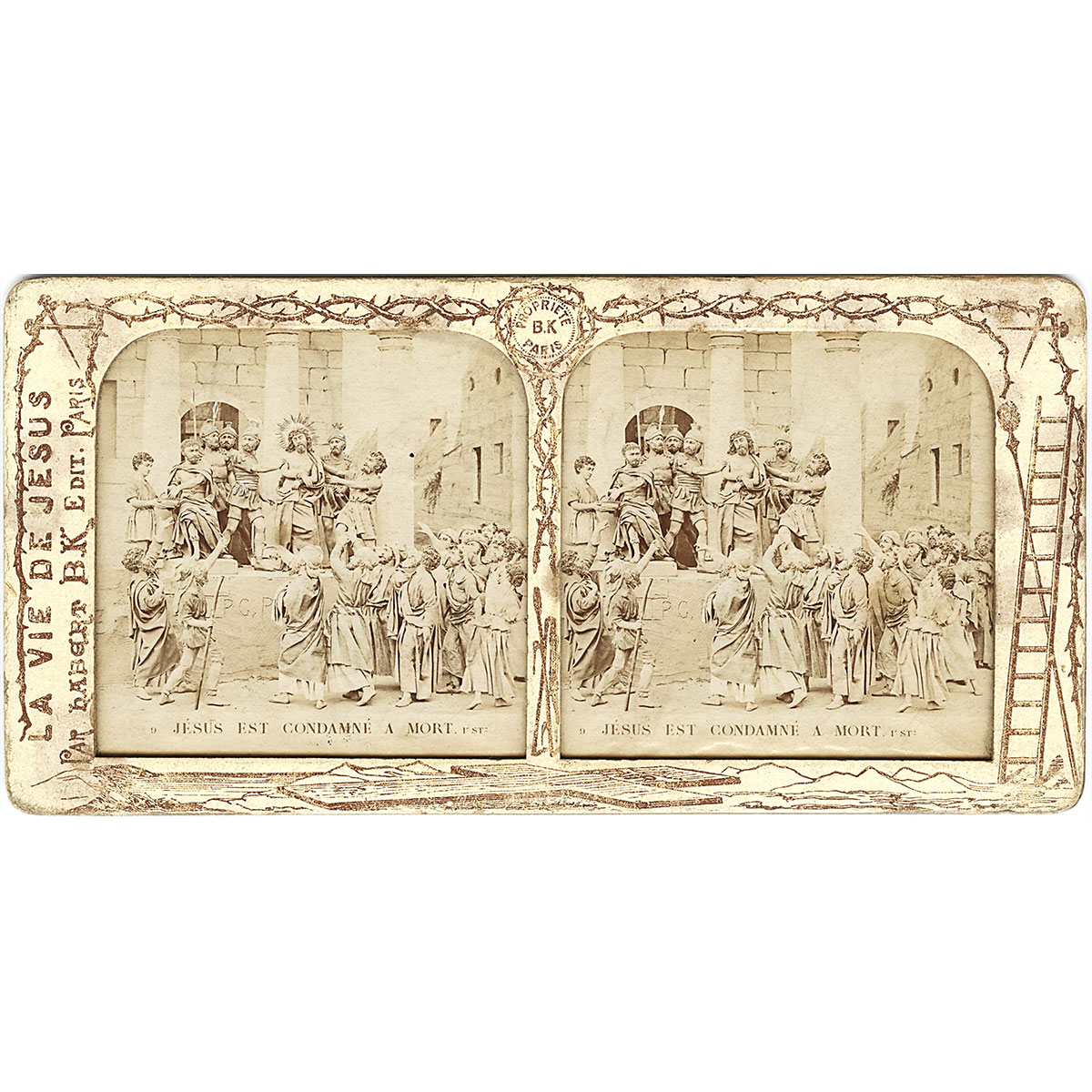
Editions B.K. - stereoscopies no. 9. JÉSUS EST CONDAMNÉ A MORT 1ᵐᵉ STᵒᶰ c.1870
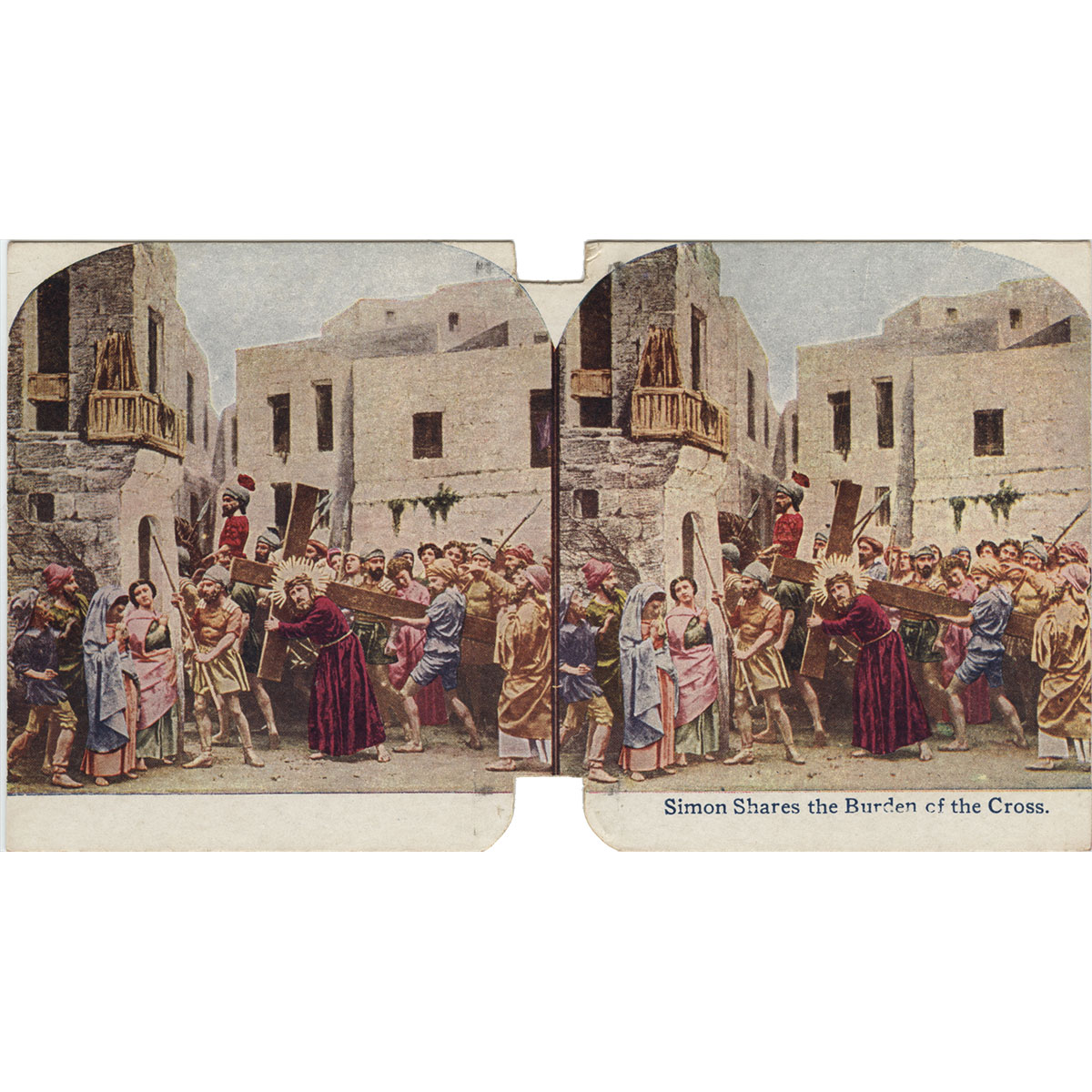
Sculptoscope – Simon Shares the Burden of the Cross 1929
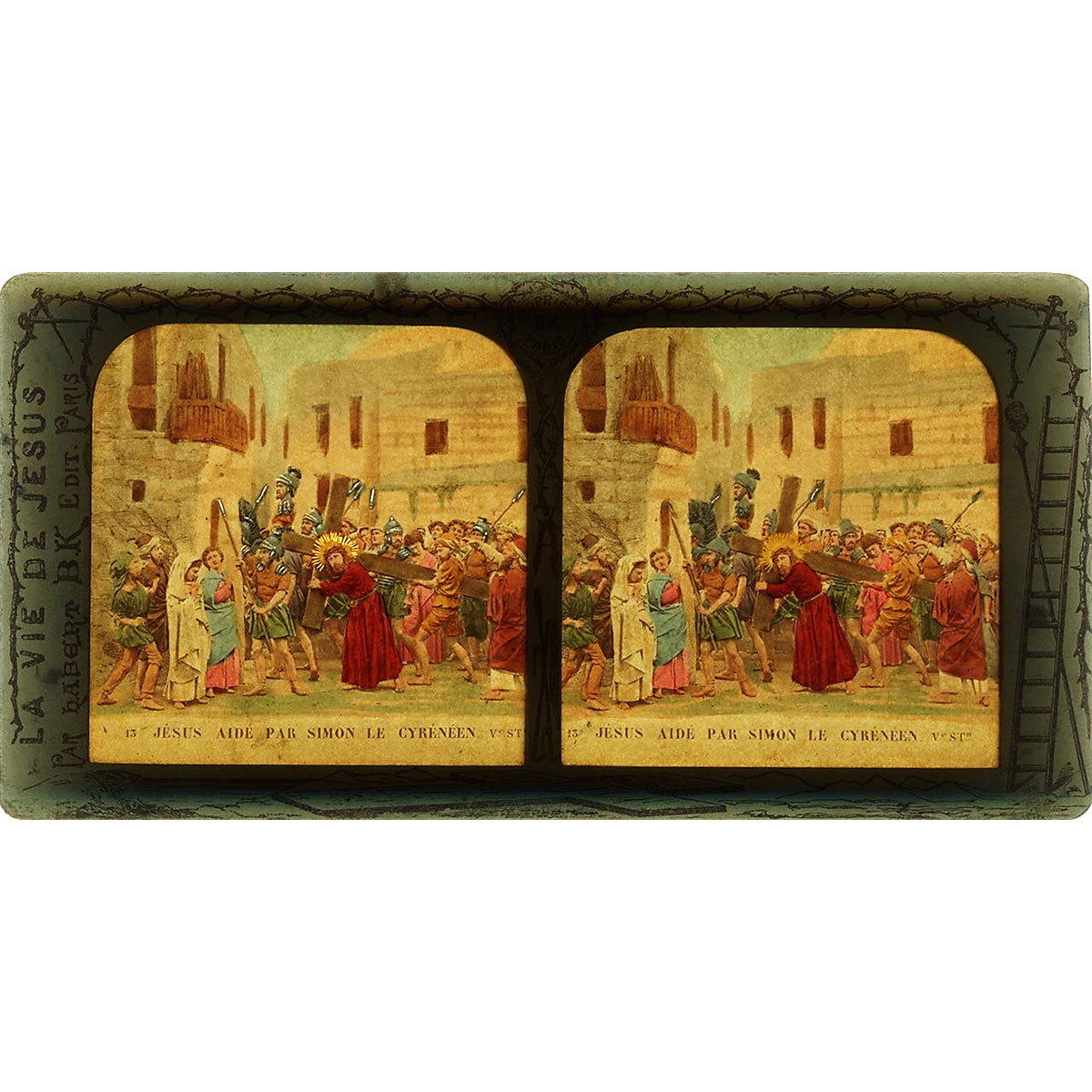
Editions B.K. - stereoscopies nº 13. JÉSUS AIDÉ PAR SIMON LE CYRÉNÉEN Vᵐᵉ STᵒᶰ baclklit c.1870
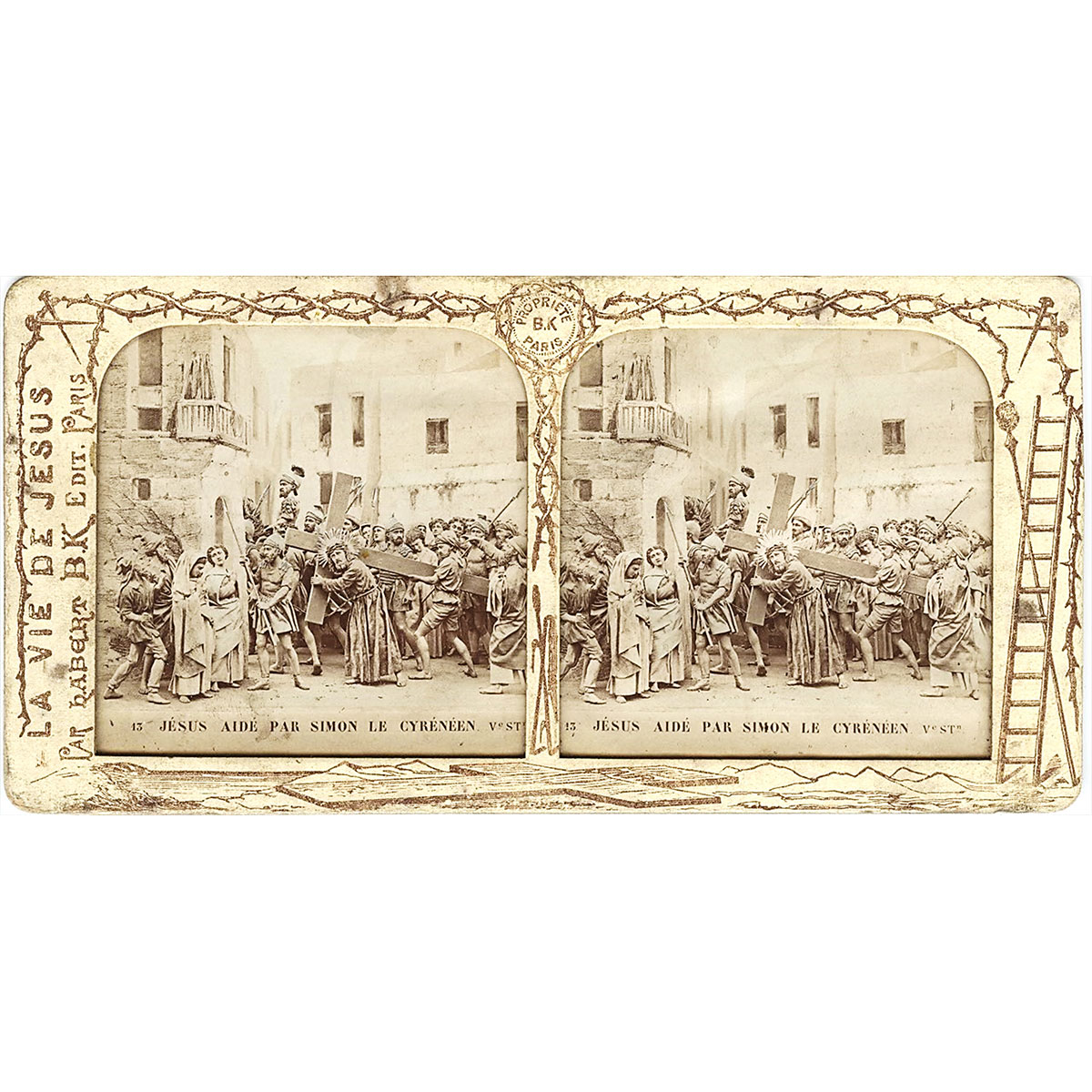
Editions B.K. - stereoscopies No. 13. JÉSUS AIDÉ PAR SIMON LE CYRÉNÉEN Vᵐᵉ STᵒᶰ c.1870
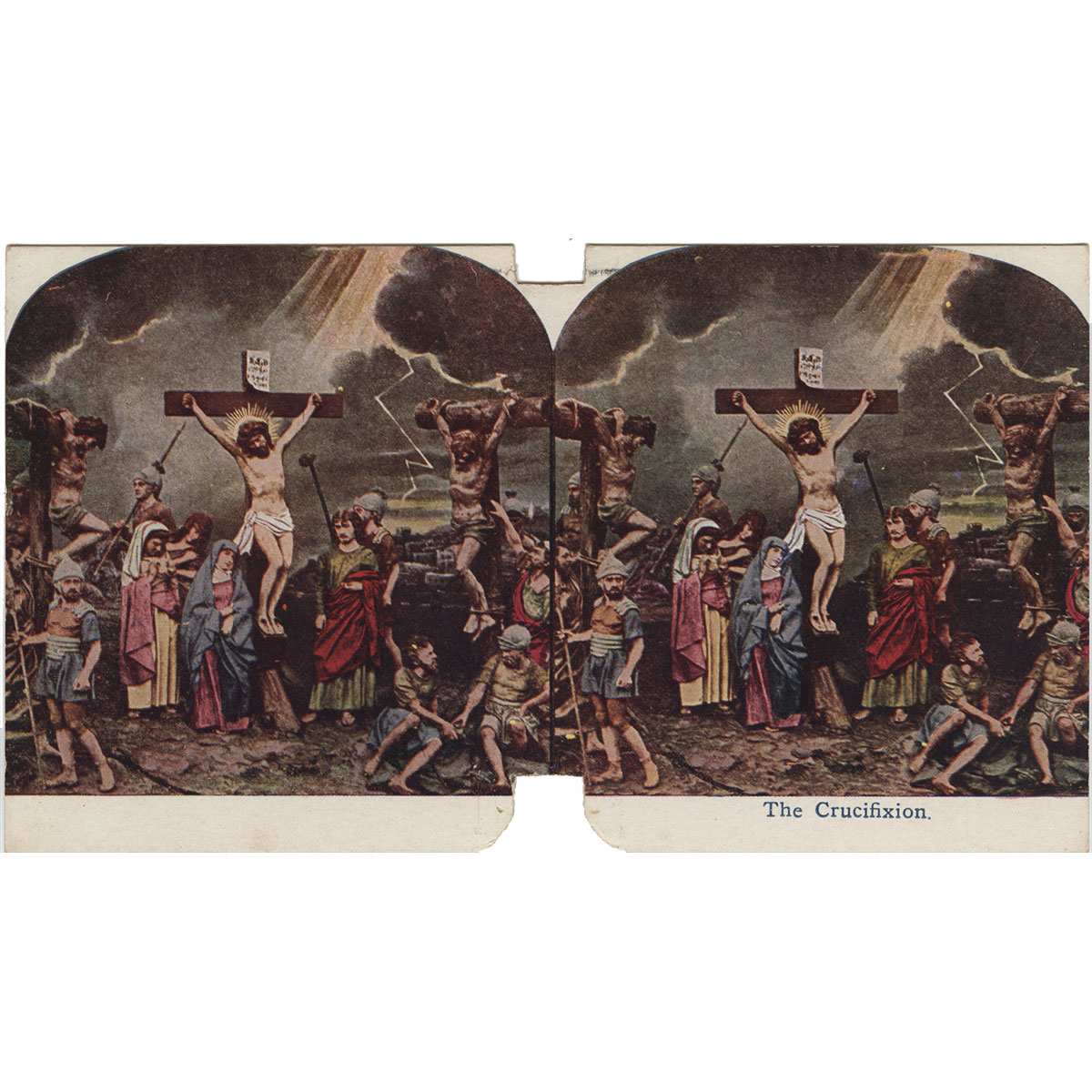
Sculptoscope – The Crucifixion 1929
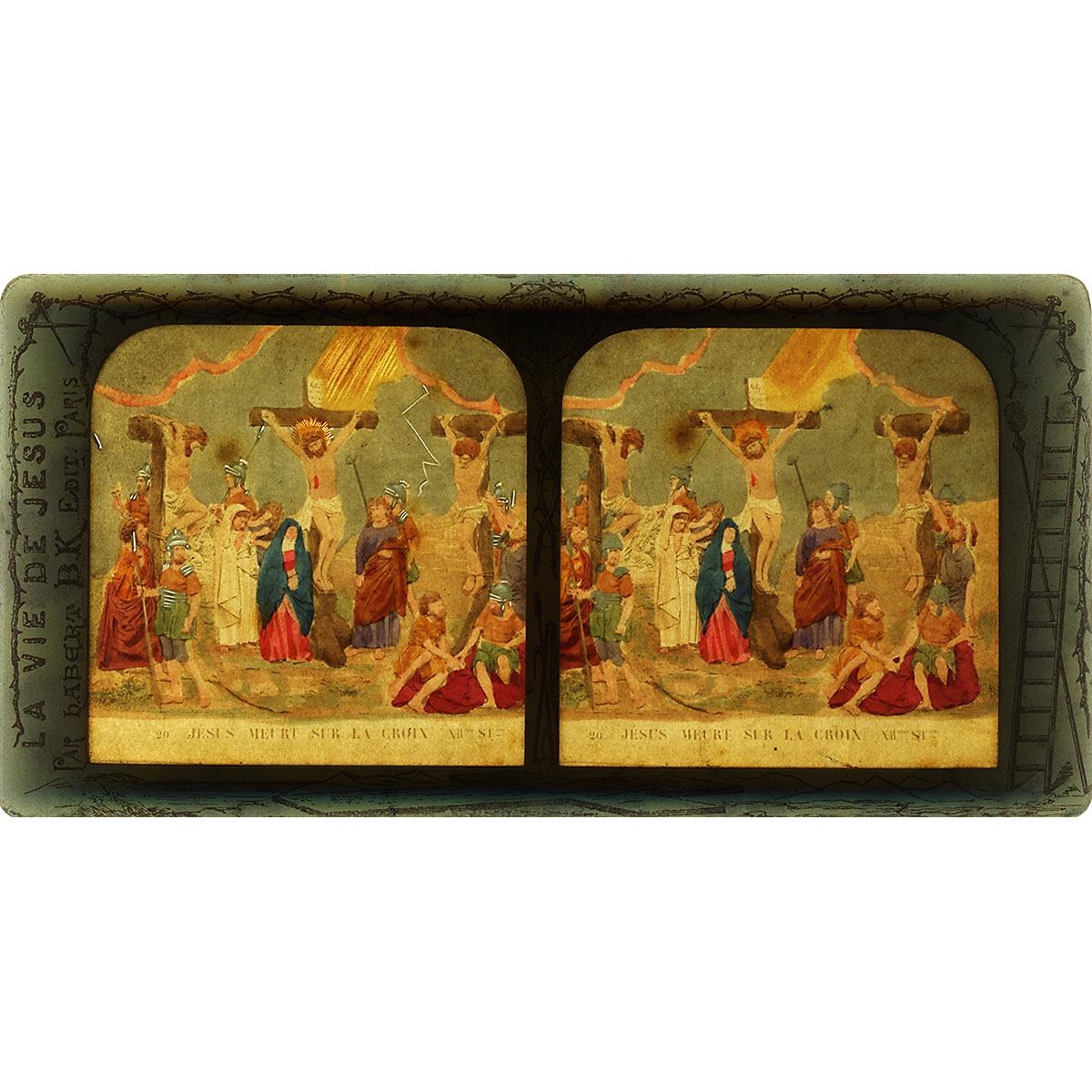
Editions B.K. - stereoscopies nº 20. JÉSUS MEURT SUR LA CROIX XIIᵐᵉ STᵒᶰ baclklit c.1870
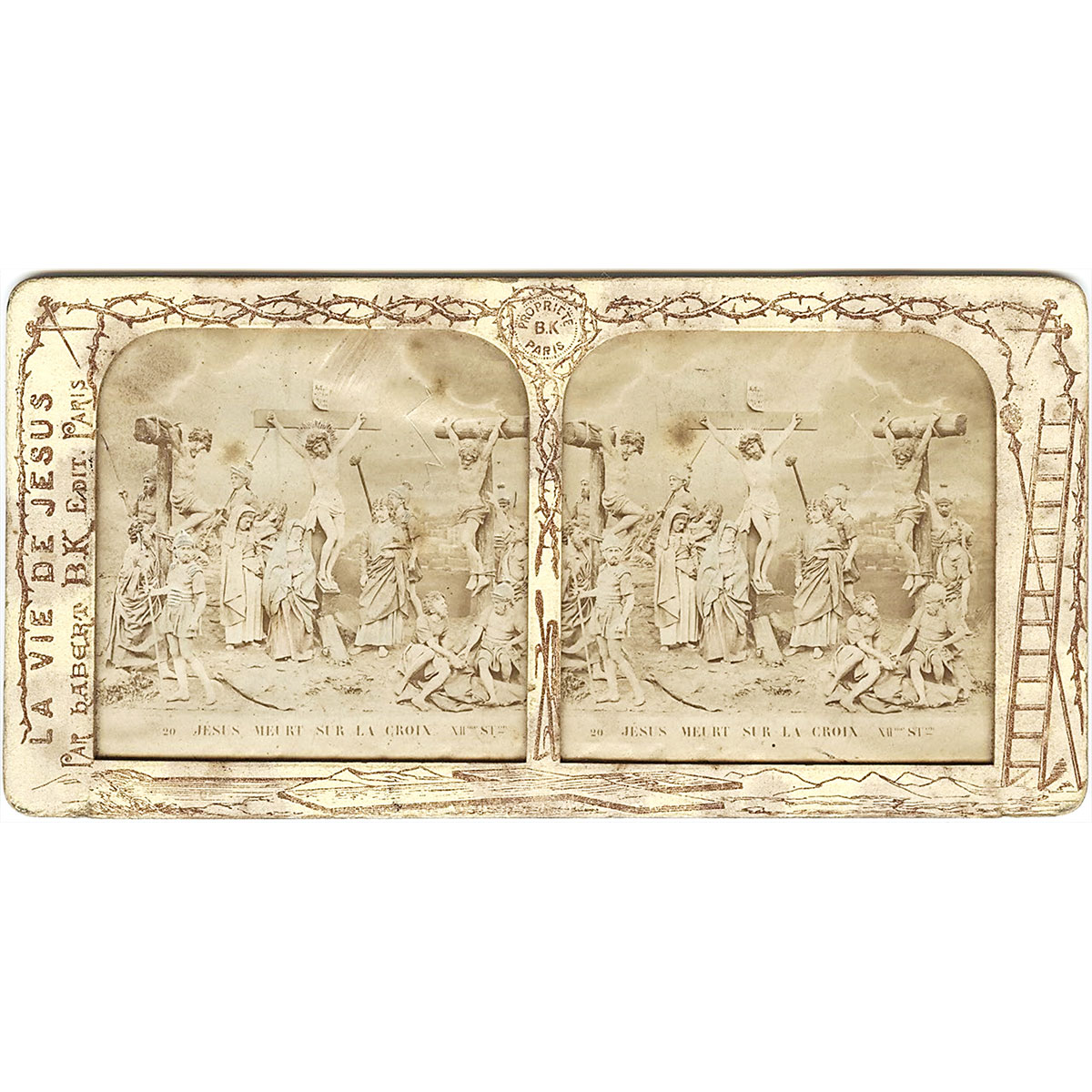
Editions B.K.- stereoscopies no. 20. JÉSUS MEURT SUR LA CROIX XIIᵐᵉ STᵒᶰ c.1870
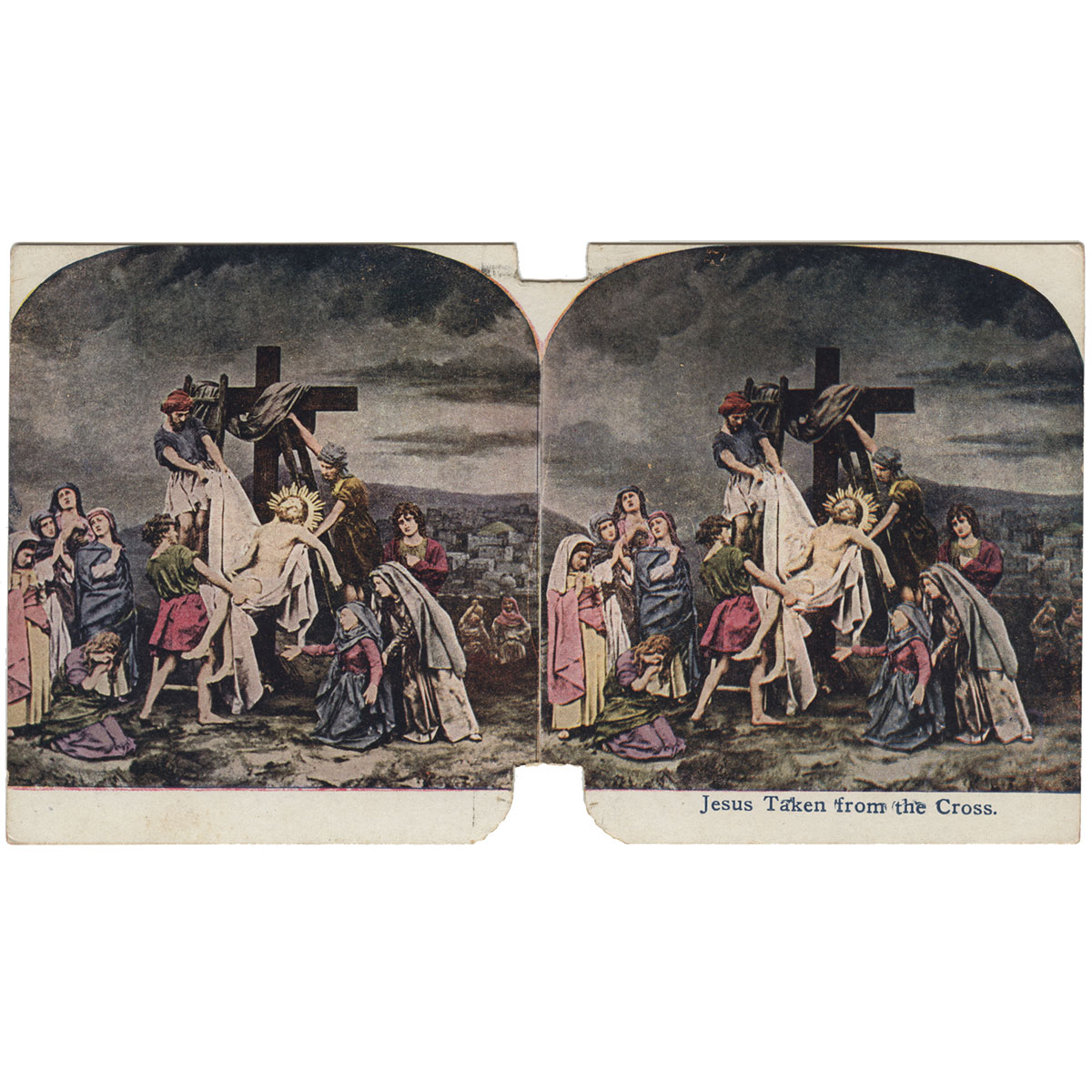
Sculptoscope - Jesus Taken from the Cross 1929
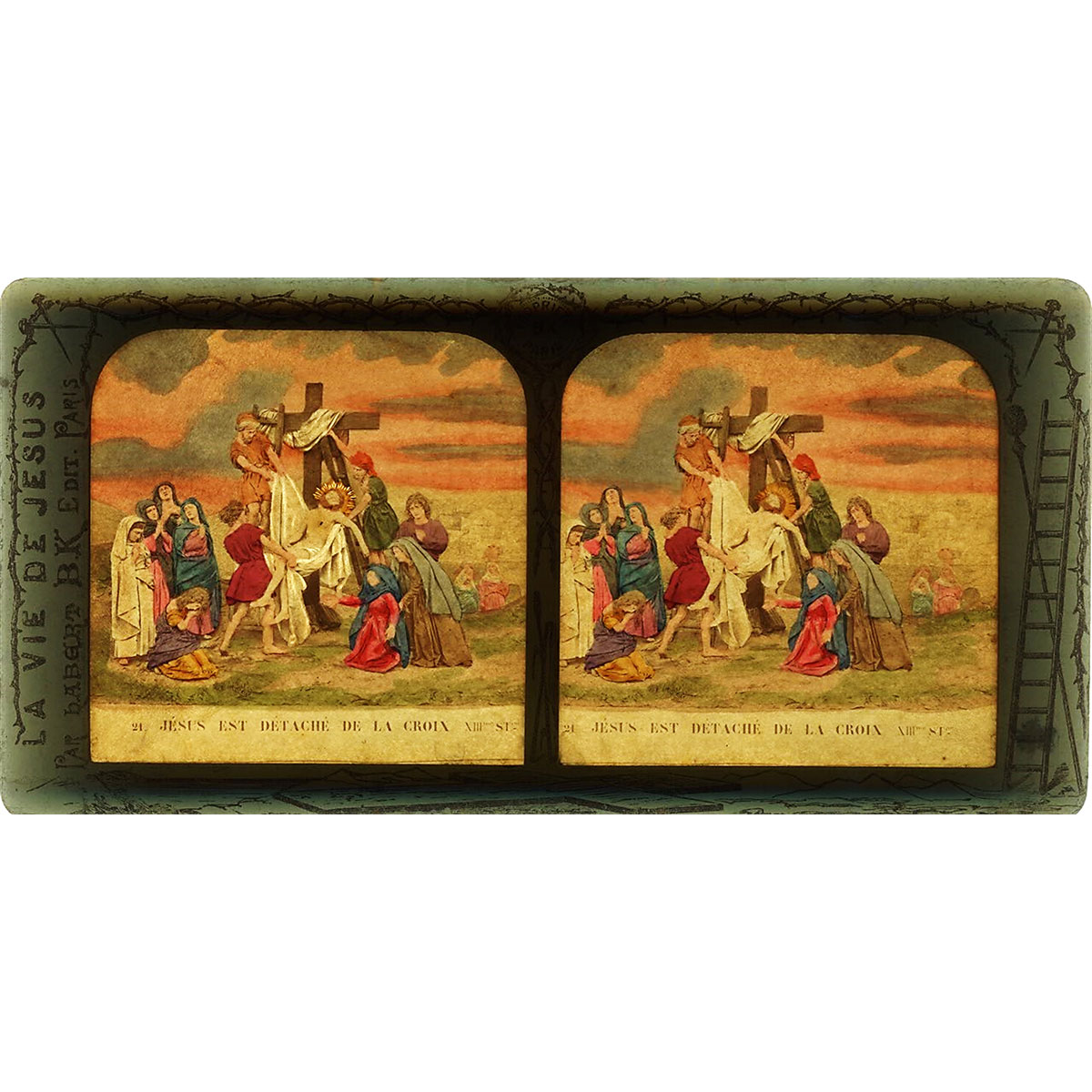
Editions B.K. - stereoscopies no. 21. JÉSUS EST DÉTACHÉ DE LA CROIX XIIIᵐᵉ STᵒᶰ baclklit c.1870
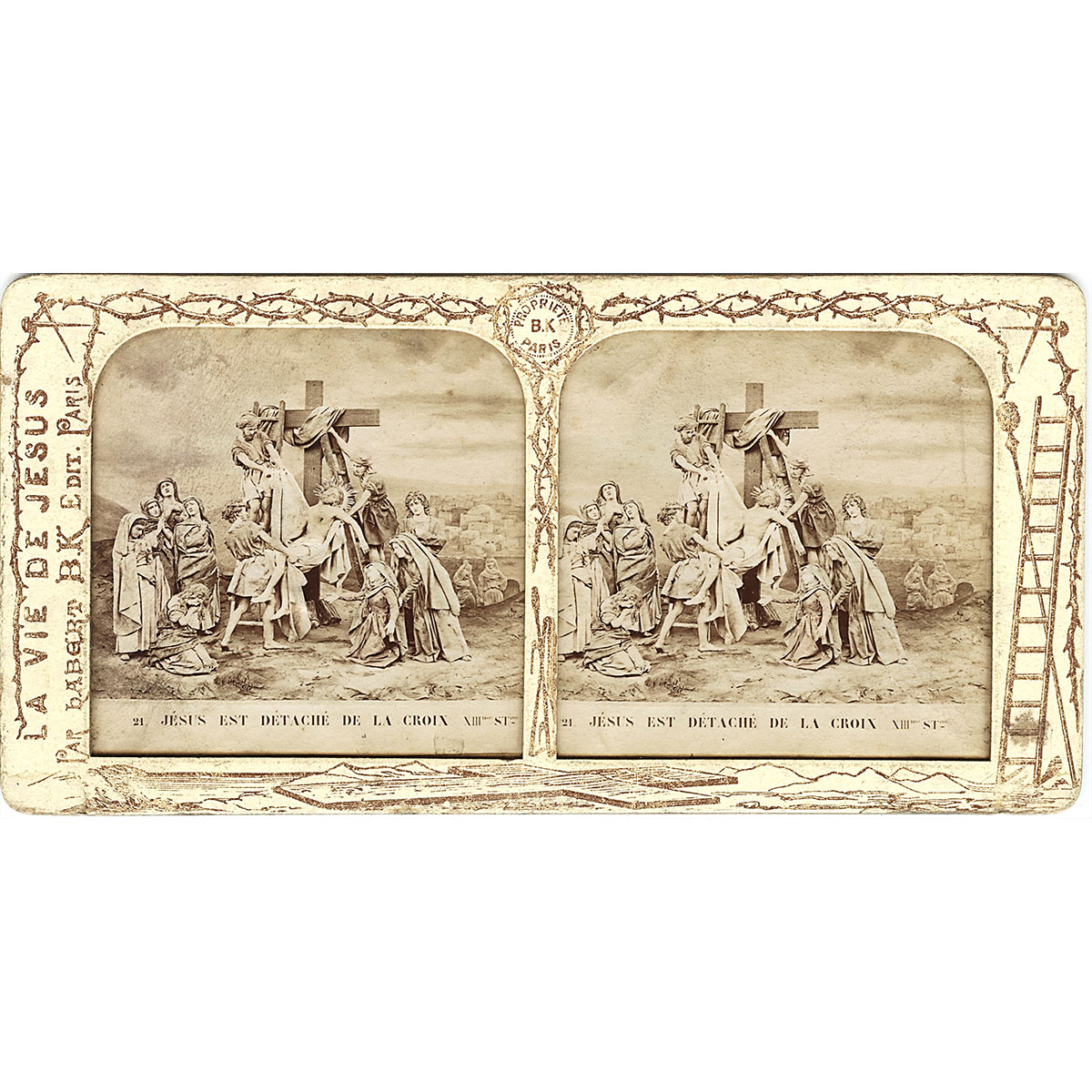
Editions B.K. - stereoscopies no. 21. JÉSUS EST DÉTACHÉ DE LA CROIX XIIIᵐᵉ STᵒᶰ c.1870
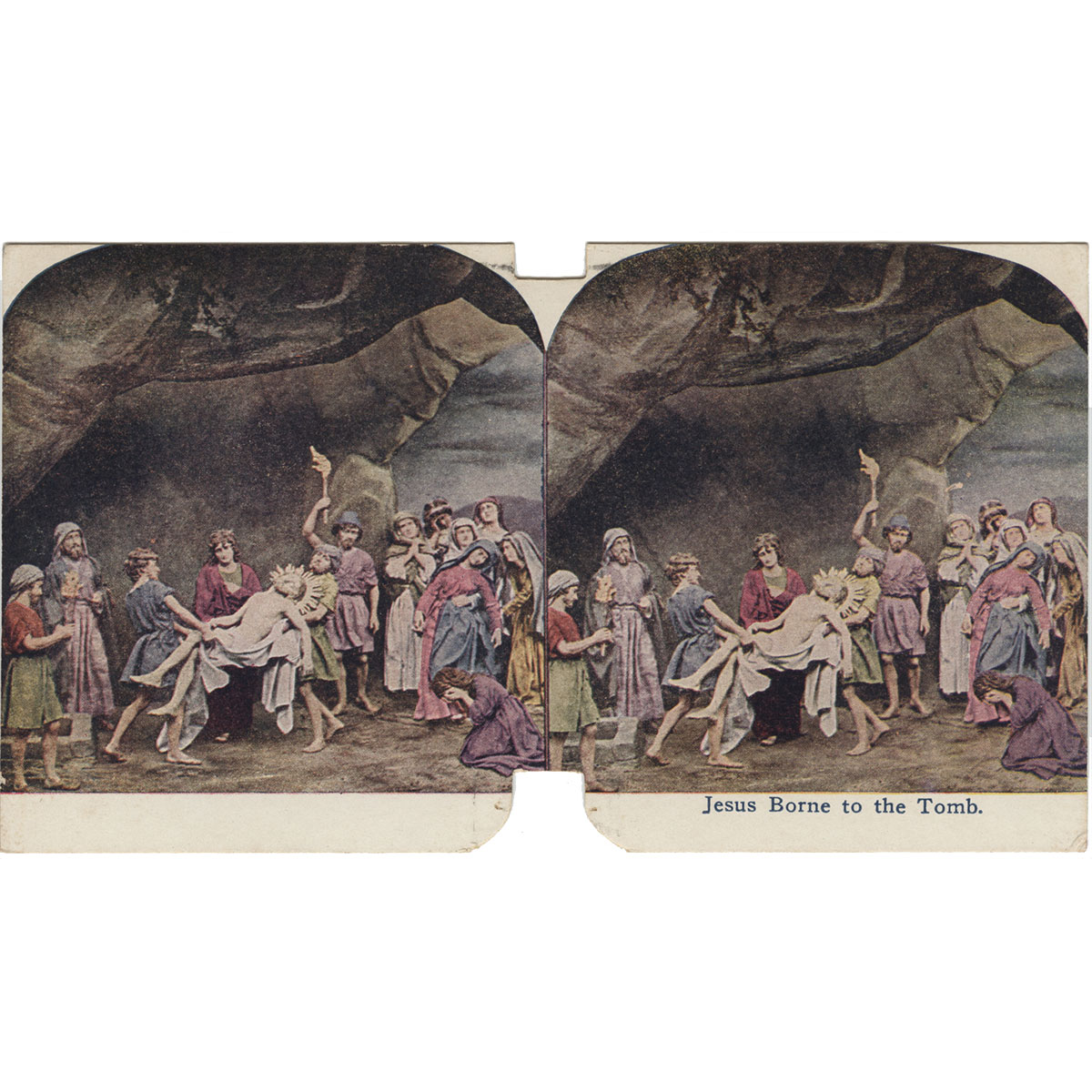
Sculptoscope – Jesus Borne to the Tomb 1929
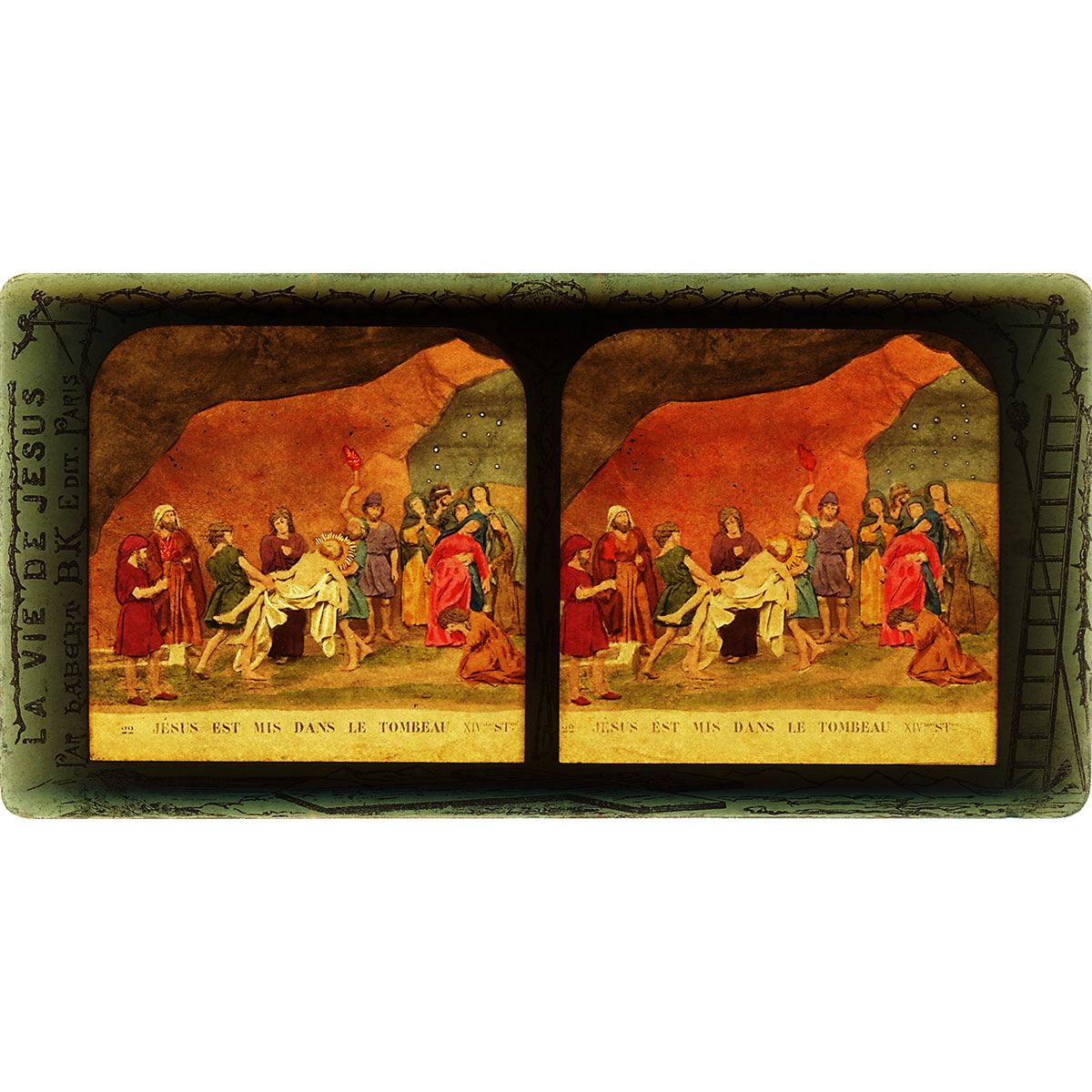
Editions B.K. - stereoscopies nº 22. JÉSUS EST MIS DANS LE TOMBEAU XIVᵐᵉ STᵒᶰ baclklit c.1870
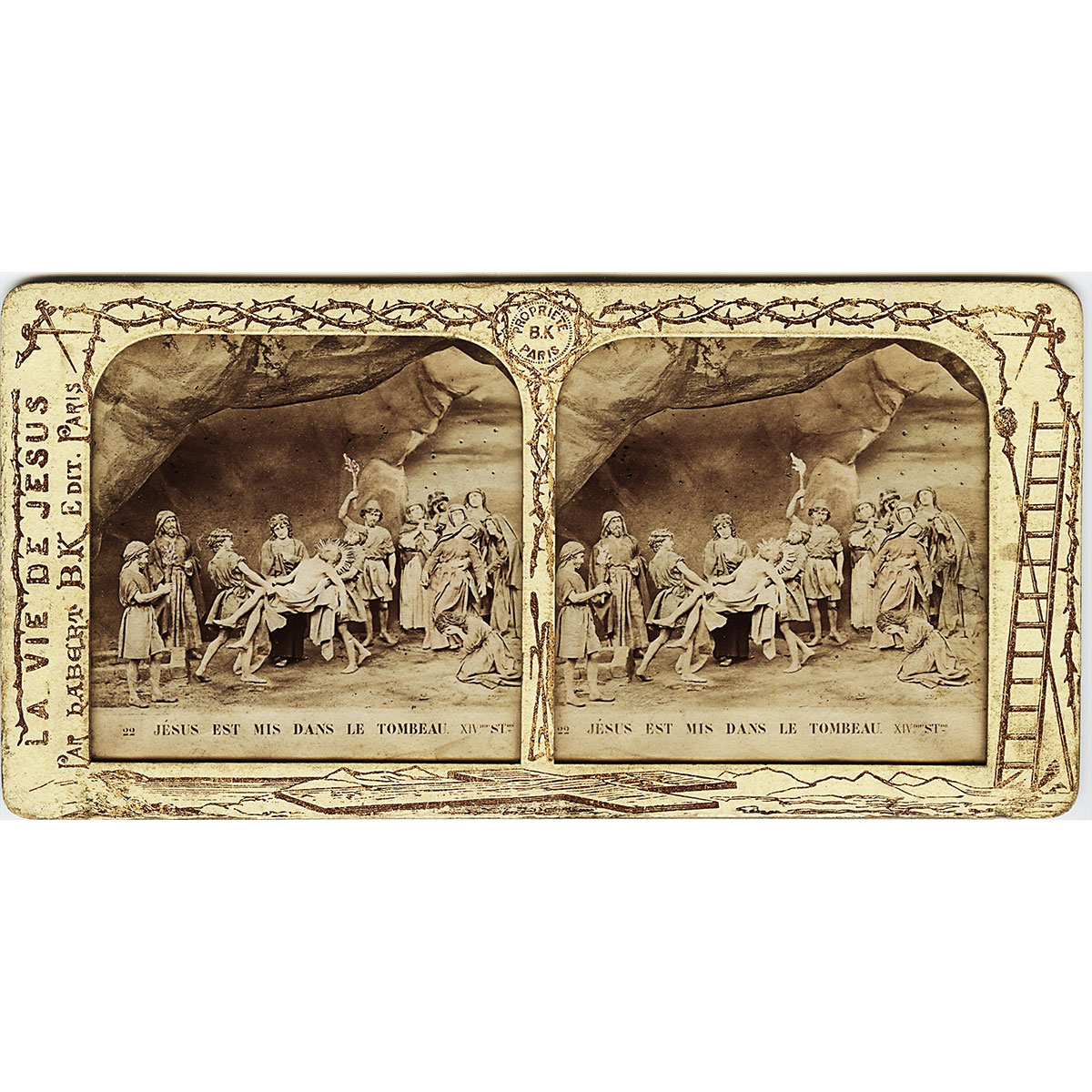
Editions B.K. - stereoscopies no. 22. JÉSUS EST MIS DANS LE TOMBEAU XIVᵐᵉ STᵒᶰ c.1870
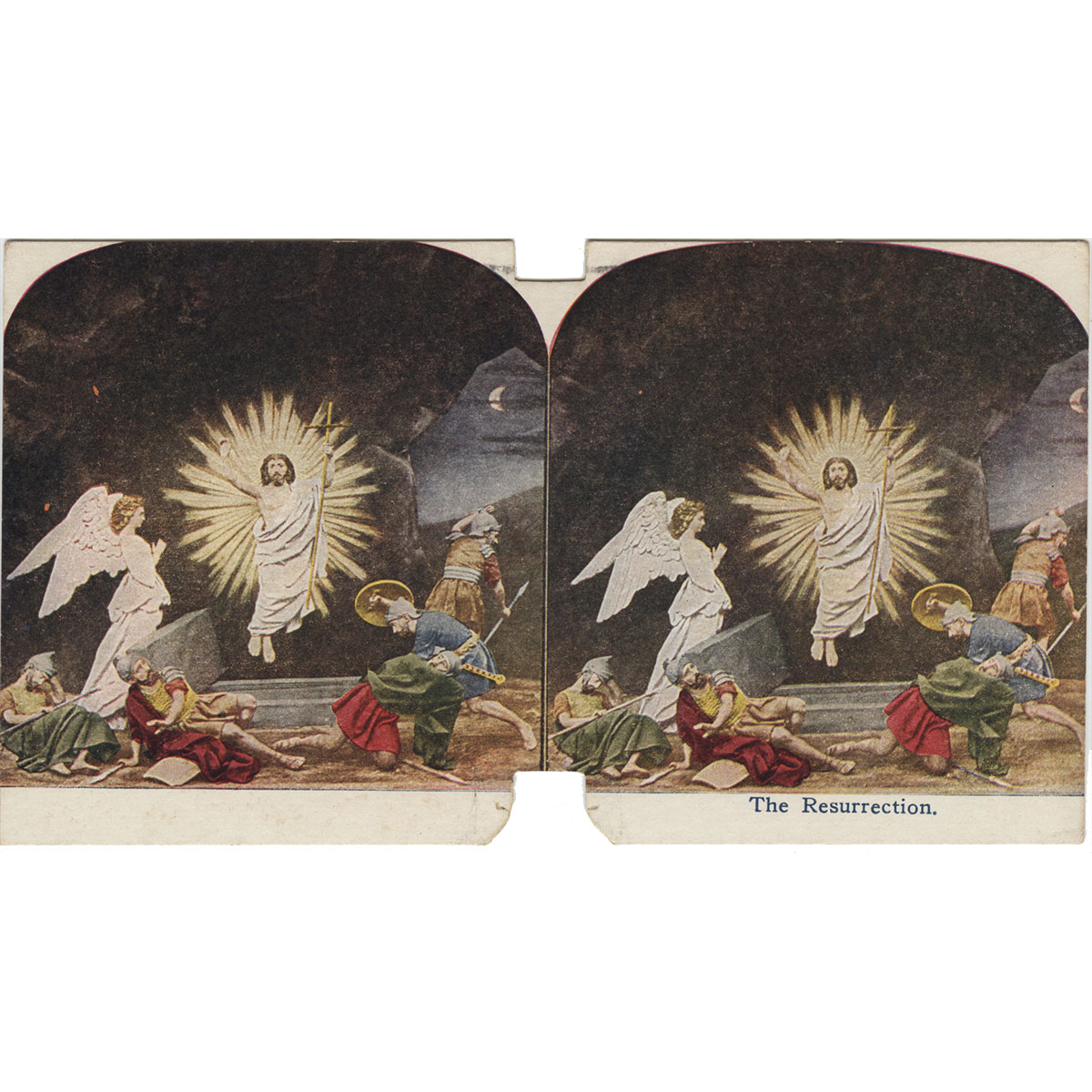
Sculptoscope - The Resurrection 1929
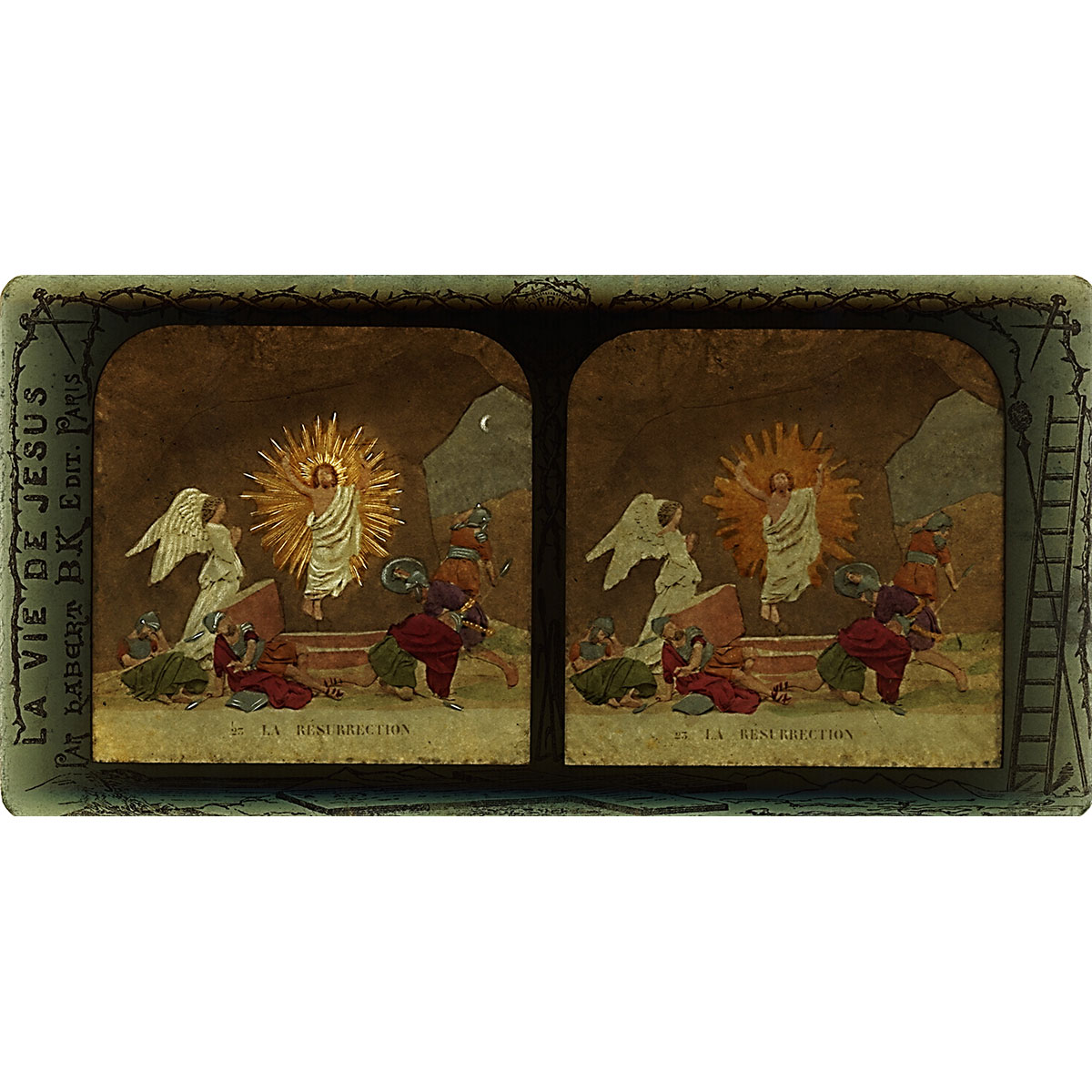
Editions B.K. - stereoscopies no. 23. LA RÉSURRECTION backlit c.1870
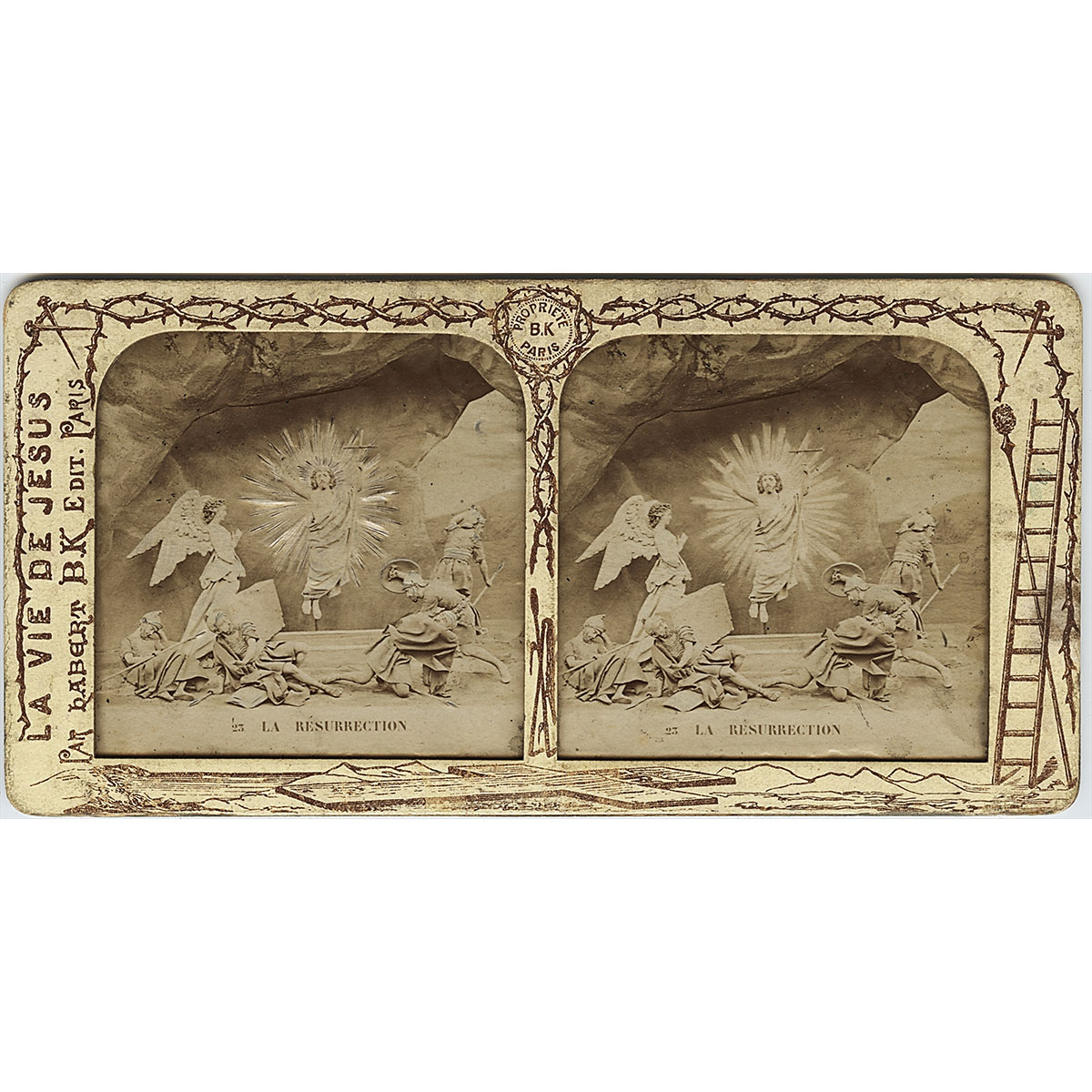
Editions B.K. - stereoscopies no. 23. LA RÉSURRECTION c.1870
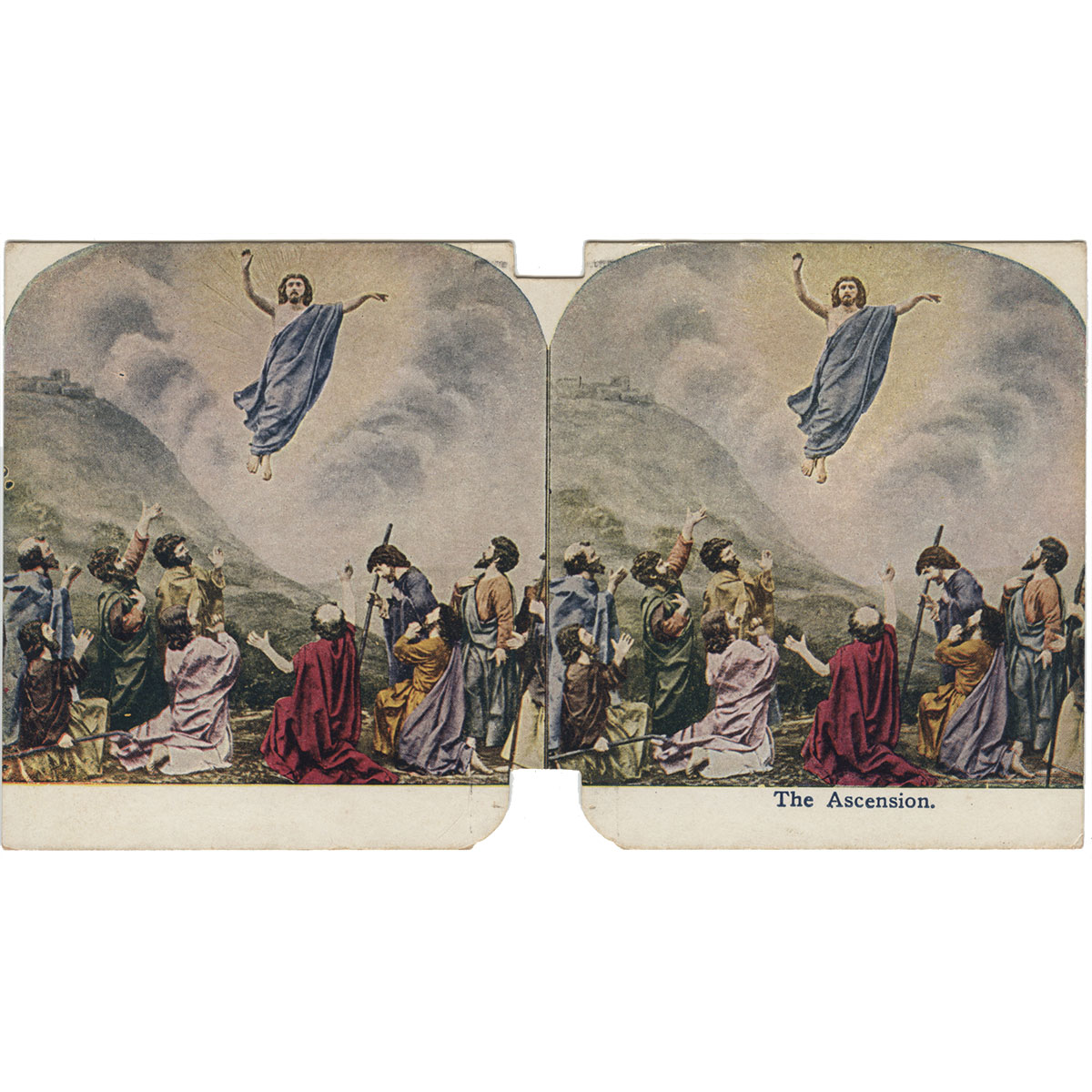
Sculptoscope – The Ascension 1929
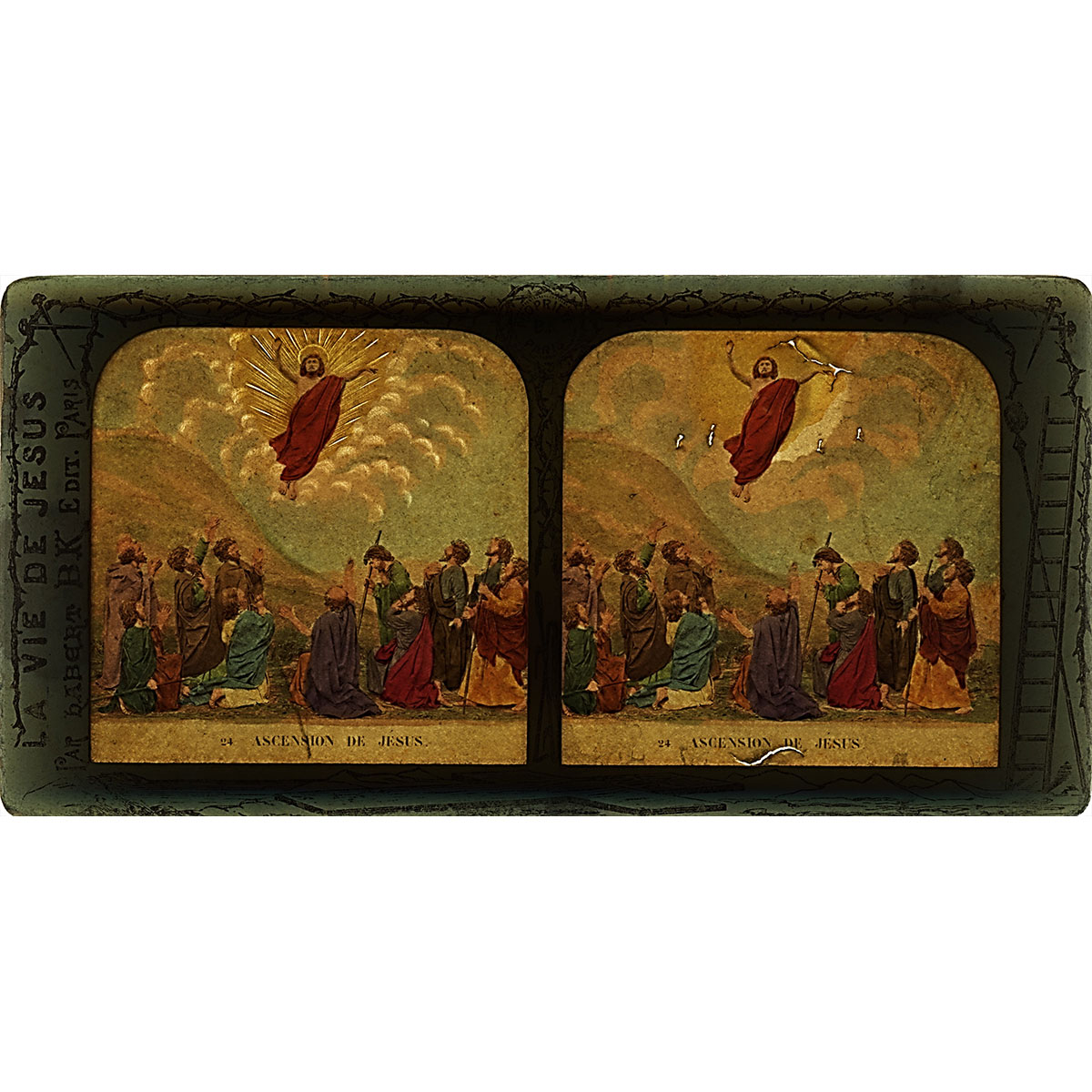
Editions B.K. - stereoscopies nº 24. ASCENSION OF JESUS backlit c.1870
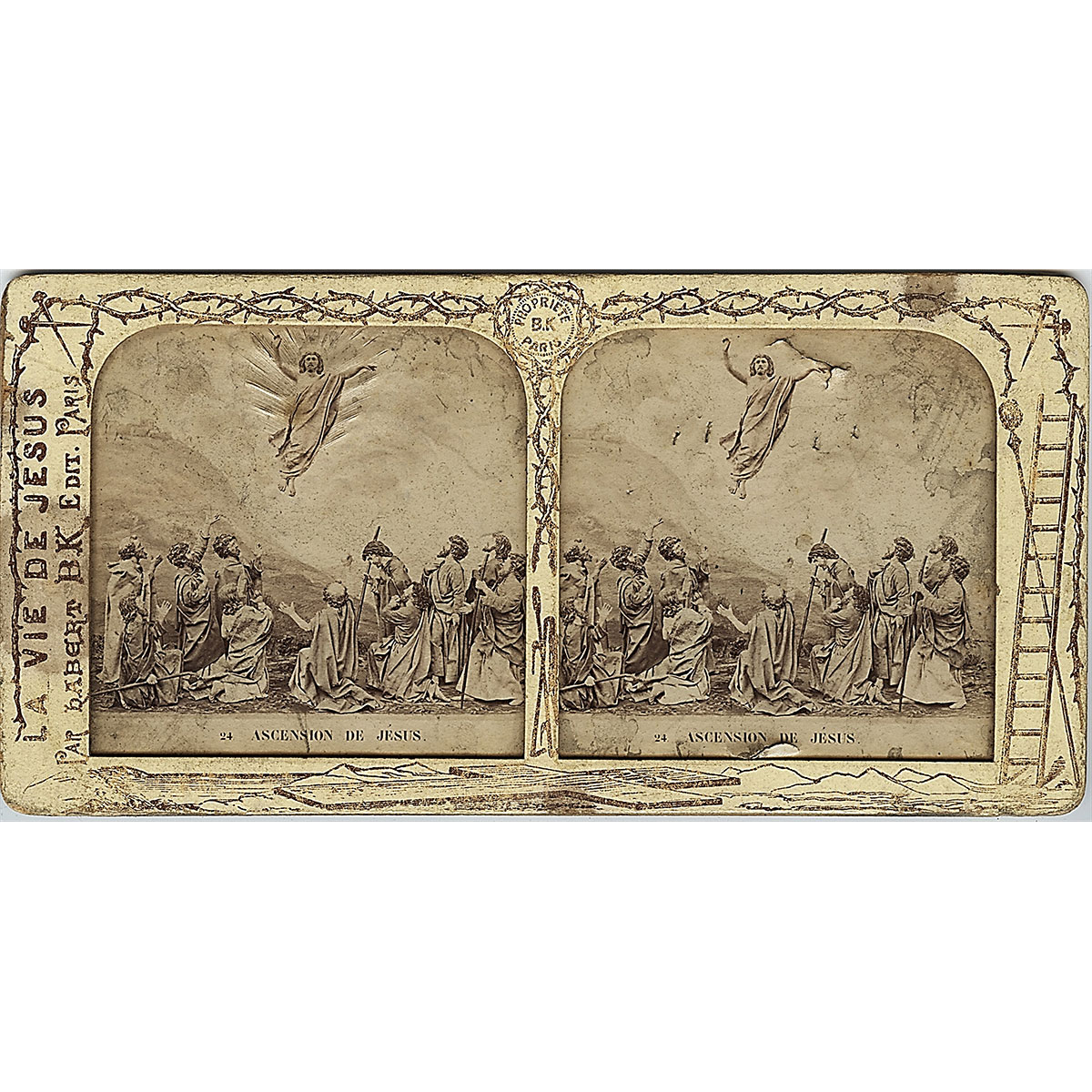
Editions B.K. – stereoscopies no. 24. ASCENSION OF JESUS c.1870
TEMPORARY TRANSMISSION
(Re-use of photographic sources in publishing houses)
THE RETRACTED EASTER WEEK
Production:
In this season, the cultural and religious phenomenon of Holy Week takes place; regardless of one’s creed, these dates have their own photographic story and, as it could not be otherwise, their own stereoscopic treatment.
In 2022 we promoted and produced, together with the City Council of Real Sitio de San Ildefonso, the Real Fábrica de Cristales de La Granja, MundoHouse and Klumpcol, an exhibition whose designers were Lourdes López Mendieta and Alberto Villar Bueno. It was curated by Lee Fontanella and Juantxo Egaña. It was called – Semana Santa ‘La Pasión’. A stereoscopic vision – and was inaugurated on 01/04/2022.
Among other monoscopic photographs. The main objective for us was to show the 14 stereoscopic views, life-size 9×18 cm, which were displayed on black panels and reproduced pairs included in the series of 24 cards published by B.K., in which the life of Jesus unfolds (LA VIE DE JÉSUS Par Habert B.K. Edit. Paris).
The B.K. edition reproduced photographically scenes from sculptural groups by the sculptor Louis Alfred Habert (1824-1893). His figures were articulated models with interchangeable elements (heads and limbs among others), so that depending on the situation depicted they had different gestural expressions and body positions.
Attached is the pdf document explaining the exhibition (diagrams that we transferred to La Real Fábrica de Cristales) for a better understanding of those attending. We draw attention to the different faces of Jesus, the postures of the soldiers, disciples and followers. In the document we can find concrete examples of these characteristic changes, as well as an identification of the settings where the action takes place, in very realistic geographical approximations, with respect to what is described in the Bible and the urban remains that are still evident today in the city of Jerusalem.
For the Holy Week Exhibition event, Stations I to XI plus XIII and XIV were chosen. Nº. XII (Death of Jesus) was replaced by a diorama with oil paintings by the artist Juan de la Peña (100×200 cm) and a visual montage by Luis Lancho. Stereoscopy nº. 15 was added as an element independent of the usual Stations of the Cross, because it reflects the message of hope in the Resurrection.
At that time (April 2022), we were showing how an albumen was transformed into a full-colour image, simply when direct light shone on it (the paint and tissue pack performed the “miracle”).
Our interest in that period is renewed today when we see that in the FBS Collection, in the area dedicated to photomechanics, we find the so-called stereoscopic “lithographs” of Whiting Brothers (Richard Ross and William A.), publishers of stereoscopic cards under the firm THE AMERICAN NOVELTY Co. of Cincinnati (Ohio), which also manufactured a specific viewer for these cards, the Sculptoscope (models perfected between 1913 and 1922) which worked with 1-penny coins, and as an attraction in amusement arcades, as well as countertops of some shops.
Richard Ross and William A. Whiting had previous experience as salesmen for Keystone stereoscopic products. In fact, R.R. worked as a photographer for the company. The production of THE AMERICAN NOVELTY Co. brought together original works that generated funds from the company itself, such as the photographs of T. W. Ingersoll. However, we can see that it also drew on funds from other companies, such as the reproductions of Publisher B.K. referred to above.
In fact, among the material belonging to the FBS Collection, the stereoscopies copyrighted by R.R. Whiting and THE AMERICAN NOVELTY Co. are of very varied themes. But we are going to focus on the 14 stereoscopic four-colour prints, taken from the B.K. series, which motivated the exhibition of “The Passion”. Although the pairs lack identification of authorship, they are reframed and printed copies, whose format had to be adapted for the viewing system of the Sculptoscope, viewer with carousel drive mechanism for views of paper cards, patented by R.R. Whiting.
With the Sculptoscope, a three-dimensional restitution was produced by means of fixed, unadjustable, middle-distance viewing, whereby the approach to the image was conditioned by precise optics so that the eyes could transfer to the brain a scene without the pattern generated in the image, the view of which was limited by the mechanical reproduction system.
Read more
Let us remember that photomechanics is a process that uses plates obtained from photographs (negatives and positives) and that their reproduction is possible by applying different printing media. These procedures were used, as a technique complemented by chemical development (photolithography), from the last third of the 19th century and throughout the 20th century.
Photographs suitable for the Sculptoscope lost the nuances found in the albumen and stereoscopic photographs published by Adolphe Block. This 19th-century publisher portrayed sculptural groups arranged in different designs on each card, which enabled him to produce two photographs with different perspectives (right- and left-eye views).
The loss of specific data in the images of THE AMERICAN NOVELTY Co., caused by four-colour printing (a system that was being developed at the beginning of the 20th century), was compensated by the quality of the colour and by the distance at which the card had to be viewed. This means that it was a medium that contributed to the wider dissemination of stereoscopy and 19th-century photographs, sometimes exploiting backgrounds that had previously been used photographically, in many other ways.
The system devised by R.R. Whiting took full advantage of the economic possibilities of the viewer mechanism, as there are double-sided printed cards. However, in the copies shown this month, the reproduction of the Life of Jesus is summarised in 14 single-sided pairs.
The various series of “Whiting’s Miniature Museum” manufactured by THE AMERICAN NOVELTY Co. used to have 15 display units and had specific viewing instructions: by inserting a penny, 15 different scenes could be viewed and, by pulling the trigger of the Sculptoscope, they would pass one by one. We can understand that the series we present must be incomplete, although as it is not numbered, and has only the titles of each scene, we can take as a reference the B.K. cartons, which are perfectly identified. According to the numbers we have assigned to the four-colour charts, this correspondence is as follows:
- Modification of B.K.’s stereoscopy nº 2.- Adoration des Magues.
- Modification of B.K.’s stereoscopy nº 3.- La Fuite en Égypte.
- Modification of B.K.’s stereoscopy nº 4.- Jésus parmi les docteurs.
- Modification of B.K.’s stereoscopy nº 5.- Les noces de Cana.
- Modification of B.K.’s stereoscopy nº 6.- Jésus prêche sur la montagne.
- Modification of B.K.’s stereoscopy nº 7.- Entrée de Jésus a Jérusalem.
- Modification of B.K.’s stereoscopy nº 8.- Jésus trahi par Judas.
- Modification of B.K.’s stereoscopy nº 9.- Jésus est condamné à mort (1re station).
- Modification of B.K.’s stereoscopy nº 13.- Jésus aidé par Simon le Cyrénéen (Ve station).
- Modification of B.K.’s stereoscopy nº 20.- Jésus meurt sur la croix (XIIe station).
- Modification of B.K.’s stereoscopy nº 21.- Jésus est détaché de la croix (XIIe station).
- Modification of B.K.’s stereoscopy nº 22.- Jésus est mis dans le tombeau (XIVe station).
- Modification of B.K.’s stereoscopy nº 23.- La Résurrection.
- Modification of B.K.’s stereoscopy nº 24.- Ascension de Jésus.
To learn more:
- F. Kurtz, Gerardo, Ortega, Isabel , 150 años de fotografía en la Biblioteca Nacional – Guía-inventario de los fondos fotográficos de la Biblioteca Nacional coordinada y dirigida por…, Madrid, Ediciones El Viso, 1989, (pág. 181-185).
- Wing, Paul, Stereoscopes: the first one hundred years, Transition Publishing, October 6, 1996. Referencias a Whiting, Richard Ross y William A. editores de tarjetas estereoscópicas bajo la firma THE AMERICAN NOVELTY Co. págs. 162 a 167.
- François Boisjoly, Répertoire des Photographers – de XIXE siècle, París, Les Editions de l´Amateur, 2009, pág. 45 – Block, Adolphe (1829-1918).
- Brian May, Denis Pellerin and Paula Fleming, DIABLERIES – Stereoscopie Adventures in Hell, London Stereoscopic Company, 2013 y 2019, (detalles biografía de Habert , Louis Albert pág. 77.81. 161, 176-177, 179, 261, 265-267, 270, 273.)
- Fernández-Barredo Sevilla, Yolanda, Sanchez García, Juan José, Explicación Exposición La Pasión 2022.
- Fernández-Barredo Sevilla, Yolanda, Sanchez García, Juan José, Comparativa de vistas estereoscopicas en albúmina B.K respecto a litografías Whiting´s, Fundación FBS 2025.