
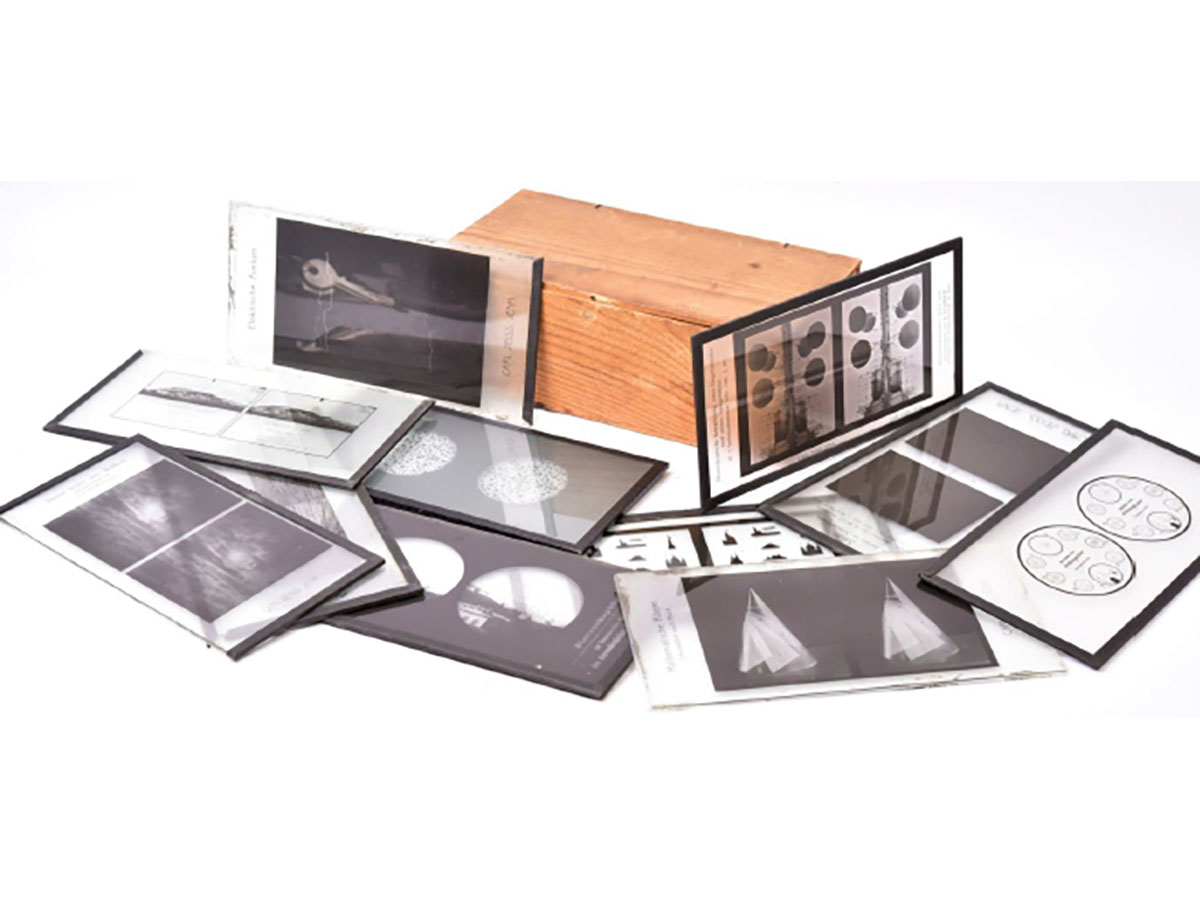
0.- CARL ZEISS LOT.
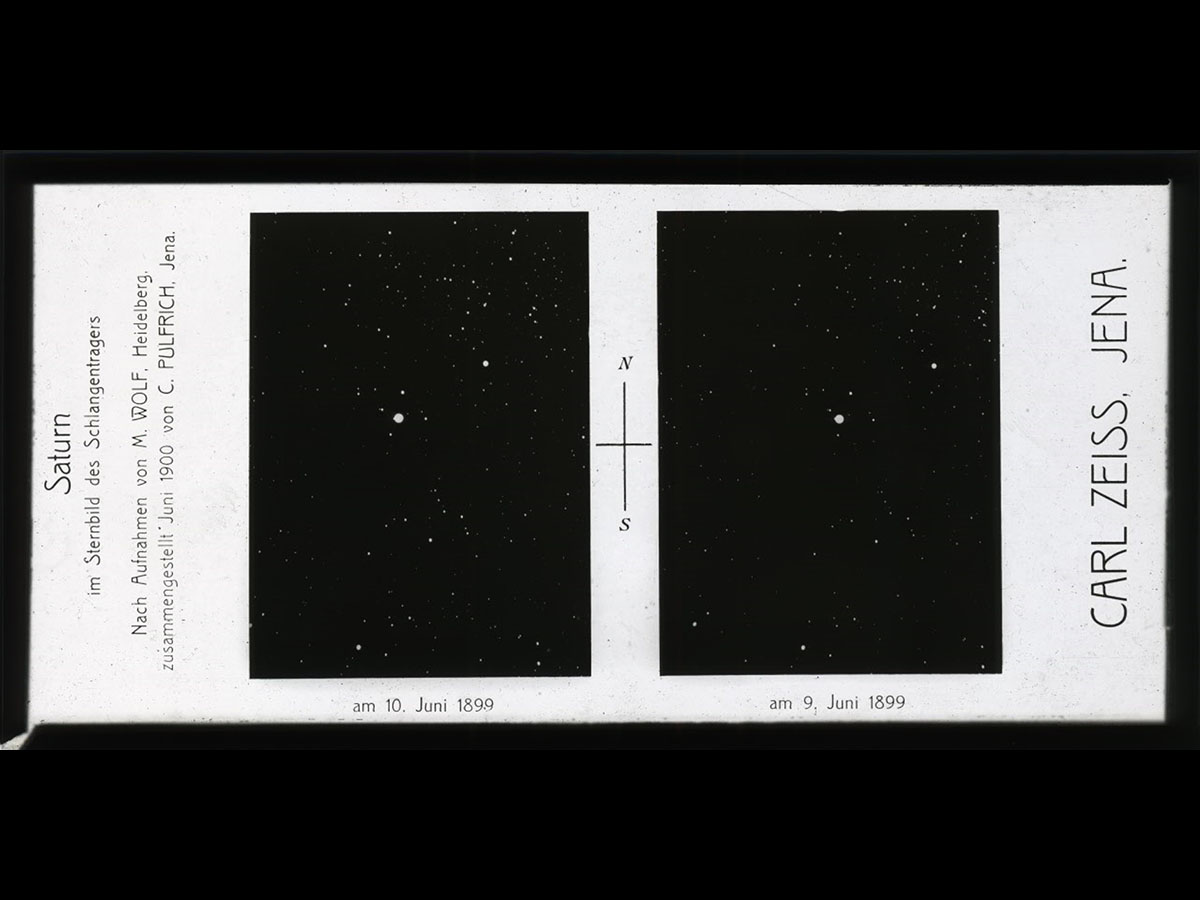
1- Saturn 1899
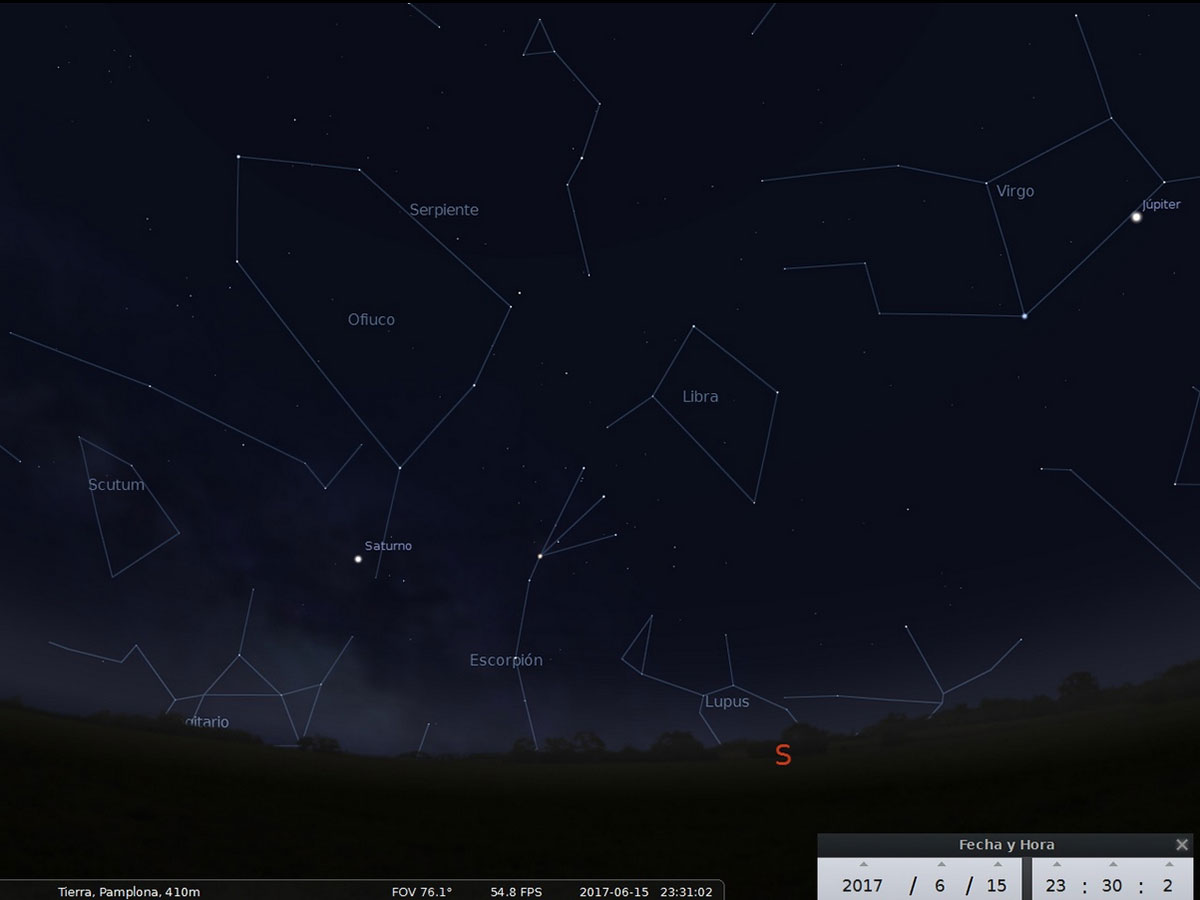
1B.- Saturn and constellations- Pamplona- June 2017.
www.reinodelasestrellas.com
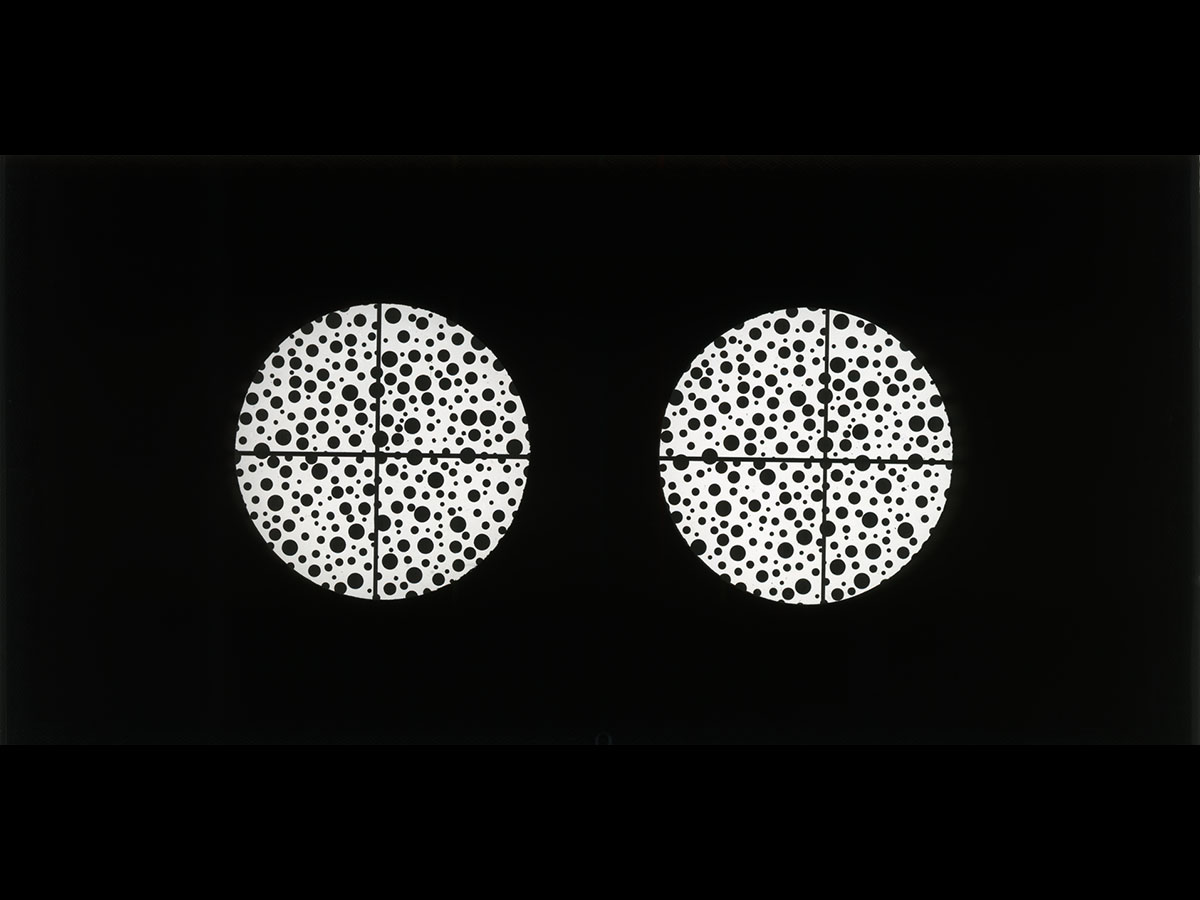
2.- Parallax. Optotype.
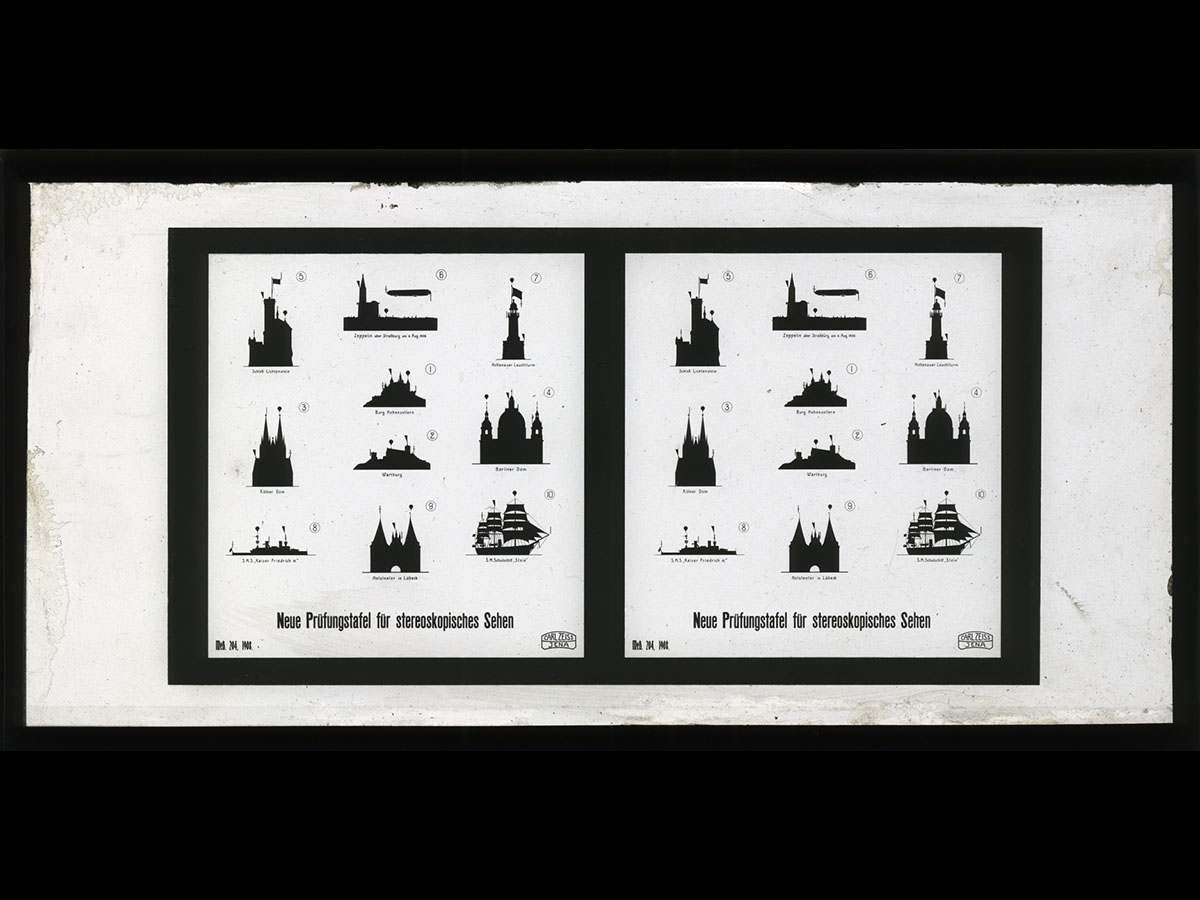
3.- Silhouettes. Optotype.
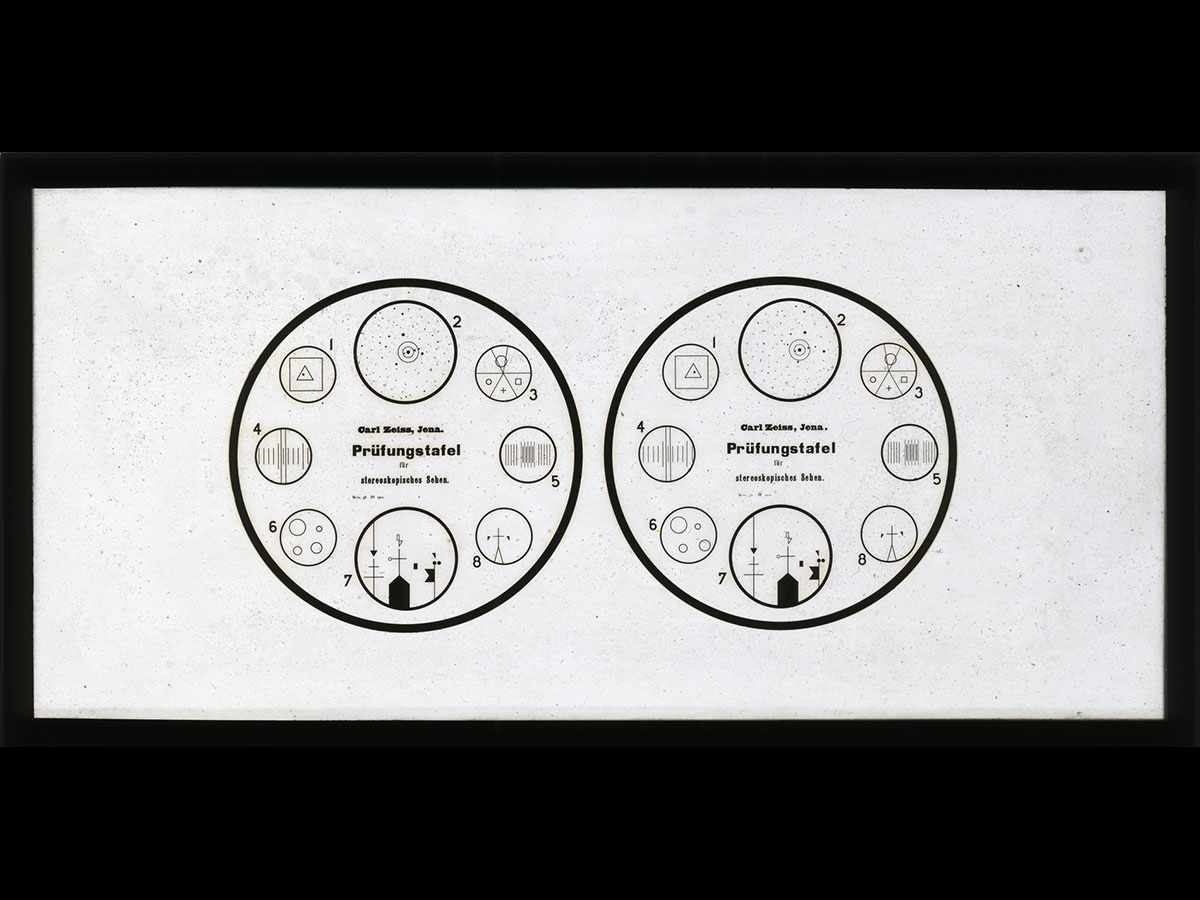
4.- Examination board for stereoscopic vision. Optotype.
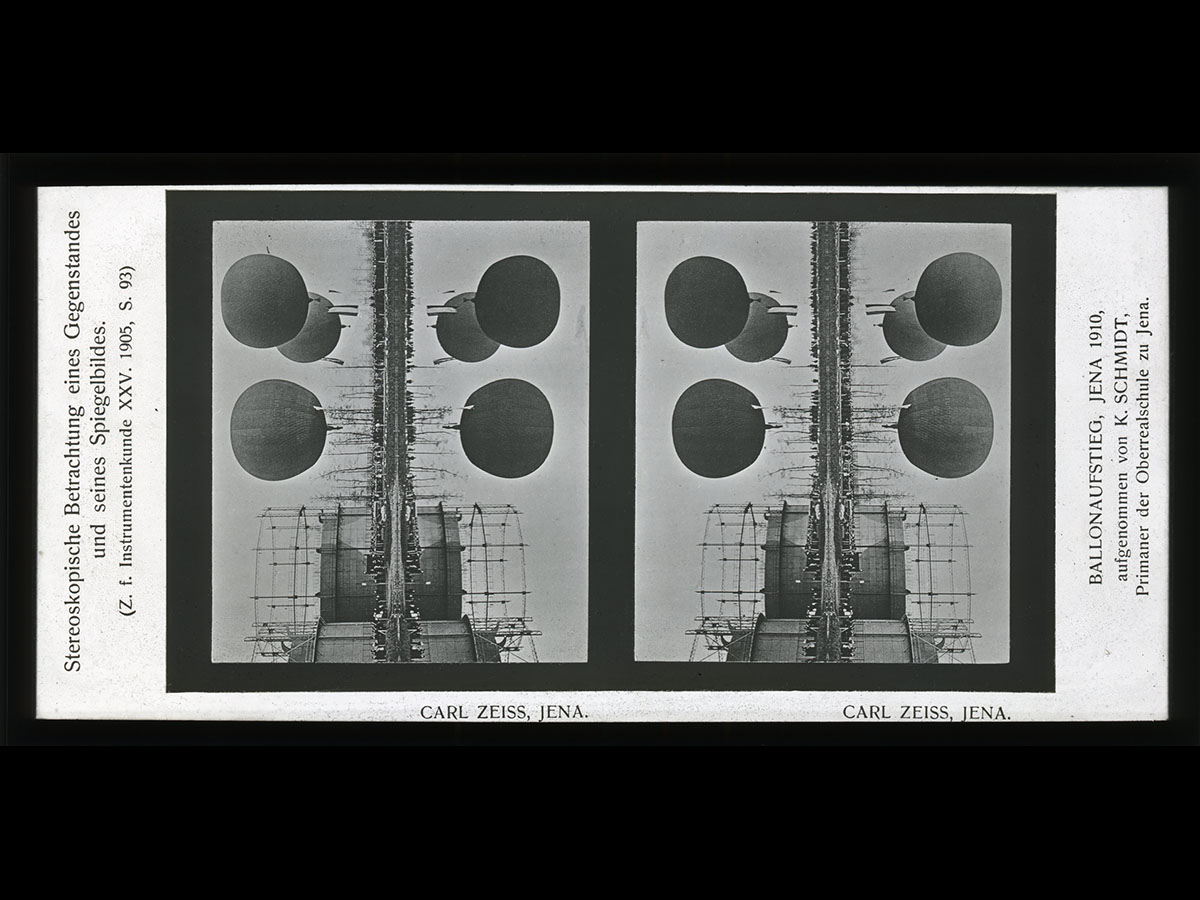
5.- Globos y sus reflejos. Estudios de refractometría.
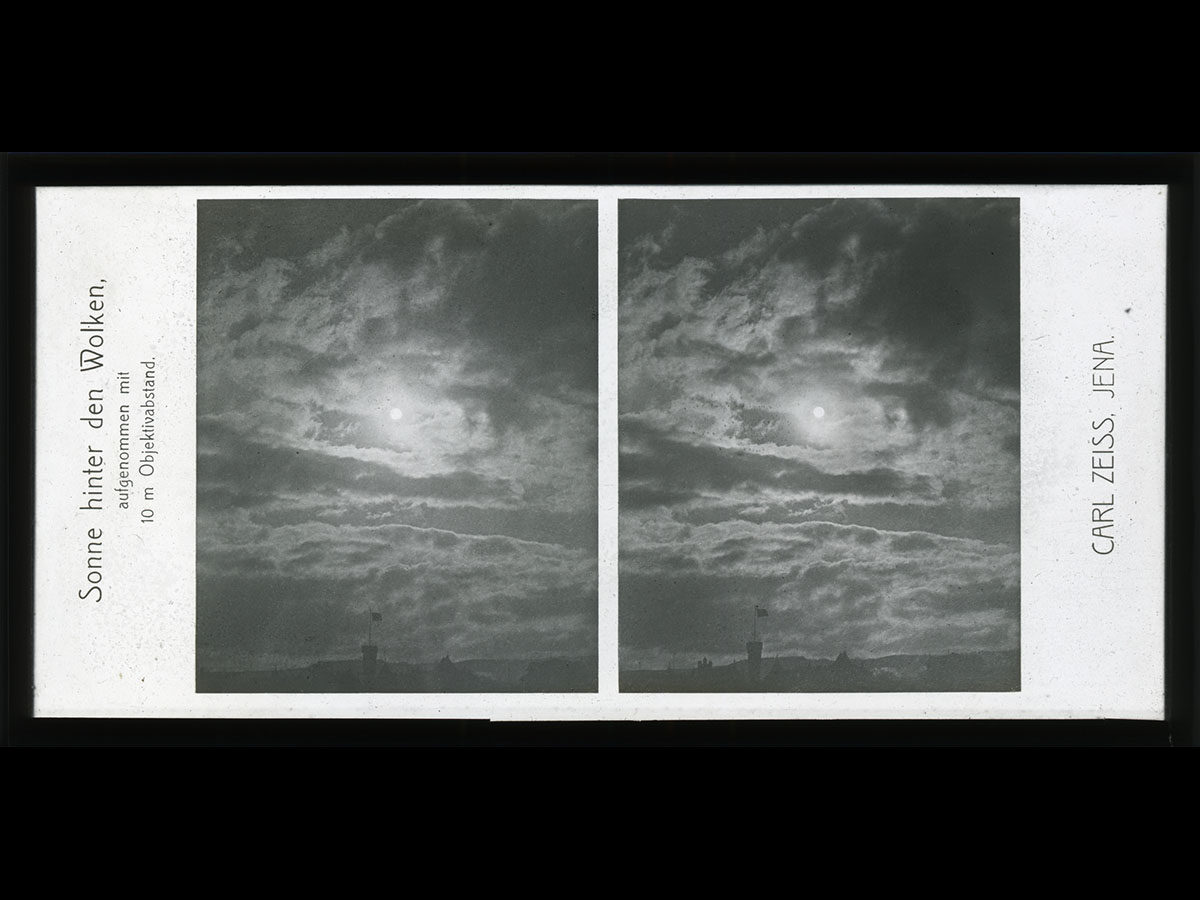
6.- Sun behind the clouds.
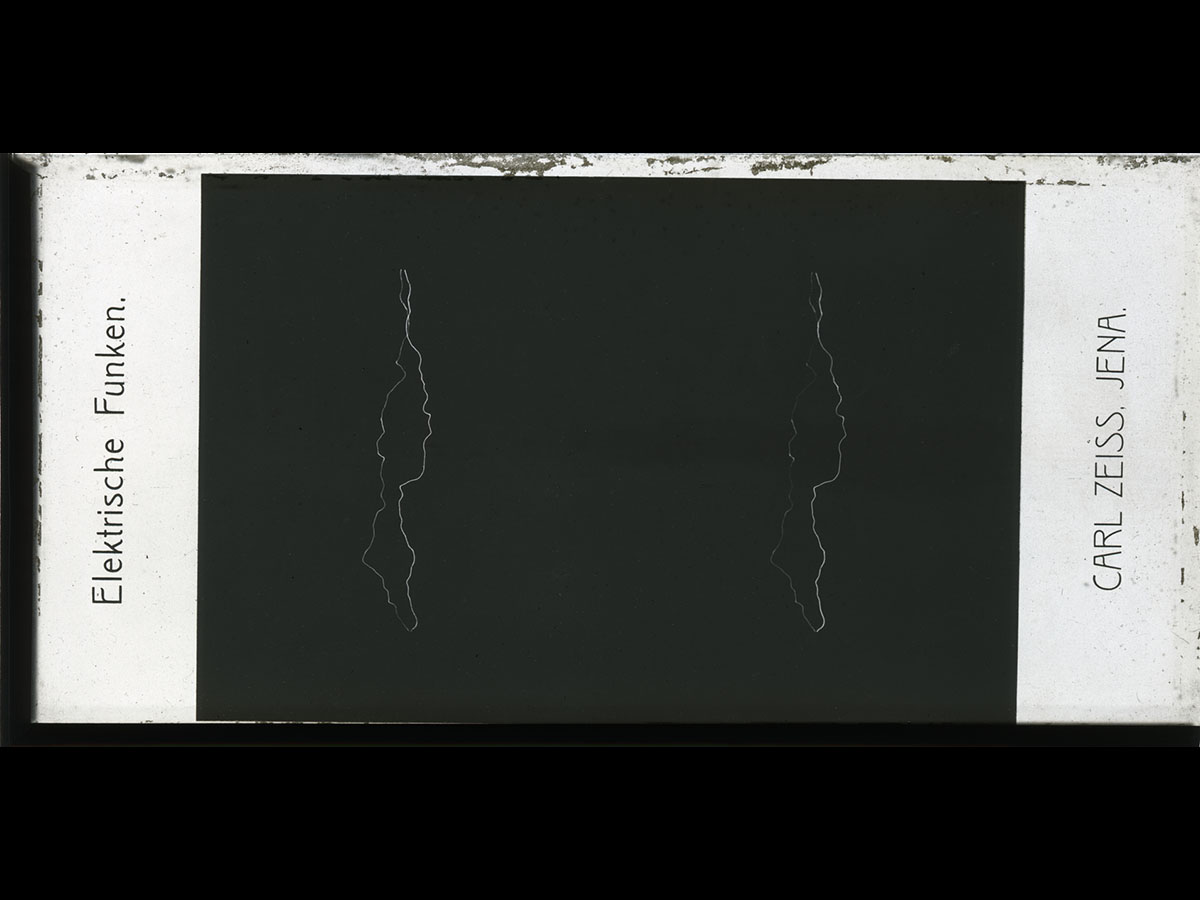
7.- Electrical sparks.
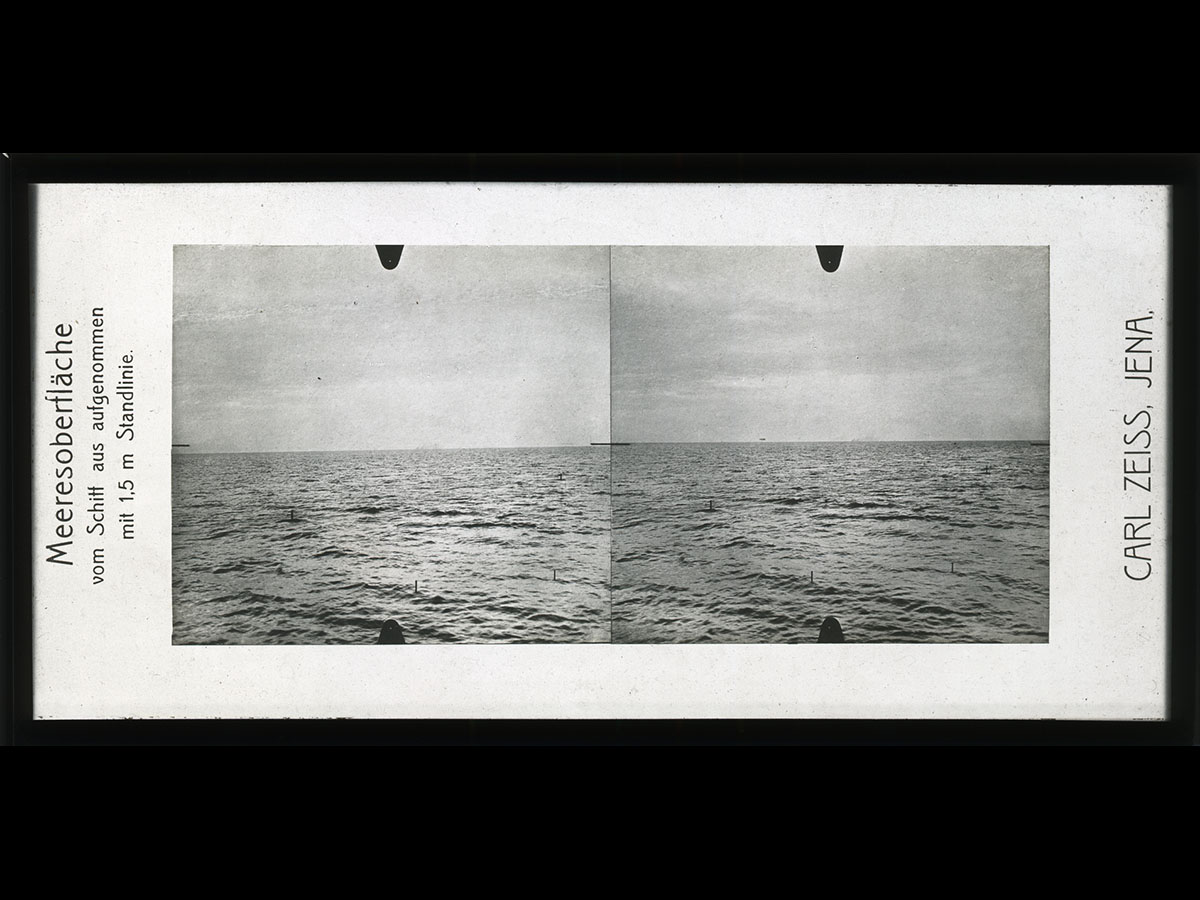
8.- Sea surface.
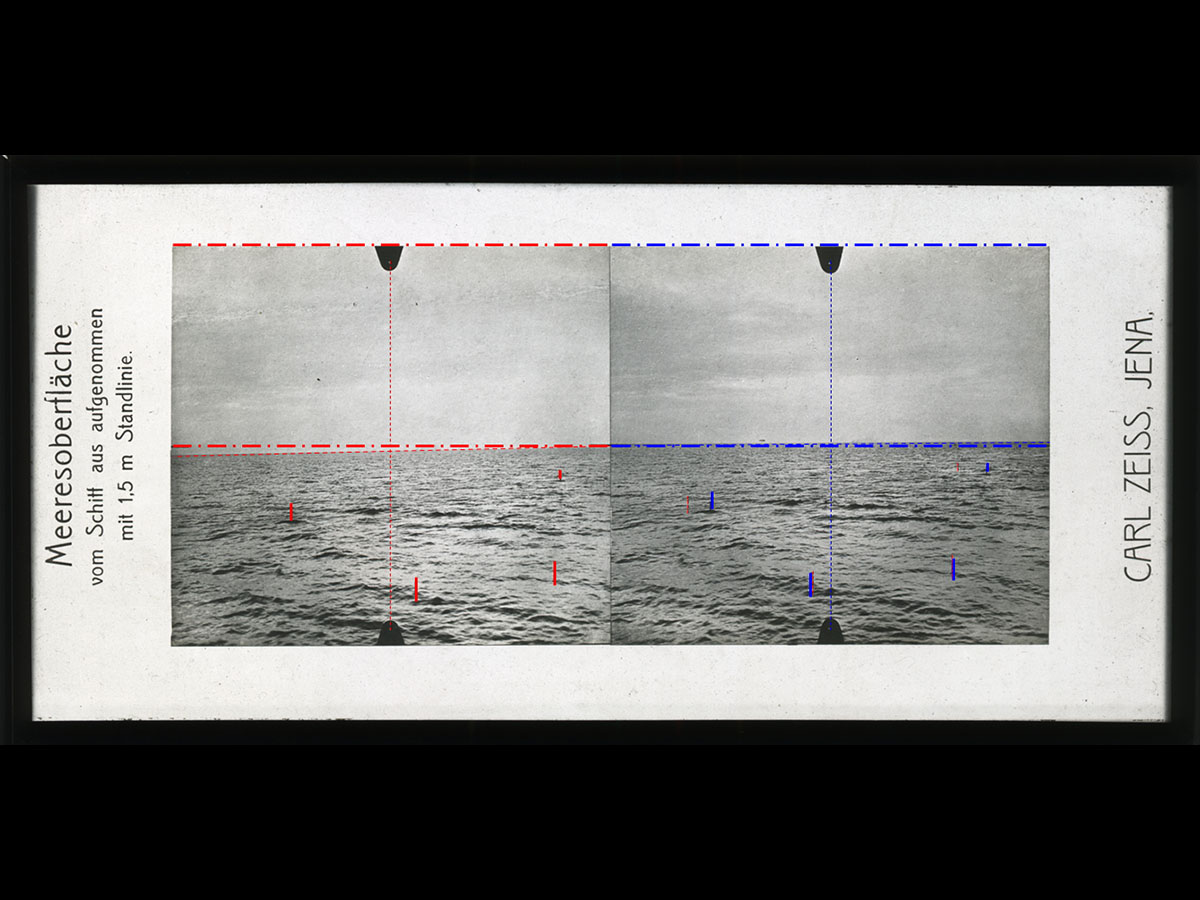
8A.- Sea surface.
Comparison of stereo pairs.
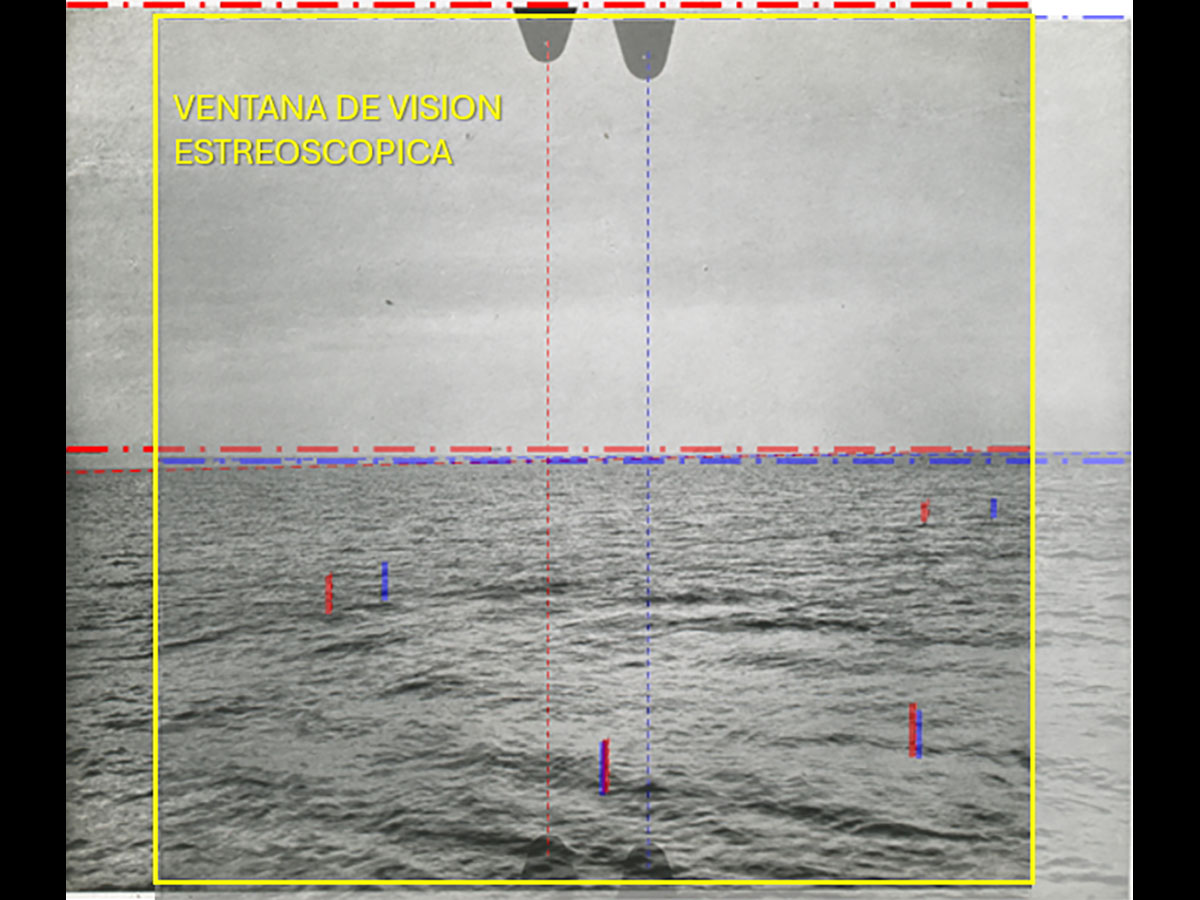
8B.- Sea surface.
Stereoscopic window.
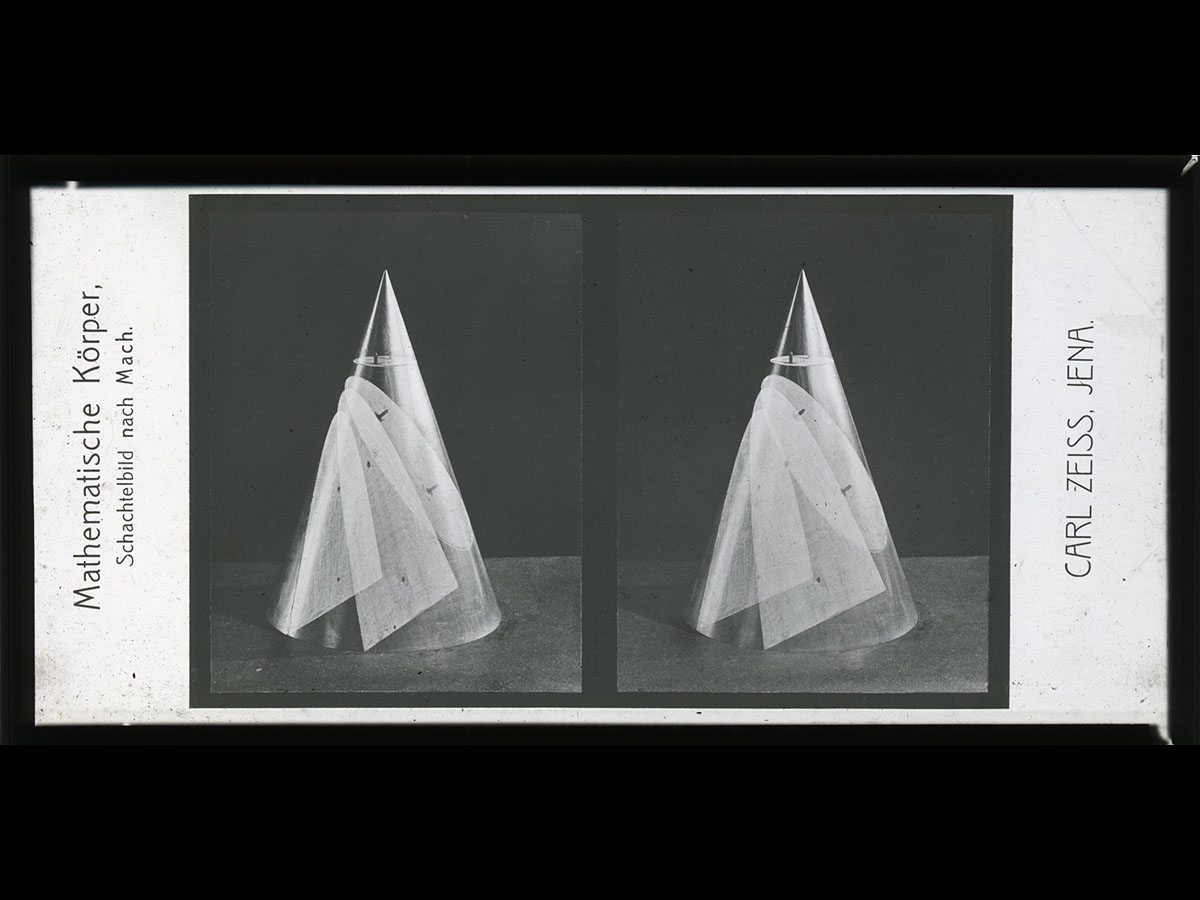
9.- Mathematical bodies.
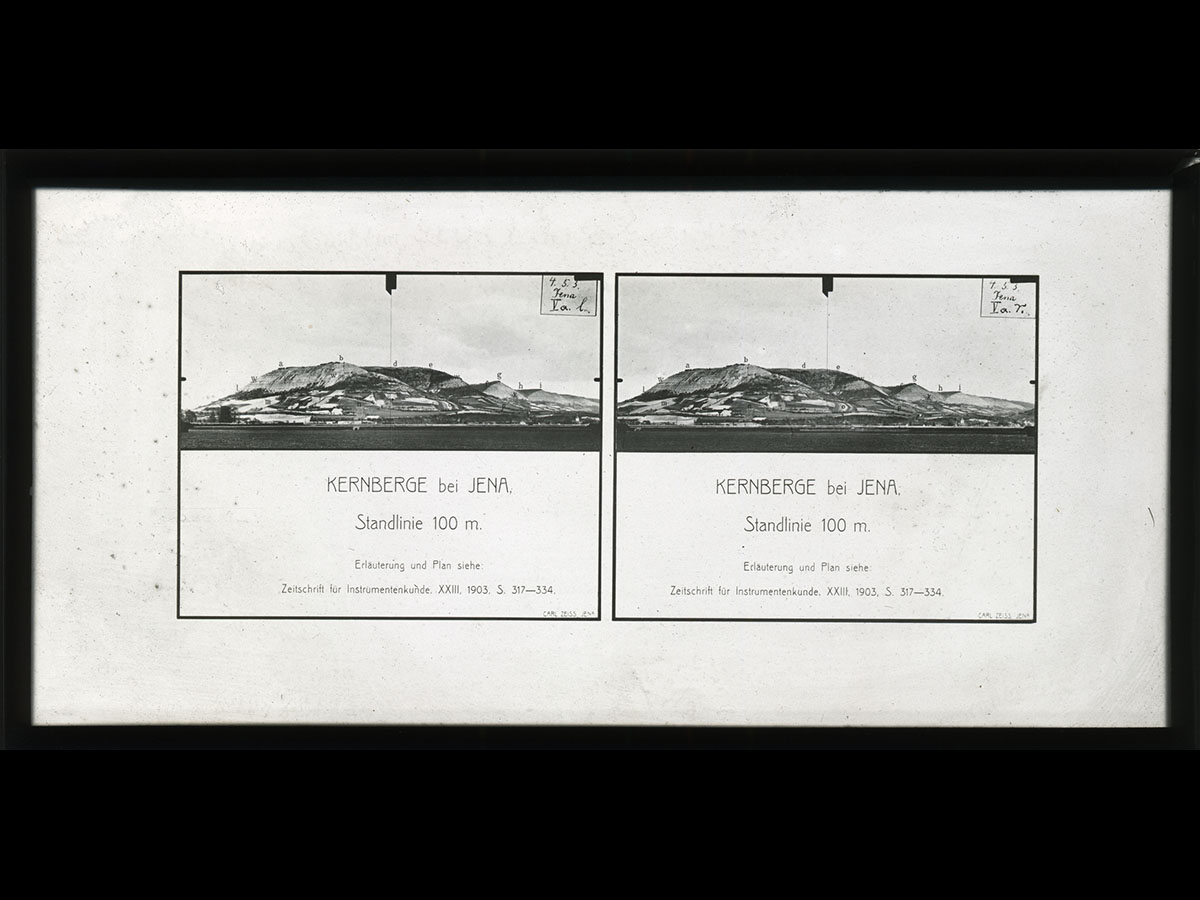
10.- Explanation and consultation plan.
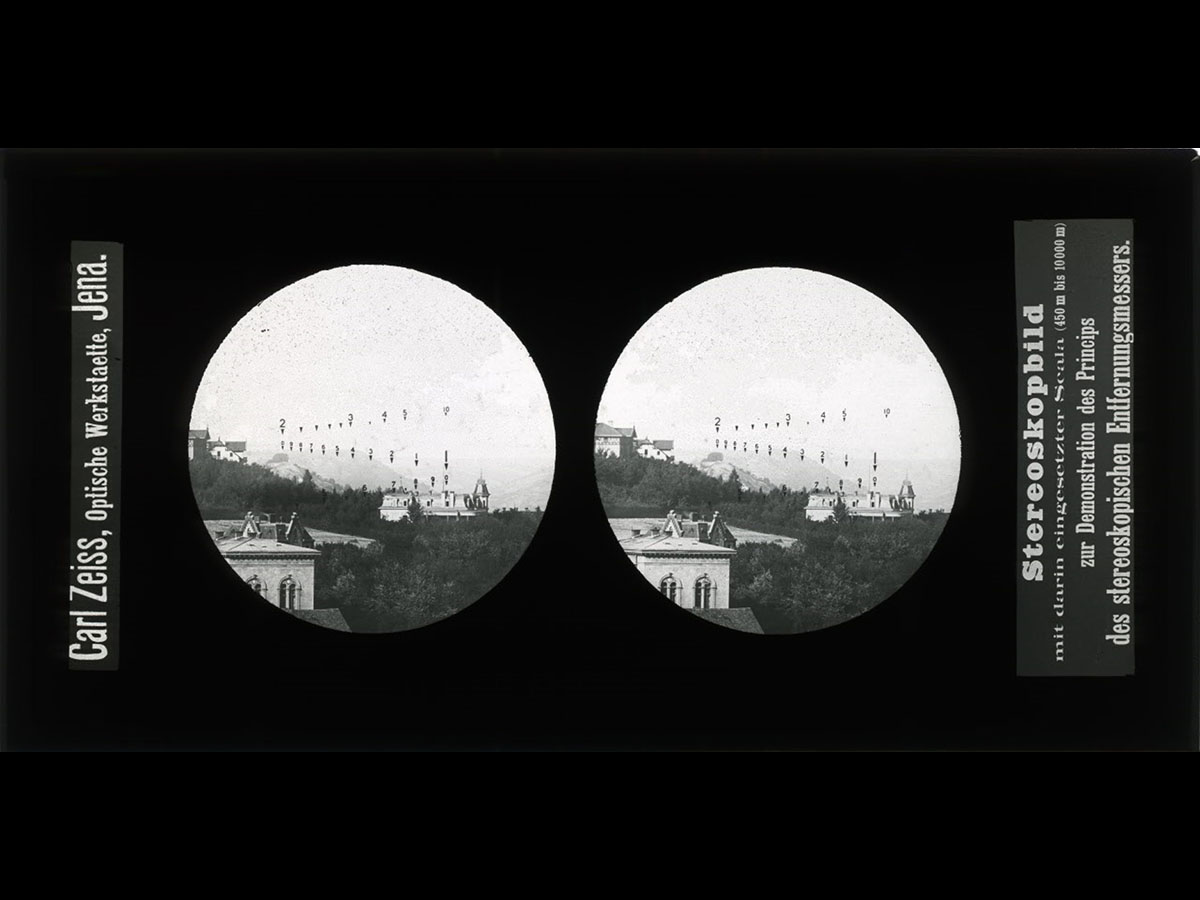
11.- Inverted scale.
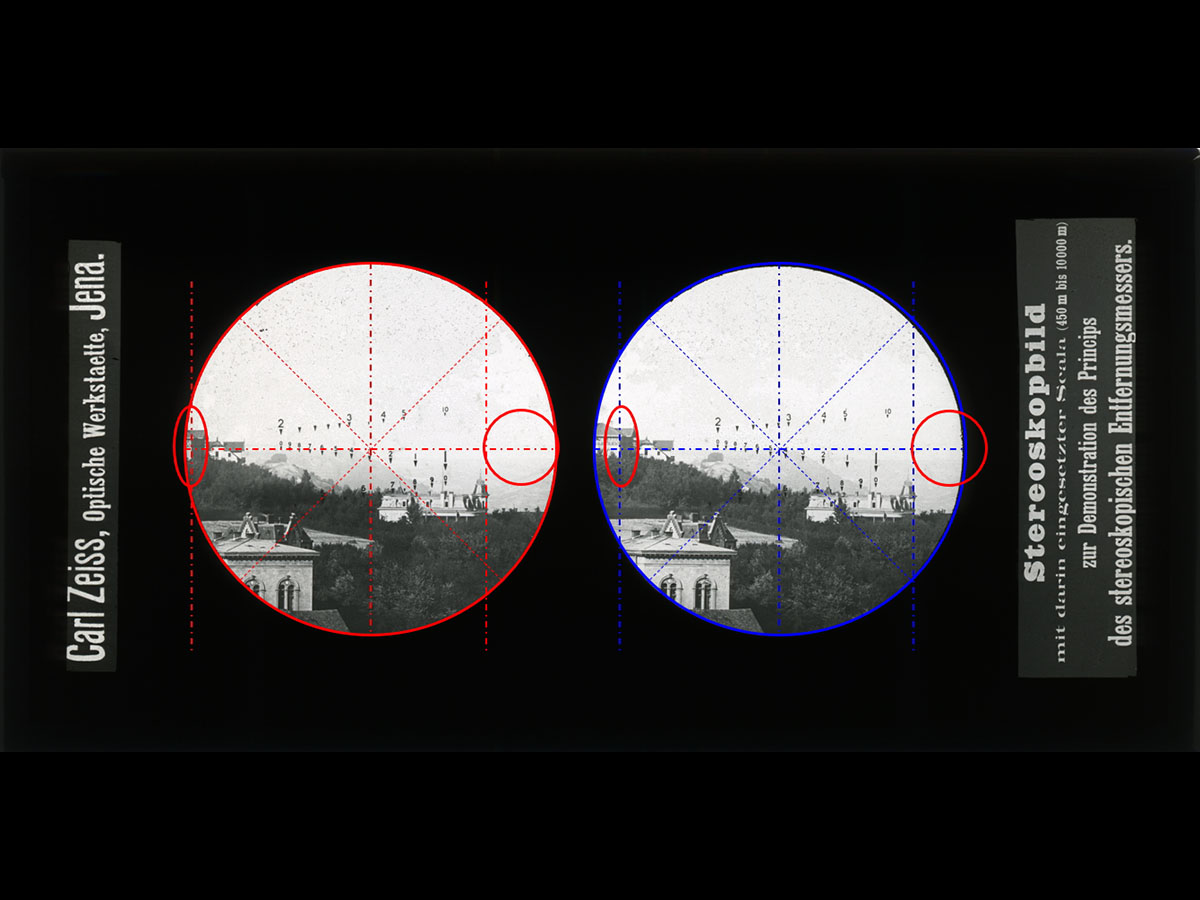
11A.- Inverted scale.
Pair comparison.
THE CASE OF CARL ZEISS PRODUCTS
DIVERSITY IN EVERY ASPECT
Lot of 11 stereograms on glass
We begin with the section of ENVISIONED, as a guiding thread for the following months of March, with the aim of generating points of attention that may be of interest for research in process or to be initiated, within the FBS collection.
The invitation to this research is found in this box of 11 stereoscopies; the stereoscopic format is 9x18cm, the images concretise some experiments carried out within the company CARL ZEISS, JENA in its different periods of production.
Photographic capture is conditioned by the purpose given to the documents obtained; these 11 stereoscopies are a paradigmatic example that demonstrates this. The images show part of the research carried out by Carl Pulfrich (1858-1927) after he was hired, in 1890, to create and direct the INSTRUMENTS DEPARTMENT within the company CARL ZEISS, JENA.
The collaboration among scientists to extract the most congruent and reliable results from the research carried out within the ZEISS organisation was manifold. Pulfrich collaborated with the astrophysicist Max Wolf (1863-1932) in the production of instruments for astrophotography. The identifier M. Wolf is engraved on the secondary carriers.
This can be seen in photograph 1 of the carousel attached to the text, in which Pulfrich unifies the deep sky data taken by Wolf, namely the passage of Saturn in the constellation Ophiuchus.
These are two sequential photographs, taken on the mornings of 09/06/1899 (left half-pair, in the order of vision) and 10/06/1899 (right half-pair). The German astronomer M. Wolf did a very extensive detection work during his lifetime, as we have 228 asteroids discovered by means of astrophotography.
As explained by Lanska, Lánská and Remler in their publication ‘Carl Pulfrich and his instruments for identification and demonstration of the Stereo-Effekt” Pulfrich’s publications are organised according to the periods in which he carried out his research into:
– Refractometry (1885-1899), an optical method to determine the speed of propagation of light in a medium against the speed occurring in a vacuum, (unit of study, refractive index – which is dimensionless).
– Stereophotogrammetry (1899-1923), the study of which involves the use of one or more stereoscopic pairs captured under very precise and controlled conditions.
– Photometry (1920-1927), measuring and representing the intensity of light in a given direction.
The last stage was interrupted by his death; he drowned when the canoe in which he was sailing sank.
In the archive https://www.archive.zeiss.de we can find some of the journals and publications that Pulfrich wrote on the disciplines mentioned, and, although they are results that summarise the whole research process, anyone can see the social and scientific implications of the findings derived from the studies that were carried out under the signature of CARL ZEISS, JENA.
We look especially at the Instrumentenkunde (Instrumentology) from 1901 to 1905, among others up to 1923; the Instrumental Science.
So we can see that, in 1910, under the title ‘Collection of offprints from the Mess product group’, the compendium of articles on the stereoscopic comparer (stereocomparer) ‘…. for photometric and spectrographic measurements and for measuring the size of stars’ is filed, which places us in stereoscopy no. 1 of the lot we present to you, in which the previous work carried out by M. Wolf is referred to.
The 3 Optotypes, used customarily to assess human visual acuity (capacity), were also used to test the optics used in Zeiss instruments. In this case there are three different models in the lot (photos 2, 3 and 4). There is no text on photo 2, but it is apparently a parallax check. Picture 3 is called ‘new test chart for stereoscopic vision’ and corresponds to ten silhouettes, including the Hohenzollern Castle, the Berlin Cathedral and the Zeppelin flying over Strasbourg on 4 August 1908. The latter is a model created to examine the union of elements within the stereoscopic window.
Other collections of images refer to special prints for the stereoscopic observation of an object and its mirror image, as we can see in photo 5 of the balloons and their reflections.
Photographs taken under certain atmospheric conditions, a cloudy sky, or the capture of a lightning strike, belong to other types of experiments, belonging to ‘Refractometry’ (stereo 6), and the lightning strike, which was only possible to capture by means of a short but very controlled exposure, within ‘Photometry’ (stereo 7).
Finally, plates 8, 10 and 11 refer to a consultation plan and introduce us to Stereophotogrammetry, which was a research that Pulfrich devoted himself to from 1899 onwards, always in collaboration with Zeiss. Measuring distances exactly under different conditions (land, sea and air) as well as checking the position of two surface points with respect to planes of incidence under them (stereo 9).
In conclusion, we would like to say that this batch of stereoscopies has allowed us to delve into one of the aspects that forms part of the objective of our Foundation, which is the verification that stereoscopy has been used in scientific and technical research on a recurring basis since before the emergence of photography, then used the latter to treat stereoscopic photography as another science.
To learn more:
- Terrero y Díaz-Herrero, Antonio, Fototopografía, es decir, Aplicaciones de la Fotografía al Levantamiento de Planos topográficos, La Asamblea del Ejercito v la Armada. Revista de Ciencia. Arte e Historia Militar. Año V, 2.” época, tercer tomo, año 1862. págs. 31 a 46.
- Torroja y Miret, José María, Fotogrametría terrestre y aérea. Discurso, Real Academia de Ciencias Exactas, Físicas y Naturales; Establecimiento Tipográfico de Fortanet, 16 de mayo de 1920. Pág, 15 a 17 y 20 a 25.
- Pulfrich, Carl, Die Stereoskopie im Dienste der isochromen und heterochromen Photometrie, DIE NATU RWI S S E N S C HAFTE N, Zehnter Jahrgang, Heft 25, 23. Juni 1922.
- Auberbach, Felix, Das Zeisswerk und die Carl-Zeiss-Stiftung in Jena. Ihre wissenschaftliche, technische und soziale entwicklung und bedeutung, Jena Verlag von Gustav Fischer 1925, reimpresión 2010. ISBN 978-3-86777-291-4
- Vierling, Otto, Die Zeiss Ikon Kleinbild-Stereosysteme 1941-1957. Catálogo de sistemas de visión, lentes, objetivos, cámaras y elementos de restitución. Original. Nachdruk 1984 mit freundlicher Genehmigung von Carl Zeiss.
- Petzold, Axel, El origen histórico del efecto Pulfrich: Una observación astronómica fortuita en la frontera de la Vía Láctea, Neurooftalmología . 33 ( 1–2 ): 39–46 . doi : 10.1080/01658100802590829 . S2CID : 1542237 (2009).
- Douglas J.Lanska*, J.Miriam Lánská** y BerndF. Remler, Carl Pulfrich y sus instrumentos de identificación y demostración del Stereo-Effekt; Neurosciences and History 2015; 3(1):8-18.
(*) Douglas Lanska. MD, MS, MSPHProfessor at University of Wisconsin–Madison.
(**) Miriam Lánská Doctor of MedicineFakultní nemocnice Hradec Králové.