
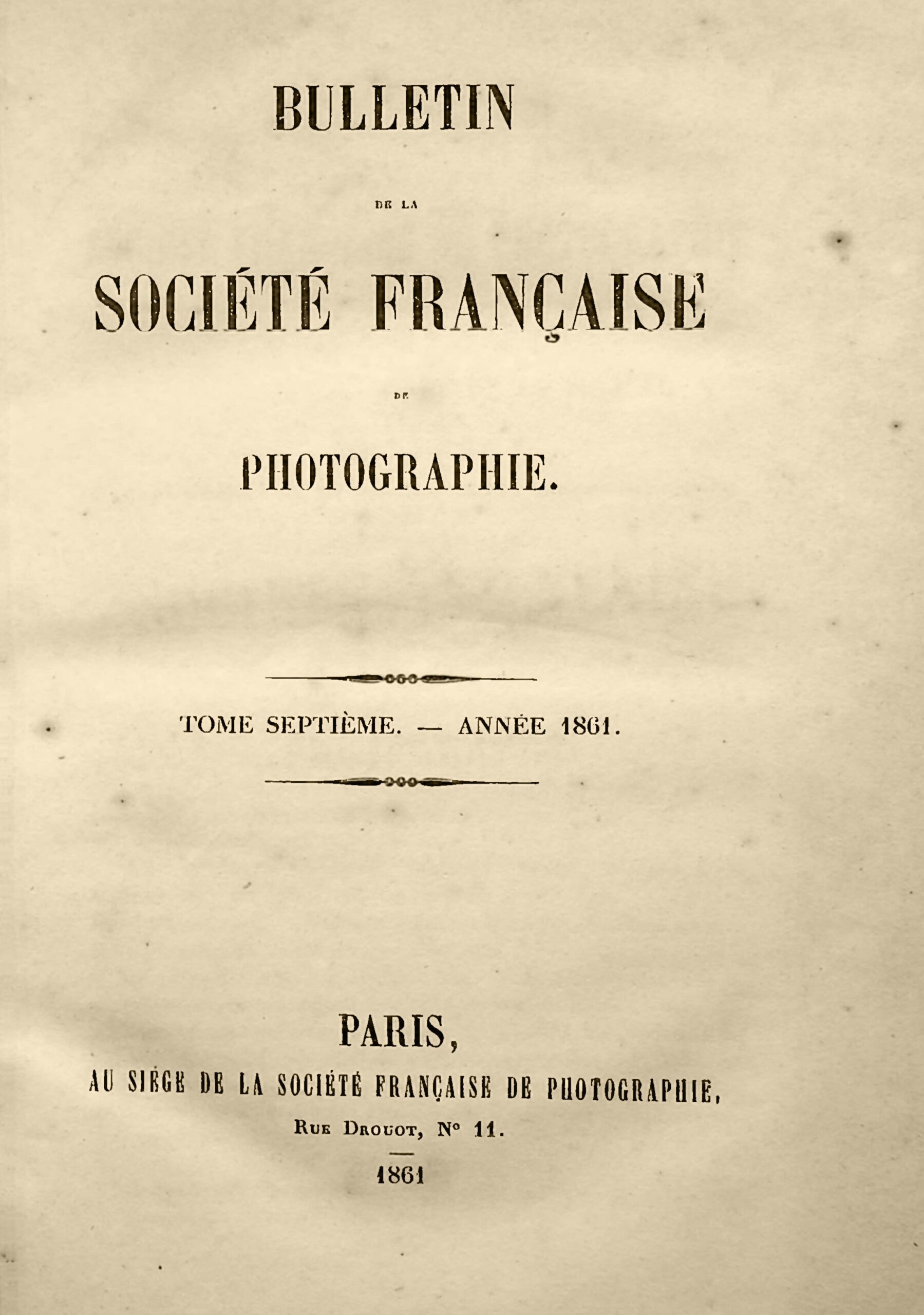
Bulletin de la Société Française de Photographie. Paris, 1861. FBS Foundation.
The Société Française de la Photographie (SFP), founded on 15 November 1854, was one of the first institutions dedicated to the technical and artistic advancement of photography. It emerged as a continuation of the Société Heliographique, but with a more inclusive and ambitious vision, bringing together scientists, artists, photographers and entrepreneurs with a passion for this emerging medium. Its first president, Henri Victor Regnault, a renowned scientist, set the direction of the SFP.
The SFP began publishing the Bulletin de la Société Française de Photographie, a journal that quickly became an international reference. During the 19th century, this journal documented fundamental technical advances, such as the development of wet collodion, stereoscopic photography and the first experiments with colour photography. Researchers such as Gabriel Lippmann, known for his innovative method of taking colour photographs, contributed significantly to the bulletin. Louis Ducos du Hauron, another colour pioneer, presented processes that paved the way for future techniques. Also M. Klerjot offered his technical contributions in this early period.
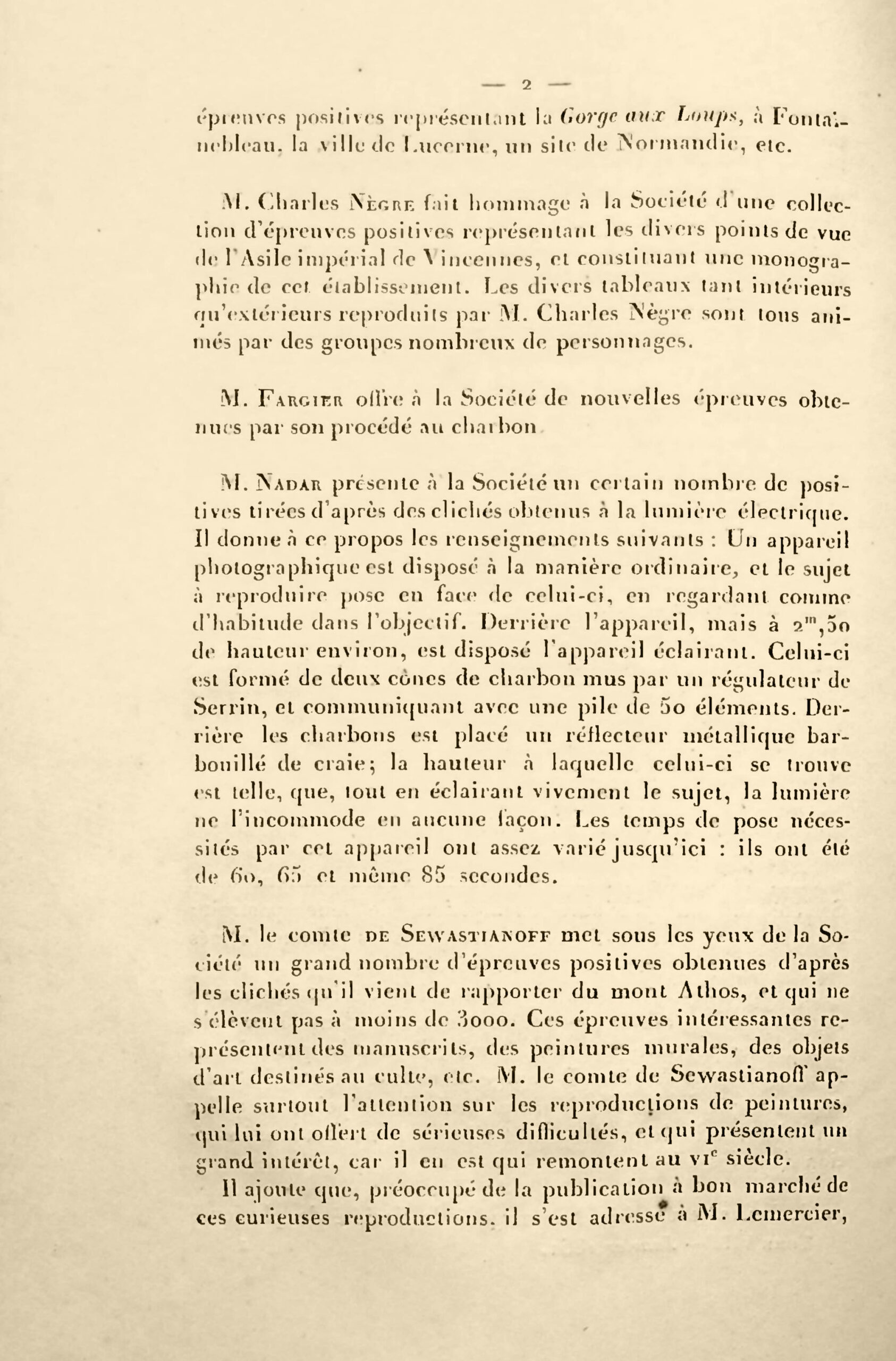
Bulletin de la Société Française de Photographie. Pag. 02. Paris. 1861. FBS Foundation.
This magazine served as a platform for photographers and theorists to share discoveries and reflections. Thanks to the SFP, pioneering photographers such as Nadar and Petit, famous for their portraits, and Gustave Le Gray, whose technical advances in collodion and his landmark seascapes, found a space to legitimise their work. Charles Nègre, one of the founders of the SFP, was noted for his participation in the Heliographic Mission and for his innovations with the calotype and wet collodion, key tools for documenting art and architecture. Hippolyte Bayard, a pioneer in exploring the artistic limits of photography, embodied the creative values that the SFP sought to promote. Edouard Baldus, known for his ability to capture landscapes and architecture, also contributed to this mission, being a forerunner in the use of wet collodion.
In addition, photographers such as Disdéri, known for popularising the carte de visite format, reflected the practical and commercial impact of photography at the time. The inclusion of international figures such as William Henry Fox Talbot, inventor of the calotype, highlights the global influence of ideas shared through the SFP and its journal. Blanquart-Evrard, a pioneer in photographic printing, was instrumental in the mass dissemination of images through his refinement of the albumen process. Alphonse Poitevin, with his work in photolithography and related permanent-image techniques, showed how photography could transcend the artistic realm and become a scientific tool.

Bulletin de la Société Française de Photographie. Paris. FBS Foundation.
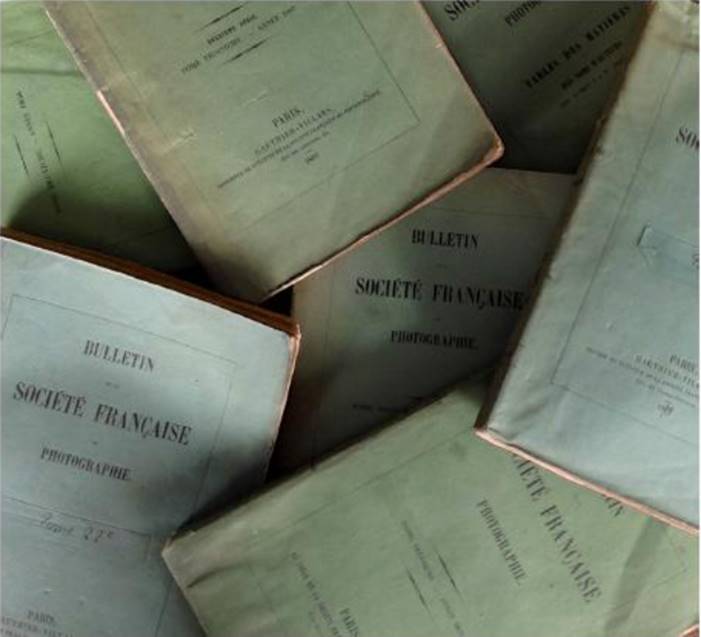
Bulletin de la Société Française de Photographie. Paris. FBS Foundation.
The SFP not only supported technical innovation, but also organised exhibitions and congresses highlighting the artistic capabilities of photography. Marville, known for documenting the urban transformation of Paris, demonstrated how photography established itself as a means of capturing and preserving visual history. Throughout its history, the society amassed a vast collection of photographs, cameras and documents that now constitute an important cultural heritage.
The FBS Foundation possesses bound copies of the SFP journal for the years 1855 to 1864, grouped in 30 volumes, in its bibliographic holdings. This reinforces the historical and cultural importance of these documents, which provide an invaluable record of the first steps of photography as an art and science.